

Mice and Rats
Understanding recent hantavirus outbreaks and rodent safety
Content updated: September 17, 2026
Key takeaways
- Hantavirus Pulmonary Syndrome (HPS) is a severe respiratory illness primarily transmitted by inhaling contaminated dust from wild rodent droppings or urine.
- Symptoms often begin with fever and severe muscle aches, then progress to respiratory issues that often require immediate medical attention.
- Never sweep or vacuum dry mouse droppings, as this can stir viral particles into the air; always soak the area with disinfectant first.
- Professional rodent exclusion services can help protect your home by identifying and sealing vulnerable entry points to keep pests outside.
Jump to section:
How hantavirus spreads (and the main culprits)
What are the symptoms of hantavirus?
Notable hantavirus outbreaks and cases
How to safely clean up rodent droppings
Stop rats and mice before they enter with rodent exclusion
Headlines about cruise ship travel scares and seasonal cabin cleanout warnings have put recent hantavirus outbreaks back in the news, raising concern for many homeowners. While hantavirus actually refers to a whole family of viruses, the primary threat in the United States is Hantavirus Pulmonary Syndrome (HPS). HPS is a rare but severe respiratory illness carried by wild rodents. Since pests can easily creep into our homes, staying proactive with proper rodent control is the best way to keep your household protected.
How hantavirus spreads (and the main culprits)
Contrary to popular belief, you do not usually catch hantavirus from a bite. Transmission actually happens through the air. When you sweep or vacuum up dry mouse droppings, urine, or nest materials, tiny viral particles get stirred into the dust. Breathing in this contaminated dust is how most infections occur. In North America, the primary carriers of hantavirus are wild mice and rats, particularly the deer mouse, white-footed mouse, and cotton rat.
Luckily, your chances of catching the virus are very low, as the U.S. only sees about 20 to 30 hantavirus cases each year.1 While the strains found in North America cannot be passed from person to person, international variants behave differently. The Andes virus from South America can spread directly between humans, which is the main reason behind those unusual travel-related clusters on cruise ships.

What are the symptoms of hantavirus?
HPS is a serious medical emergency with an estimated mortality rate of roughly 38%, making early intervention critical.1 The illness will not go away on its own and requires immediate medical care, often involving hospitalization and oxygen support.
- Early symptoms: Symptoms generally appear 1 to 8 weeks after initial exposure. Patients typically experience fatigue, fever, severe muscle aches, headaches, dizziness, chills, and abdominal pain.
- Late Symptoms (4 to 10 days later): Severe respiratory issues begin to take hold, including coughing, shortness of breath, and fluid buildup in the lungs. Many patients describe this stage as feeling like a tight band is wrapped around their chest.
If you experience these symptoms and suspect you have been near wild rodents, seek medical care immediately and tell your doctor about the potential exposure.
Notable hantavirus outbreaks and cases
Hantavirus cases are rare and are usually isolated, but clusters can happen when people share an exposure. One of the best-known examples is the 1993 Four Corners outbreak, which affected Arizona, Colorado, New Mexico, and Utah.2 Researchers identified a new hantavirus carried by deer mice as the cause. An unusually large mouse population, likely driven by a wet winter and abundant food, helped create conditions for the outbreak.
The 2026 M/V Hondius outbreak was unusual for a different reason. The ship's passengers and crew were affected by the Andes virus, which can spread from person to person. The outbreak resulted in 13 reported cases and 3 deaths and was declared over in July.3 While hantavirus has been found across the U.S., most cases occur west of the Mississippi River. From 1993 through 2023, 94% of reported cases occurred in that region.4
Which situations have the highest risk for hantavirus exposure?
The highest risk for hantavirus comes from enclosed, dusty spaces where pests have built nests undetected over time. Homeowners, renters, and seasonal property owners face elevated risks when opening up cabins, clearing out dirty sheds, or reorganizing long-untouched attics.
Outbreaks in contained settings like cruise ships are exceptionally rare. These unusual situations almost always involve international strains (like the Andes virus), in which an infected traveler carries the virus into a crowded environment where human-to-human transmission can occur.
How to safely clean up rodent droppings
You won't be able to identify whether droppings came from a deer mouse or a house mouse, so you can't be sure whether the risk of hantavirus is present or not. Therefore, it's best to leave clean up & management to professionals who are experienced in proper remediation and have access to the right PPE.
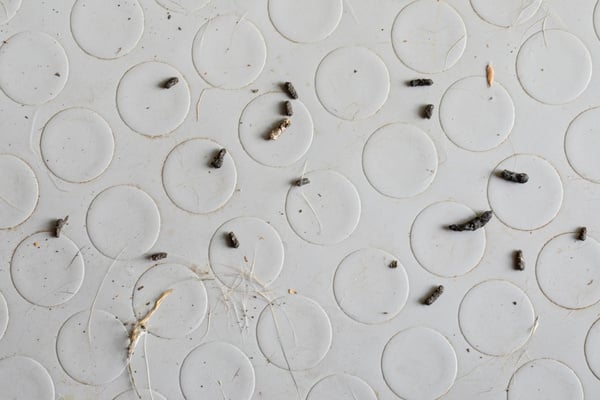
If you find rodent droppings, do not sweep or vacuum them while they are dry. These actions can stir contaminated particles into the air and increase the chance of inhaling them. Instead, follow these basic precautions for a light infestation:
- Ventilate the area: Open doors and windows for at least 30 minutes before starting so fresh air can circulate.
- Wear protective gear: Put on heavy rubber gloves and a high-efficiency (HEPA) mask to protect your skin and lungs.
- Soak, don't sweep: Spray droppings and nests thoroughly with a household disinfectant or a bleach solution (1 part bleach to 9 parts water). Let it sit wet for 5 minutes.
- Wipe and discard: Wipe up the mess using wet paper towels. Place all used materials into a sealable trash bag, tie it tightly, and dispose of it in an outdoor trash can.
Stop rats and mice before they enter with rodent exclusion
Cleaning up rodent waste addresses an existing problem, but it does not prevent more rodents from getting inside. Rodents can squeeze through surprisingly small openings, so inspect and seal gaps around doors, windows, vents, pipes, utility lines, foundations, and rooflines.
To guard your home against rodent-borne illnesses, you need a long-lasting solution that stops pests at the perimeter. Terminix provides professional rodent exclusion services to identify, seal, and protect all vulnerable entry points around your property.
Don't leave your family's health to chance. Schedule a free mice and rat inspection today to keep unwanted pests out.


1Statistics regarding the annual number of hantavirus cases reported in the United States are sourced from the Centers for Disease Control and Prevention (CDC).
2Historical outbreak data, including details regarding the 1993 Four Corners outbreak, viral transmission by deer mice, and related environmental factors, are sourced from the Centers for Disease Control and Prevention (CDC).
3Details regarding the 2026 M/V Hondius outbreak, including case counts, mortality rates, and Andes virus transmission, are based on international public health alerts and maritime epidemiological reports, such as the World Health Organization's Disease Outbreak News.
4Geographic distribution statistics and national case data spanning from 1993 through 2023 are sourced from the CDC's official Health Alert Network (HAN) surveillance data.