

How to identify mouse droppings
Know how to spot mouse droppings in your home and learn what to do about them.
Content Updated: September 10, 2026
Key takeaways
- Mouse droppings are small, dark pellets with pointed ends that typically measure ⅛” to ¼” long.
- Mouse poop appearing within 24 to 48 hours after cleaning may indicate ongoing mouse activity and an active infestation.
- Prevent mice from entering your home by sealing entry points a ¼” or larger, storing food in airtight containers, and reducing clutter that provides hiding places.
- Professional rodent control can help identify mouse activity, locate entry points, and provide long-term solutions to eliminate infestations and prevent mice from returning.
Jump to section:
What do mouse droppings look like?
Other mice dropping lookalikes
Where to look for mouse droppings
Can you live in a house with mouse droppings?
How to get rid of mouse droppings
How to deal with a mouse infestation
Mouse droppings are typically one of the earliest and most noticeable signs of a mouse infestation. Learning how to identify mouse poop can help you recognize rodent activity, determine whether mice may be present in your home, and take action before the problem becomes more severe.
If you suspect mice are in your home, Terminix rodent experts can inspect your property, identify signs of activity, and recommend a customized mouse control plan to help eliminate the infestation and prevent future problems.
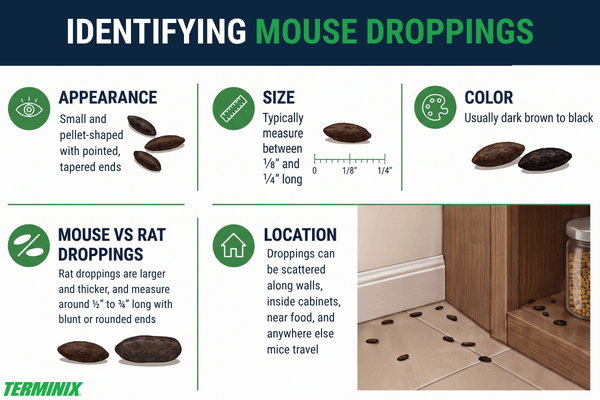
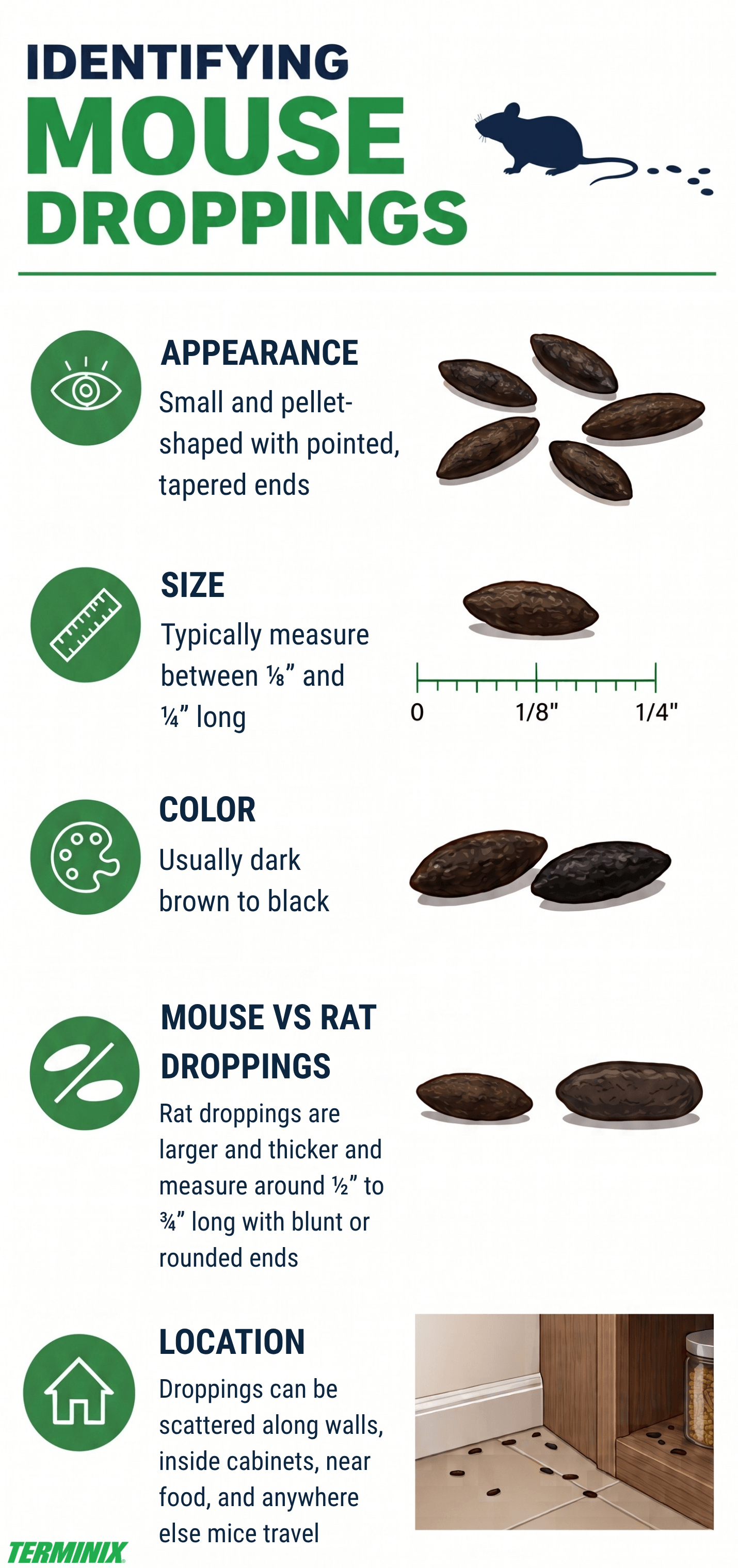
Identifying Mouse Droppings
A guide by Terminix outlining physical characteristics, common locations, and key differences between mouse and rat droppings.
Dropping Characteristics
- Appearance: Small and pellet-shaped with pointed, tapered ends
- Size: Typically measure between 1/8" and 1/4" long
- Color: Usually dark brown to black
- Location: Droppings can be scattered along walls, inside cabinets, near food, and anywhere else mice travel
Mouse vs Rat Droppings
- Rat Droppings: Rat droppings are larger and thicker, and measure around 1/2" to 3/4" long with blunt or rounded ends
What do mouse droppings look like?
Mouse droppings are small, pellet-shaped, and typically measure about 1/8 to 1/4 inch long. They are usually dark brown to black with pointed, tapered ends, similar in appearance to dark grains of rice. Because mice can produce many droppings per day, you'll often find multiple droppings scattered along walls, inside cabinets, near food sources, or anywhere mice frequently travel.
One of the most reliable ways to determine whether mice are actively using an area is to safely remove the droppings and then inspect the area again after 24 to 48 hours. The presence of fresh mouse poop can strongly suggest ongoing mouse activity.
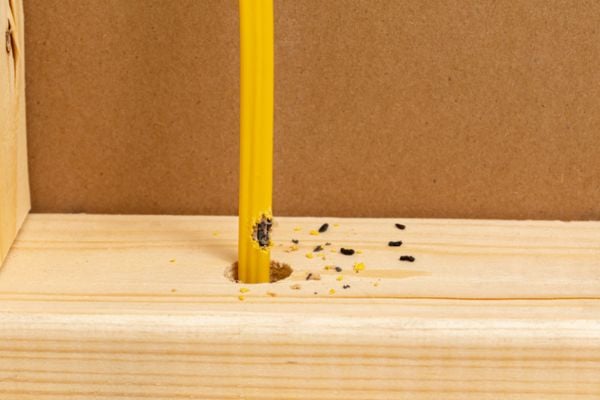
Mice vs. rat droppings
Mouse and rat droppings may look similar, but there are a few differences that can help with identification:
- Size: Mouse droppings are smaller, typically ⅛” to ¼” long, while rat droppings are larger, usually ½” to ¾” long.
- Shape: Mouse droppings are slender, with pointed, tapered ends resembling dark grains of rice. Rat droppings are thicker with blunt or rounded ends, but the exact shape can vary. They can be similar in size to a large raisin, olive pit, or small bean, depending on the species.
- Location: Mouse droppings are commonly found inside cabinets, drawers, pantries, and along baseboards where mice frequently travel. Rat droppings are more commonly found in larger spaces such as basements, garages, crawl spaces, and attics.
Other mice dropping lookalikes
Other types of droppings can sometimes be mistaken for mouse poop due to their small size and dark color. Common lookalikes include:
- Squirrel droppings: Squirrel droppings can resemble mouse droppings but are typically larger and more rounded. These droppings are also usually found outdoors near trees, roofs, or decks.
- Bat droppings (guano): Bat droppings may look similar to small rodent droppings but are often more crumbly and break apart easily if disturbed. They are commonly found beneath roosting areas like attics, eaves, and rafters.
- Lizard droppings: Lizard droppings can be mistaken for mouse droppings because they are small and dark. However, they typically have a white, chalky tip that is not present in mouse droppings.
- Cockroach droppings: Cockroach droppings may resemble very tiny mouse droppings, but are usually much smaller and may look like coffee grounds or pepper flakes. They are commonly found in cabinets, drawers, and other hidden areas.
Where to look for mouse droppings
Because mice are nocturnal and tend to remain hidden, checking areas where they feed, travel, or seek shelter can help you identify a potential infestation. Common places to look for mouse droppings include:
- Kitchen cabinets, pantries, and food storage areas
- Utility closets and areas around appliances, water heaters, or plumbing
- Bathroom cabinets and storage areas
- Attics, crawl spaces, and other quiet areas
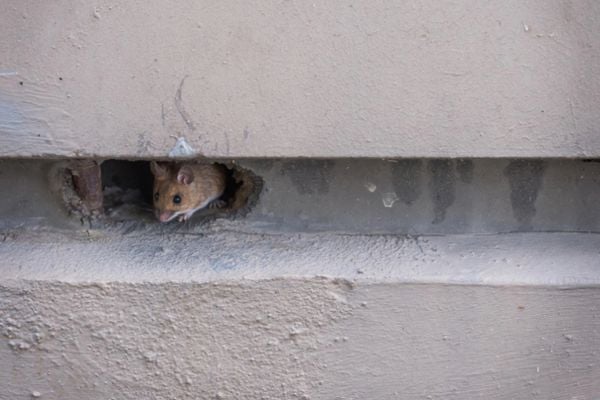
- Areas near air vents, exposed pipes, wall openings, or gaps where mice may enter or travel
Mice are not typically solitary, so finding droppings may indicate more than one mouse is present.
Can you live in a house with mouse droppings?
Living in a home with mouse droppings can create unsanitary conditions and suggest there may be an active rodent problem. Mice can contaminate food, surfaces, and belongings with droppings and urine, and may also spread bacteria and trigger allergies through dander and nesting materials.
If you find mouse poop in your home, avoid disturbing them until they can be properly cleaned. A professional can help address and remove the infestation, which can help prevent additional droppings from accumulating.
How to get rid of mouse droppings
To get rid of mouse droppings, the first thing you want to do is to remove the mouse or mice that are causing them. If you remove the droppings while the pests are still in your home, new droppings will most likely continue to accumulate. We recommend that you have a professional help remove the mice and the droppings for the most reliable and efficient removal possible.
If you want to take a DIY approach, be careful when cleaning up the droppings. Be sure to take the following precautions from the Centers for Disease Control and Prevention (CDC) to remove mouse poop wherever you find it:
- Air out the space where pellets are found for at least 30 minutes before cleaning.
- Wear rubber, latex, or vinyl gloves and a breathing mask or respirator. Never touch the droppings with your bare hands.
- Use a disinfectant spray on the area and let it soak in for five minutes. You can also make your own version by mixing one part bleach with 10 parts water.
- Clean the area with disposable rags or paper towels.
- Put the mouse droppings and disposable cleaning supplies into a plastic bag; seal it well.
- Place the sealed bag in a covered trash can, and take out the trash as soon as possible.
- Re-inspect the area after 24 hours. If there are new droppings, then you have an ongoing infestation.
It’s also important to avoid sweeping or vacuuming up mice droppings. Particles from mouse dander and droppings can become airborne, potentially making household members sick.
How to deal with a mouse infestation
If your home has a mouse infestation, it’s important to address the conditions that may be attracting them. Taking preventative measures can help make your home less appealing to mice and reduce the risk of future activity:
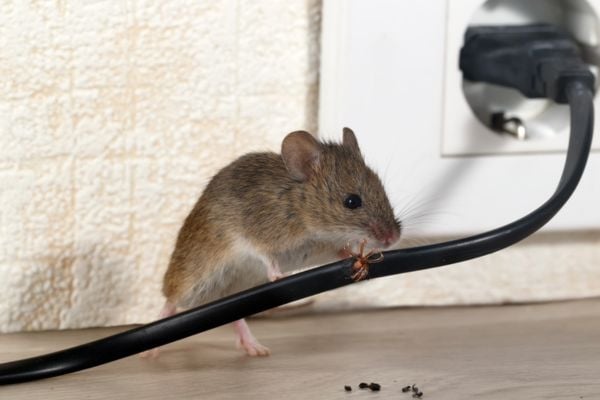
- Seal potential entry points: Inspect your home for gaps, cracks, and openings that mice can use to enter. Because mice have flexible bodies, they can squeeze through openings as small as a nickel or a dime.
- Protect vulnerable areas: Mice can chew through materials such as plastic, wood, wiring, and insulation. Seal openings in walls, crawl spaces, and other areas where mice may access these materials.
- Close gaps around pipes and cables: Use appropriate materials to seal openings where pipes, wires, and cables enter your home.
- Remove access to food sources: Store food in sealed containers, clean up crumbs and spills, avoid leaving dirty dishes in the sink, and keep pantry items in durable containers instead of cardboard or soft plastic packaging.
- Secure pet food: Store pet food in airtight containers and avoid leaving leftover food in bowls overnight.
- Manage trash properly: Keep indoor and outdoor trash cans covered and avoid allowing garbage to accumulate.
- Reduce clutter: Remove excess clutter and debris from your home’s exterior, garage, basement, and other storage areas where mice may hide.
If mouse poop continues to appear despite your prevention efforts, or you need help addressing an active infestation, schedule your free mouse inspection with Terminix. Our rodent control experts can help determine how rodents are getting inside your home and the best treatment methods to remove them.