
Home>Termite Control>How to get rid of termites
cockroach on crystal

How to get rid of termites in your home

Seeing signs of termites in your home? Explore this guide for more information on DIY termite treatments, prevention methods, and when to call a professional.

Quick facts

  • Spotting early warning signs of an infestation, like mud tubes, hollow-sounding wood, and discarded wings, can help you prevent extensive property damage.
  • Reducing excess moisture, sealing foundation entry points, and keeping firewood away from your house can help prevent termites from getting inside.
  • While DIY methods target visible pests, getting rid of termites requires treating the hidden colony underground or within walls.
  • Since these pests work out of sight, professional termite control is the most effective way to get rid of termites and protect your home.
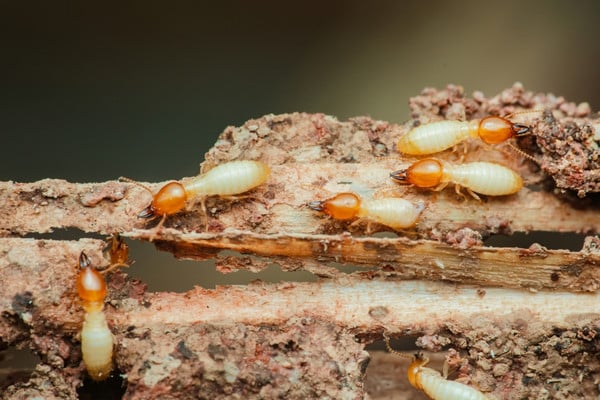
A pale termite crawling on a piece of damaged wood near two others.

Identifying termites

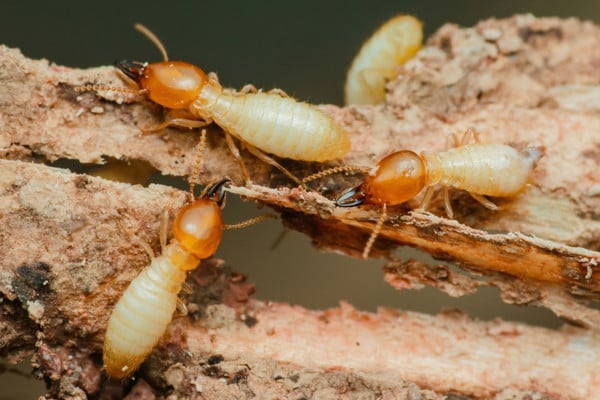
Knowing how to identify a termite can help you spot an infestation before significant damage occurs. Unlike ants, termites have straight antennae, broad waists, and two pairs of equal-sized wings when they swarm. Most worker termites are pale white to light brown and avoid light, making them difficult to see. While subterranean termites are the most common species affecting homes, drywood and dampwood termites can also infest structures, depending on your location.
What are the signs of termites?

Termites often remain hidden for months or even years, making early detection important. Learning the common signs of termites can help you recognize an infestation before it causes extensive damage.
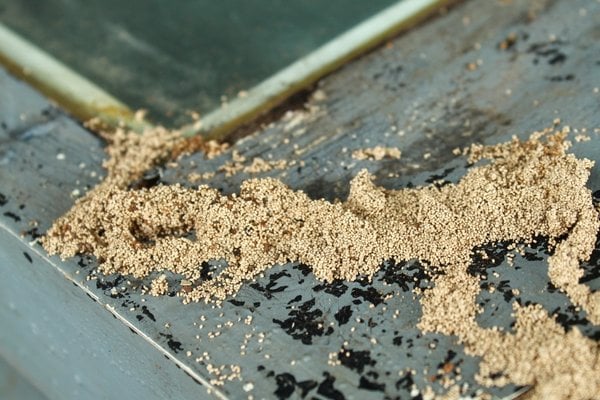
Pile of tan, pellet-like termite droppings (frass) on a windowsill.

Termite droppings (frass)

Drywood termites leave behind small, pellet-like droppings called frass, which often collect beneath infested wood or around tiny kick-out holes.

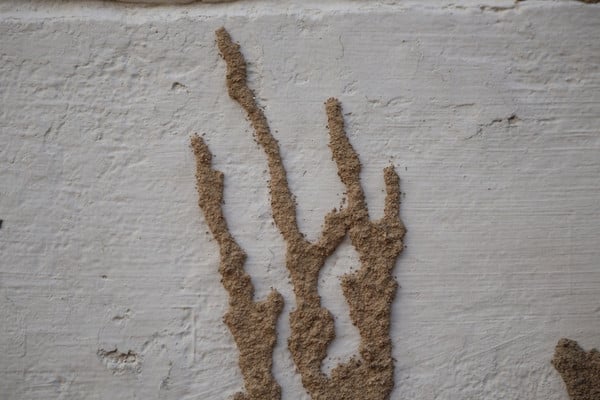
Branching termite mud tubes running up a white painted wall.

Mud tubes

Subterranean termites build pencil-sized mud tubes along foundations, walls, and crawl spaces to travel safely between their colony and a food source.

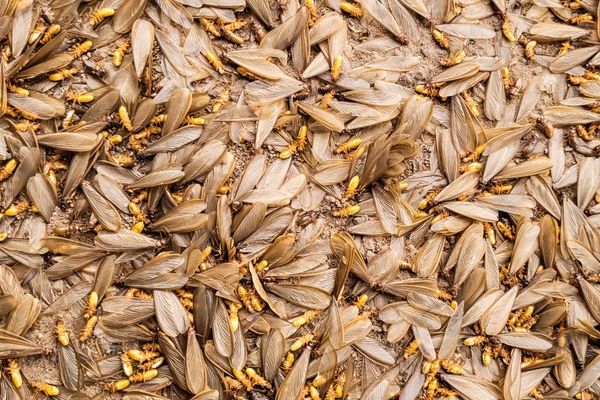
Pile of shed termite wings with small yellow termite swarmers scattered among them.

Swarming termites

Piles of discarded wings near windows, doors, or light fixtures are a common warning sign of swarmers. If you spot them inside, knowing how to get rid of flying termites quickly is critical.

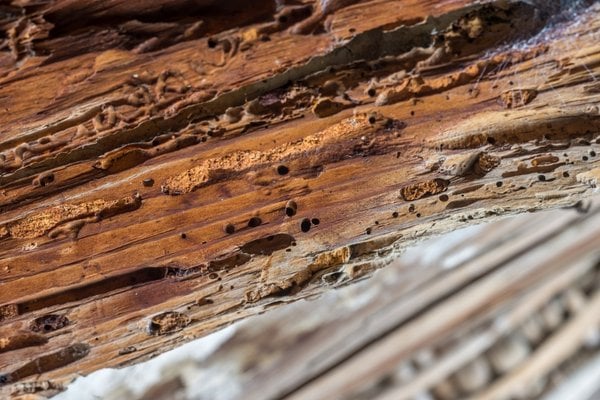
Close-up of a wooden beam riddled with tunnels and small termite exit holes.

Exit holes

Small pin-sized holes in wood may be a sign of drywood termites. These exit, or "kick-out," holes allow termites to push waste out of their tunnels, often leaving small piles of frass.

How to Check if You Have Termites | Signs of Termites

Causes of termite infestations in your home

Understanding how to get rid of termites in your home starts with knowing why they are there. A termite infestation can start when these pests find the right combination of food, moisture, and access to your home. Simple issues like excess water, damaged wood, and mulch or firewood stored near your foundation can create conditions that termites prefer. Staying on top of home maintenance and removing potential attractants can help make your property less inviting to termites.
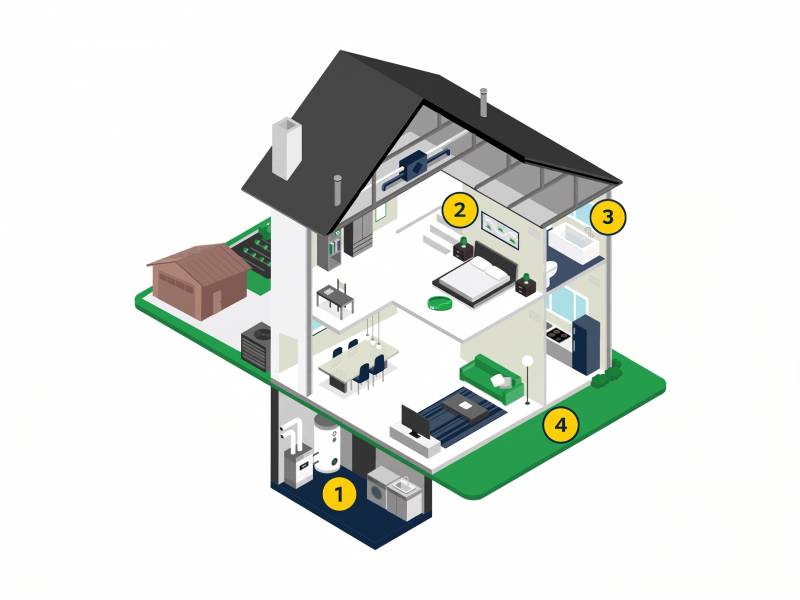
Cutaway illustration of a two-story house showing the bedroom, bathroom, kitchen, living room, basement and yard, with numbered markers on common termite hotspots.

Common hotspots

  • Termites commonly enter through foundation cracks and expansion joints, while damp crawlspaces provide the moisture and hidden access they need to establish a colony.
  • Termites feed from the inside out and can remain hidden behind walls and ceilings for long periods, making damage difficult to detect. Look closely for bubbling or peeling paint that mimics water damage, which may indicate termites are tunneling beneath the drywall.
  • Leaky pipes, poor ventilation, and excess humidity can create the moist conditions that attract termites. Keep an eye out for discarded, translucent insect wings left behind on countertops or floor tiles after a seasonal swarm.
  • Tree stumps, firewood, mulch, and wood piles placed close to your home can attract termites and make it easier for them to spread. Inspect old tree stumps, decaying fence posts, and damp firewood piles near your home's exterior for active tunneling or pale, wingless insects.

DIY termite control

When homeowners ask how to get rid of termites quickly, the answer often depends on the type of termite and how long the infestation has been active. DIY termite control products may offer quick results, but they will not address the entire colony. Since termites work out of sight, professional treatment is the most effective way to eliminate the problem and help prevent future activity.
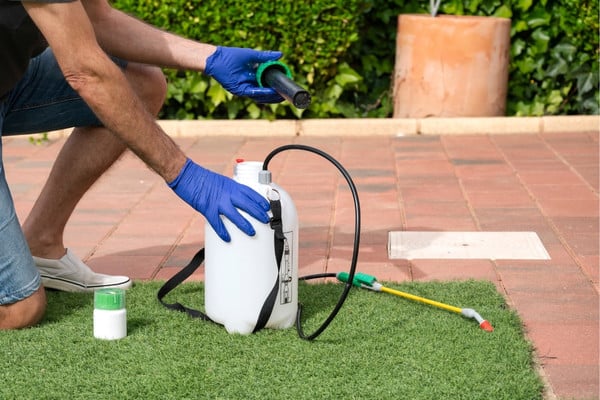
Person wearing blue gloves preparing a pump sprayer to apply a homemade termite treatment outdoors.

DIY Liquid termiticide treatments

Store-bought liquid termiticide treatments can be applied around areas where termite activity is suspected, but they often only reach visible termites rather than the entire colony.

Natural termite repellents

Many homeowners look for natural ways to get rid of termites, but these methods provide limited results. While some products may temporarily discourage termite activity, they rarely eliminate an established colony hidden underground or within walls. Natural termite repellents should not be considered a complete termite removal solution.
Glass bowl and spoon filled with white boric acid powder on a tiled counter.

Boric acid

Boric acid can kill termites that come into direct contact with it, but it does not provide complete colony elimination on its own.

Glass jar labeled “Diatomaceous earth” beside a sieve of white powder, with the powder dusted around lettuce seedlings in a garden bed.

Diatomaceous earth

Food-grade diatomaceous earth can kill termites on contact by drying out their protective coating. However, it is not a reliable solution for getting rid of a termite colony inside walls or underground.

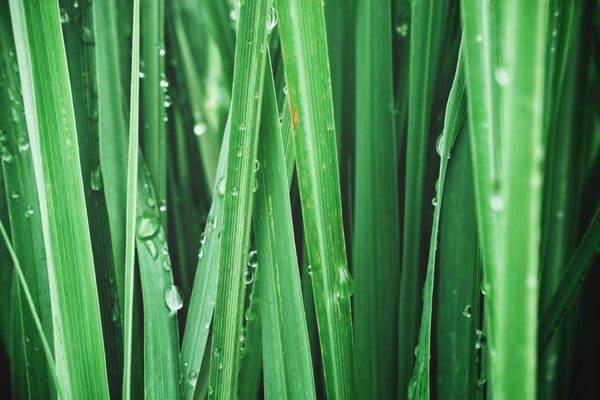
Close-up of long green vetiver grass blades covered in water droplets.

Termite-repelling plants

Plants such as vetiver grass or catnip are sometimes believed to help repel termites, but there is little evidence that they provide reliable protection or prevent infestations.

Termite prevention tips

The best way to get rid of termites in your home is to help prevent them from becoming established in the first place. Simple termite prevention steps can help reduce your risk of an infestation and keep your home protected after professional treatments. While no prevention method can guarantee termites won't return, reducing moisture, eliminating wood-to-soil contact, and addressing potential entry points can make your property less attractive to these wood-destroying pests.
Illustration of a hand tightening a dripping faucet with a wrench.

Control moisture

Fix leaks, improve drainage, and keep gutters clear to help reduce moisture around your home.

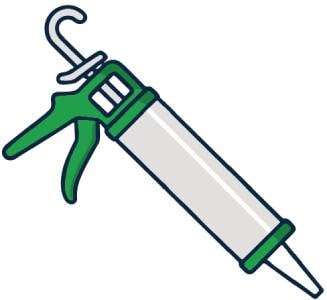
Illustration of a caulking gun.

Seal entry points

To block potential entry points for termites, seal any cracks or gaps found in foundations, walls, vents, and openings.

Illustration of a bundle of firewood tied with twine.

Limit wood-to-soil contact

Store firewood away from your foundation and keep mulch, lumber, and other wood materials from directly touching your home.

Illustration of a house with a magnifying glass held up to its roof.

Schedule annual inspections

Getting yearly termite inspections can help you detect early signs of activity and protect your home from extensive damage.

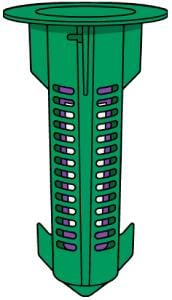
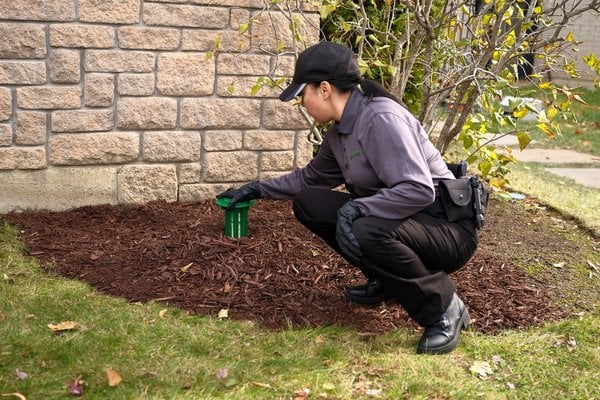
Illustration of a green in-ground termite treatment station with slotted sides.

Use preventive termite treatments

Preventive termite treatments, like our Drywood Defend System for drywood termites or ongoing bait solutions for subterranean termites, can provide added protection against future termite infestations.

Home maintenance tips

Knowing the ways to keep termites out of your home starts with staying proactive about your property's condition. Regular upkeep can help you spot potential issues before they become major problems, from checking for signs of damage to maintaining areas that support your home's structure. Small maintenance tasks throughout the year can help protect your home from termite activity and related damage.
Close-up of termites with orange heads and pale bodies crawling on decaying wood.

Common hotspots

  • Inspect foundations and crawlspaces for cracks, gaps, or moisture issues, and repair problems as soon as they are found. Keep these areas well-maintained with proper drainage and ventilation.
  • Check walls and ceilings for signs of damage, including cracks, stains, or soft spots. Repair leaks and water damage quickly to help protect your home's structure.
  • Regularly check plumbing fixtures, pipes, and areas under sinks for leaks or water damage. Make repairs promptly and use proper ventilation to help keep the space dry.
  • Keep firewood, mulch, tree stumps, and other wood materials away from your home's foundation. Trim vegetation away from your home and maintain a clear area around the foundation.

Termite control services

If you need to get rid of termites, professional treatment is the most reliable way to protect your home. A Terminix expert can identify the type of termites in your home, locate hidden activity, and create a termite treatment plan tailored to your situation.

magnifying glass

Inspection

A termite expert will inspect your home for signs of activity, including damaged wood, mud tubes, moisture issues, and potential entry points.

TMX Technician

Treatment

Based on your inspection, we’ll create a customized termite control plan with targeted treatments tailored to your home and infestation.

Home Protection 1

Prevention

Your technician will provide recommendations to help reduce termite risks and protect your home from future infestations.

Let the pros take care of your termite problem