Education
Arachnids: Types, facts, and how they differ from insects
Content Updated: July 10, 2026
Key takeaways
- Arachnids are a group of arthropods characterized by having eight legs and two main body segments.
- Common types of arachnids include spiders, scorpions, harvestmen (daddy long-legs), ticks, and mites.
- Arachnids and insects are very different. Arachnids have eight legs, two main body segments, and simple eyes, while insects have six legs, three body segments, and compound eyes.
- Arachnids can be managed through preventive measures such as sealing entry points, reducing clutter, trimming vegetation, and controlling moisture around the home.
Jump to section:
- What is an arachnid?
- Types of arachnids
- Arachnids vs. insects
- What to do if you have spiders or other arachnids in your home
Spiders are among the most recognizable arachnids, but they're only one member of a diverse group that includes ticks, mites, scorpions, harvestmen, and more. Learning what they all have in common can help you better understand how arachnids differ from insects and other arthropods. If spiders are becoming a nuisance around your home, spider control services from Terminix can help identify areas of activity and implement targeted treatments.
What is an arachnid?
Arachnids are a class of arthropods that includes spiders, scorpions, ticks, mites, and other eight-legged species. There are many types of arachnids, but they are all invertebrates that have exoskeletons, segmented bodies, and at least three pairs of jointed legs.
Types of arachnids
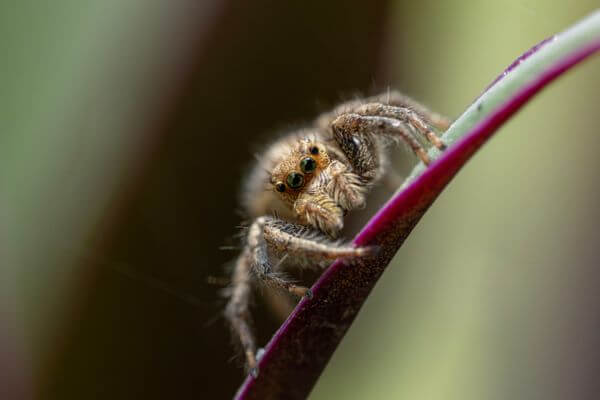
Arachnids are a diverse group, with more than 100,000 known species worldwide. While spiders are one of the most familiar types, they make up only a portion of this class, with tens of thousands of species identified. Other common arachnids include:
- Scorpions: They use their pedipalps as pincers and a stingered tail for defense and hunting. Many species are nocturnal and hide under rocks or debris during the day.
- Harvestmen: Also called daddy long-legs, these arachnids are not true spiders and have a single fused eye rather than multiple pairs. They do not produce silk or venom.
- Ticks and mites: These arachnids are often very small and can be found in soil, vegetation, and other outdoor environments. Some species are parasitic and may feed on humans or animals.
There are also many lesser-known types of arachnids, including pseudoscorpions, whipscorpions, and solifuges. Among all arachnid species, spiders are the only ones with the ability to produce silk and spin webs.
Arachnids vs. insects
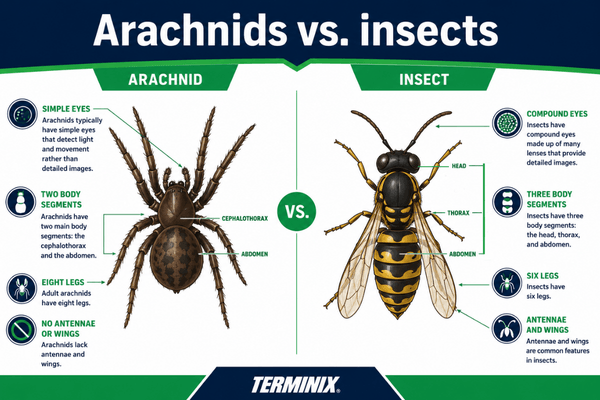
Arachnids and insects are both classified as arthropods, but they belong to different groups and have distinct physical characteristics. Here are the main differences between the two:
- Arachnids typically have simple eyes that provide limited vision, while insects have compound eyes made up of many tiny lenses that help them detect movement and their surroundings.
- Arachnids have two main body segments, the cephalothorax and the abdomen, while insects have three: the head, thorax, and abdomen.
- Arachnids have eight legs, while insects have six.
- Arachnids also lack antennae and wings, which are common features in insects.
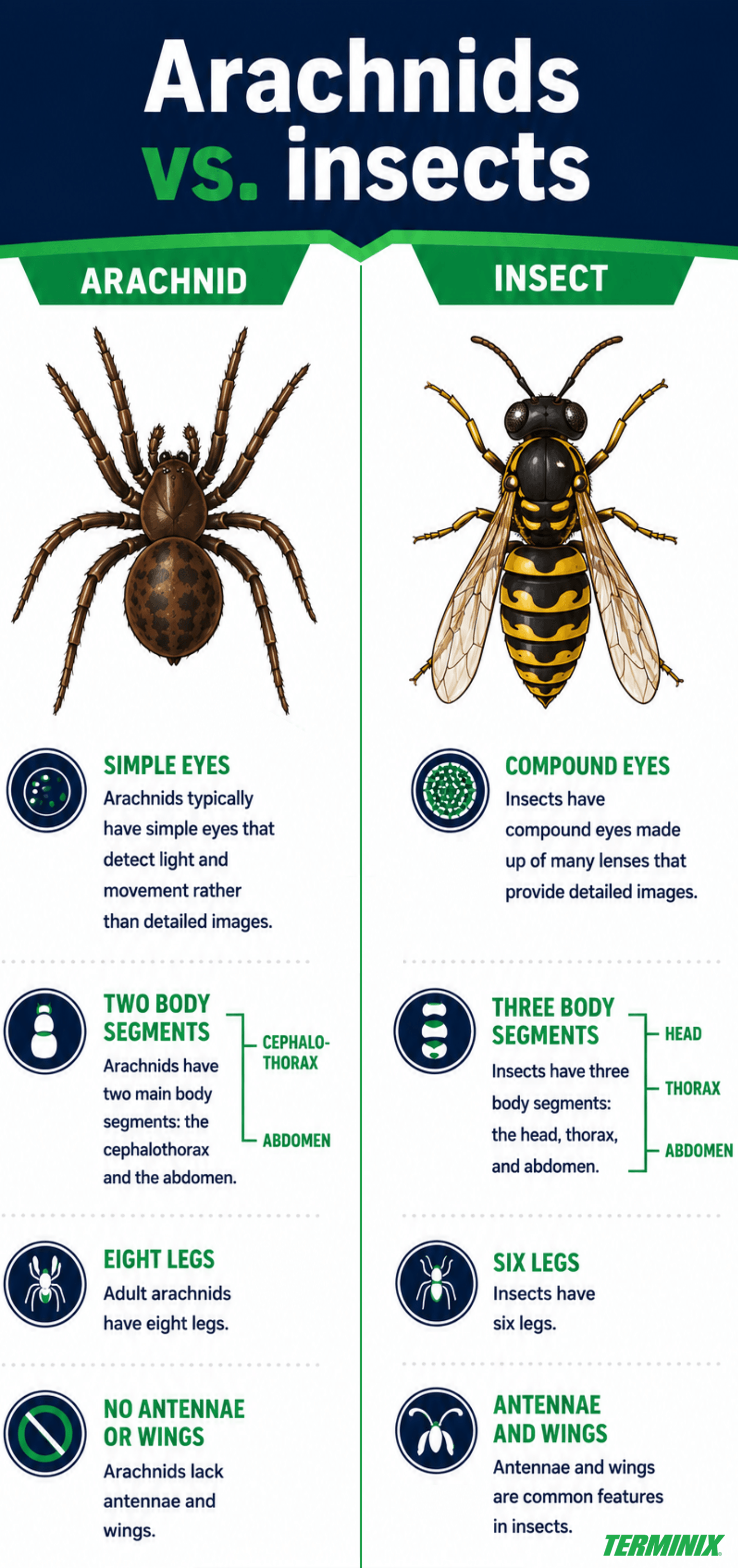
Arachnids vs. insects: Know the difference
A side-by-side comparison of the eyes, body segments, legs, and antennae/wings of arachnids versus insects to help with identification.
Physical Comparison Table
| Feature | Arachnid | Insect |
|---|---|---|
| Eyes | Simple eyes that typically detect light and movement rather than detailed images. | Compound eyes made up of many lenses that provide detailed images. |
| Body Segments | Two main body segments: the cephalothorax and the abdomen. | Three body segments: the head, thorax, and abdomen. |
| Legs | Adult arachnids have eight legs. | Insects have six legs. |
| Antennae and Wings | Arachnids lack antennae and wings. | Antennae and wings are common features in insects. |
What to do if you have spiders or other arachnids in your home
If you find spiders or other types of arachnids in your home, these prevention tips can help reduce activity:
- Seal entry points around doors, windows, utility lines, and foundations.
- Reduce clutter in storage areas, basements, garages, and other undisturbed spaces.
- Vacuum regularly to remove webs and egg sacs.
- Control other pests since many arachnids feed on insects.
- Reduce moisture by fixing leaks and improving ventilation in damp areas.
- Trim vegetation and keep mulch, firewood, and debris away from your home's exterior.
If you're seeing frequent spider activity, an increasing number of webs, or suspect potentially harmful species, our spider control services can help. A Terminix expert can inspect your home, identify conditions that may be attracting spiders, and implement targeted treatments and prevention strategies.