Ants
Fire ant control treatments
Content updated: June 11, 2026.png?rev=11a61f5e192f47f9bf0982b92c639141&hash=512DE581A96B9CEE58750C15A682D1EE)
Key takeaways
- Fire ants and red ants are often confused, but fire ants are more aggressive and capable of painful stings, making proper identification crucial for effective control.
- Various fire ant treatments exist, ranging from DIY methods like baits and mound drenches to professional pest control services, with the latter recommended for severe infestations.
- Fire ant bait targets the colony from within by being carried back to the queen, but it can take weeks or months for full effectiveness.
- Mound drench treatments provide rapid results by applying pesticides directly onto visible mounds, killing ants in the nest quickly.
Jump to section:
Sprays and granular insecticides
Professional fire ant treatments
Red ants or fire ants, one thing’s the same: you want them gone. Here’s how to do it right.
Red ants and fire ants are often confused, but they’re not the same, and getting rid of them requires different strategies. Fire ants, especially red imported fire ants, are aggressive, swarm in large numbers, and deliver painful stings. Red ants, on the other hand, may be less threatening but can still be a nuisance indoors or in the yard. Learn how fire ant control from Terminix can help you get rid of fire ants on your property.
Fire ants vs. red ants
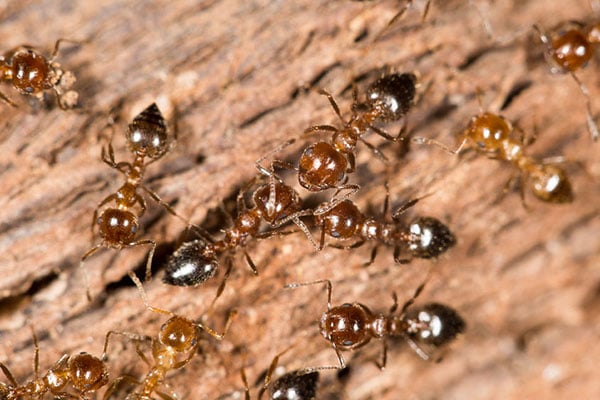
At first glance, it’s easy to confuse fire ants with other red ant species, but being able to tell them apart is important. Fire ants are aggressive, territorial, and capable of delivering painful stings. Red ants may look similar, but most are less aggressive and don’t sting or bite in the same way.
So, how can you tell what you're looking at?
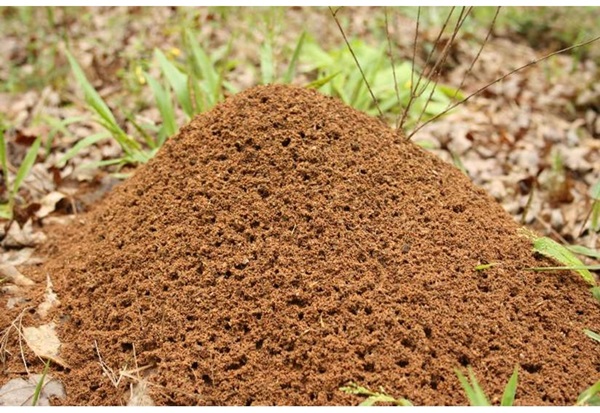
- Fire ants are usually reddish-brown with a darker abdomen, and they range from one-eighth to one-fourth of an inch in size. They often build large, dome-shaped mounds in open, sunny areas. If disturbed, fire ants swarm quickly and sting repeatedly, injecting venom that causes a burning sensation and, in some cases, serious allergic reactions.
- Red ants are a broader term used to describe various species, some of which are entirely harmless. They may resemble fire ants in color, but are typically less aggressive and less likely to sting. Still, they can invade kitchens, yards, and gardens, making them a frustrating pest in their own right.
Fire ant treatments
There are a variety of methods for getting rid of fire ants, especially during their peak activity from late spring through early fall. Many fire ant products require careful handling. Some may contain strong insecticides that can be harmful if inhaled or if they come into contact with your skin or eyes. Always follow label directions exactly and store products out of reach of children and pets.
Professional fire ant control is strongly recommended for those with fire ant allergies or when dealing with widespread infestations. Pest control professionals have access to more targeted solutions and can apply them effectively, often combining baiting, mound treatment, and barrier protection to control the ants at every level.
Some people turn to DIY fire ant control, including mound drenches, contact sprays, and fire ant bait that worker ants carry back to the colony. While these products may help reduce visible activity, they fall short of eliminating the queen and stopping the colony long-term.
Fire ant bait
Bait is a commonly used fire ant treatment that targets the colony from the inside out. Worker ants carry the slow-acting insecticide back to the nest, where it’s shared with the queen and other colony members, eventually leading to colony collapse.
It’s a low-impact option that can be applied across larger areas, making it ideal for multiple mounds, large yards, or when nests are hard to find. For best results, bait should be applied when ants are actively foraging in warm, dry weather, but they do take longer, often several weeks or even months, to fully get rid of fire ants. Be sure to keep children and pets away from treated areas.
Mound drench treatments
Mound drenches are a fast-acting fire ant treatment for visible mounds. A liquid pesticide is poured directly onto the mound, soaking into the soil and killing ants underground, often within hours. This approach is best for targeted control in residential yards, gardens, or high-traffic areas where quick relief is needed. Fire ants often build satellite colonies nearby, which means drenching alone may not eliminate the entire problem.
Other surface treatments include dusts, which leave a residue in voids ants travel through, and granular insecticides, which must be watered in to activate. Both methods require careful application and strict adherence to label directions. As with any pesticide, these treatments require careful handling and should be applied with awareness of children, pets, and surrounding areas.
And remember: never apply a liquid treatment on top of a baited area. Use one method per zone for best results.
Sprays and granular insecticides
Sprays and granular insecticides are commonly used to treat fire ants, particularly around the home. They are best used in large areas with visible ant activity. Sprays are applied directly to visible ants or along surfaces where ants may be foraging. Granules are scattered over the lawn or near mounds and then activated by water.
While these products can help reduce surface-level activity, they have limitations:
- Sprays provide fast knockdown of visible ants, but typically don’t reach the colony underground
- Granules must be watered in properly to activate, and may lose effectiveness if applied incorrectly
- Both treatments may only affect ants that come into direct contact with the product
- Neither method guarantees the elimination of the queen or the deeper parts of the colony
Used alone, sprays and granules can offer short-term relief, but they’re often more effective when combined with broader fire ant control strategies.
Homemade fire ant remedies
Many homeowners may turn to DIY remedies for fire ant treatment. DIY remedies can provide temporary relief, but they will not eliminate an entire infestation.
- Dish soap: When sprayed directly, this method can help disrupt ants' exoskeletons.
- Vinegar: Its strong scent can help deter visible ants and disrupt their pheromone trails.
- Essential oils: Peppermint and tea tree oil may help repel ants due to their strong scents.
- Orange oil: Rich in d-limonene, it can help kill fire ants and deter them over time.
Fire ant prevention
Preventing fire ants starts with making your yard and home less inviting. While no method is foolproof, small changes to your environment can go a long way in discouraging colonies from forming in the first place. Here are some effective prevention tips:
- Keep your yard well-maintained: Trim grass regularly and avoid letting mulch or leaves accumulate near the foundation.
- Remove food and water sources: Clean up pet food, spilled bird seed, and standing water in planters or buckets.
- Seal entry points into your home: Caulk cracks in your foundation, around doors, and near utility lines to limit access indoors.
- Store trash securely: Use tightly sealed garbage bins and clean up outdoor food waste promptly.
- Keep firewood and debris away from the home: Ants often nest in stacked wood, logs, or cluttered garden beds.
Even with a clean yard, fire ants can still move in, especially during warmer months. Over-the-counter products may help, but they’re often less effective than those used by professionals. For more tips on ant-proofing your home, visit our ant prevention guide.
Professional fire ant treatment
If you’ve tried DIY products with little success, you’re not alone. Fire ant treatments can be tricky. Many over-the-counter solutions only offer short-term relief and require frequent reapplication. Worse, they can be hazardous if misused around children, pets, or sensitive areas.
That’s why so many homeowners choose professional treatment. Terminix offers targeted fire ant control that’s not only more effective, but also more precise. Our trained technicians know how to apply products, monitor activity, and customize treatments for your property’s unique layout and risk level.
You don’t have to keep fighting fire ants on your own. Learn more about Terminix fire ant control and let us help protect your yard.