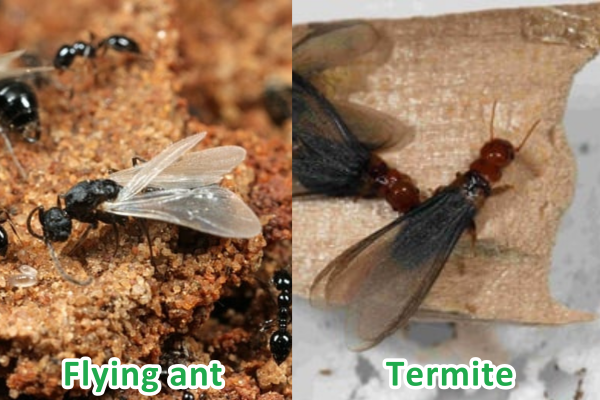
Flying ants and termites are often confused because both produce winged reproductives that swarm, but their antennae, waist shape, wings, and diets are different.
Termites feed on cellulose and can cause significant structural damage, whereas flying ants are generally harmless and do not eat or destroy wood.
Swarmers from both species may suddenly appear indoors because swarming is a brief, seasonal event triggered by warm temperatures and humidity.
Finding discarded wings, mud tubes, or damaged wood strongly suggests termites, while outdoor mating aggregations are more typical of flying ants.
Although termites and flying ants are very different pests, they're commonly mistaken for one another. While most people associate ants with crawling on the ground, flying is a normal part of their reproductive cycle. These "flying ants" are mature ants in their nuptial phase — a short period when winged males and females leave the nest to mate and start new colonies. Termites also produce winged reproductives that swarm, making it easy to mix them up at first glance.
Keep reading to learn the differences between flying ants and termites, and how to tell which one may be in your home. If you suspect termites or notice signs of termites around your home, our termite control services can help.
Identify termites vs. flying ants
Flying ants are generally harmless, but when they're mistaken for termites, a far more destructive pest, it can lead to problems. Because termites can cause structural damage to your home, it’s essential to know how to tell the difference between termites vs. flying ants.
Antennae
Ant antennae are bent, while termite antennae are straight.
Waist
Ants have a narrow, pinched waist. Termites have a straight, thicker waist.
Wings
Flying ants have two pairs of differently sized wings. Termites have two pairs of equal-sized wings.
Diet
Ants eat a variety of foods, including carbohydrates, proteins, and sweets. Termites feed exclusively on cellulose found in wood, drywall, and even paper products.
Visibility
Flying ants may be seen regularly indoors, often following food sources. Termites typically stay hidden and are only visible when they swarm.
Behavior
Both ants and termites are drawn to moisture and wood, but ants can forage widely throughout your home. Termites typically remain concealed inside wood or soil as they feed.
What do winged termites look like?
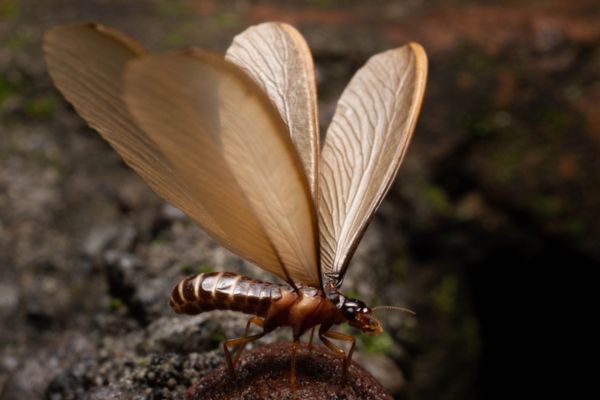
Identifying winged termites is a crucial first step in determining the appropriate treatment plan. Termite swarmers, or winged termites, are the adult reproductives of a colony. They typically emerge in spring when temperatures reach around 70 degrees Fahrenheit.
Because termite swarmers only appear briefly during a swarm, you may not see them unless you happen to catch them at the right moment. If you're unsure whether you're seeing flying ants or winged termites, contact your local Terminix branch for an inspection.
Signs of flying termites (swarmers):
Swarmers often appear around light fixtures, windows, and other bright areas.
Discarded wings near window sills, door frames, or light sources after a swarm.
Visible mud tubes or clay-like tunnels along walls, foundations, or crawl spaces.
Mating aggregations, also known as “hill-topping,” around trees, bushes, chimneys, and other tall or prominent structures.
Flying ants typically appear in late spring and early summer, often swarming only at night, making them more difficult to spot.
Unlike termites, flying ants do not cause structural damage. They do not feed on wood and are more of a nuisance than a threat.
Why do flying ants and termites suddenly appear in a house?
Flying ants and termites can seem like they appear out of nowhere, but there are specific reasons behind their sudden arrival in your home:
They enter through small openings: Both pests can slip inside through gaps around windows and doors, cracks in foundations, vents, or any other tiny opening that leads indoors. Termites may also enter from underground through mud tubes.
Their appearance feels sudden because swarms occur quickly: Swarming is a brief, coordinated event where reproductive termites or ants leave their colony to mate and establish new ones. These swarms often last only a few minutes to an hour, so if you happen to be home during that short window, it can feel like they appeared all at once.
Weather and seasonal changes trigger activity: Warm temperatures, rising humidity, and recent rainfall can all trigger swarming. For many species, the first warm days of spring or early summer signal it's time to swarm.
Indoor swarms may indicate an established infestation: If swarmers emerge inside your home, it could mean a nest is already present in your walls, basement, or crawl space.
What should you do if you have termites or flying ants?
If you notice flying insects, contact your local Terminix branch for help, especially if they're swarming. Our experts can accurately identify termites vs. flying ants and recommend the right treatment plan.
To help prevent future activity:
Seal entry points around windows, doors, siding, and utility lines.
Reduce moisture by fixing leaks, improving drainage, and using dehumidifiers in areas prone to dampness.
Keep mulch from touching the foundation of the home.
Store firewood at least 10 feet away from the home.
Trim vegetation so shrubs and branches don't touch your home's exterior.
Keep your home clean and food tightly sealed to avoid attracting ants.
Scheduling routine professional inspections with Terminix to catch termite activity early.
Whether you're dealing with flying ants or termites, our professionals can help protect your home and prevent costly damage. Schedule your free termite inspection or ant inspection today.
Sign up for a free home protection guide!
What is your address?
Your customized price is based on location.
Oops, we detected that your session has expired after a period of inactivity. Please enter your address to start again!
Sorry, we were unable to verify your service address . If this is the correct address, please continue as is to resubmit, otherwise you may edit your address and try again.