Education
What is a huntsman spider?
Content Updated: July 20th, 2026
Key takeaways
- The huntsman spider's size can reach a leg span of up to six inches, while the giant huntsman spider is considered the world's largest spider by leg span.
- While a huntsman spider bite can happen if the spider is provoked or cornered, their venom is not highly toxic to humans.
- Instead of spinning webs, they rely on incredible speed and agility to hunt down household pests like cockroaches and moths.
- Sealing cracks, reducing clutter, and contacting Terminix for professional pest management are the best ways to keep them out.
Jump to section:
How to identify a huntsman spider
How big can huntsman spiders get?
Where are huntsman spiders found?
The life cycle of the huntsman spider
Preventing huntsman spiders in your home
Huntsman spiders are giant, flat spiders with very long legs. They are often found in warm climates, crevices, under rocks, or inside homes. These spiders are known for using their speed and agility to capture prey, including insects, small lizards, and even birds. While they can be intimidating to look at, huntsman spiders are generally harmless to humans. If you are experiencing signs of spiders in your home, securing professional spider control is the most effective way to restore peace of mind.
How to identify a huntsman spider
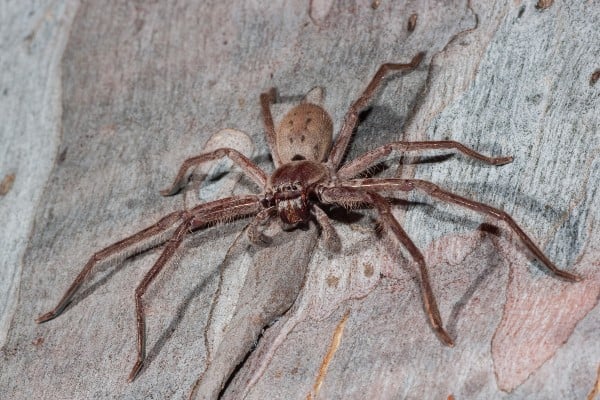
With leg spans of up to six inches, a huntsman spider is one of the larger spider species humans may come across. Here are some notable characters to help you identify them:
- Size: They are known for their exceptionally large leg spans, frequently averaging up to six inches across.
- Color: They typically exhibit muted colors, ranging from various shades of brown, tan, and gray, to blend into trees and rocky environments.
- Body and markings: They have distinctly flat bodies that allow them to squeeze into narrow cracks, often featuring dark or mottled bands on their bodies and legs.
- Legs: Their legs are long, hairy, and extend forward and outward in a crab-like fashion, which is why they are sometimes called giant crab spiders.
- Eyes: They have eight eyes arranged in two horizontal rows of four, giving them excellent vision for hunting.
How big can huntsman spiders get?
The average huntsman spider size features a body length of about one inch, with a leg span reaching up to six inches. However, the giant huntsman spider (Heteropoda maxima) is significantly larger. Discovered in Laos, the giant huntsman spider is recognized as the world's largest spider by leg span, boasting up to 12 inches (roughly the size of a dinner plate).
Where are huntsman spiders found?
These spiders are found in warm climates worldwide, often thriving in Australia, Asia, Africa, and the Americas. In the United States, huntsman spiders can be found in states such as Florida and Texas, where warm climates provide suitable habitats. Within homes, they tend to gravitate towards less-frequented areas such as under furniture, in wall cracks, or among household clutter.
Do huntsman spiders bite?
Yes, huntsman spiders can bite, but it is a relatively rare occurrence. Experiencing a bite from a huntsman spider usually results in minimal discomfort, as these spiders are hesitant to bite humans unless disturbed. Although they carry venom, it is typically only used to immobilize their prey rather than to defend against humans, making them generally harmless to us. Individuals may notice mild swelling, pain, or redness at the huntsman spider bite site. It’s best to seek medical attention from a professional if you think you have been bitten.
What do huntsman spiders eat?
Huntsman spiders are opportunistic predators, feeding on a diverse diet that includes caterpillars, moths, cockroaches, and other spiders. Unlike web-spinning spiders, they are active hunters, relying on their speed and agility to capture prey. These arachnids can move at impressive speeds, often surprising unsuspecting insects. Once they have cornered their target, they inject it with a paralyzing venom, ensuring a quick and efficient meal.
The life cycle of the huntsman spider
The life cycle of these spiders begins with the female carefully laying and protecting eggs in a silky sac, usually in a secure, hidden spot. After a period of careful nurturing, spiderlings hatch. As they mature, these young spiders experience multiple molts, shedding their exoskeletons to accommodate their growing bodies. Throughout birth to adulthood, they develop hunting skills and the ability to outmaneuver predators, becoming masters of their surroundings. Once they reach maturity, they can reproduce.
Preventing huntsman spiders in your home
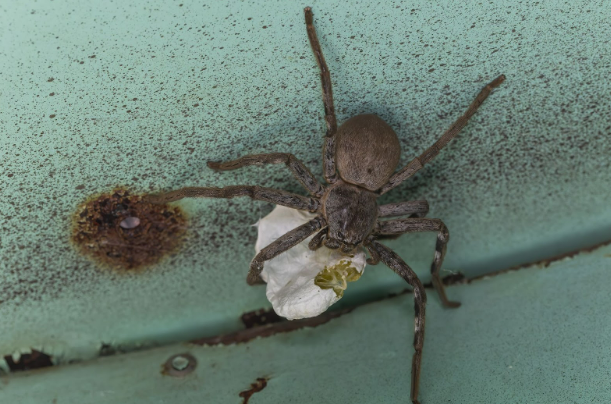
Although huntsman spiders are generally harmless to humans, their unexpected appearance can be startling. To prevent unwanted encounters, it's essential to take proactive prevention steps. Regularly inspect your home for cracks or openings, seal them, and minimize clutter.
For a more thorough solution than DIY, trust Terminix experts to protect your home from spiders and other pests. To learn more about what to expect for professional spider control costs, reach out to us today. For year-round protection from up to 39 household pests, including spiders, try one of our PestFree365 plans!1