Home Garden
Do spiders hibernate? Winter survival and indoor activity
Content updated: June 30, 2026
Key takeaways
- Spiders in winter often seek shelter in protected locations, including homes, basements, attics, and other undisturbed areas.
- While spiders do not hibernate, many species enter a dormant state called diapause that helps them conserve energy during cold weather.
- Some spider species can survive freezing temperatures by producing natural antifreeze compounds through a process known as cold-hardening.
- Not all spiders survive winter, and some outdoor species leave behind eggs that hatch in the spring.
- Brown recluse spiders can survive the winter indoors and may remain active throughout the season.
Jump to section:
Where do spiders go in the winter?
How spiders survive cold temperatures
A dangerous exception: The brown recluse spider
As temperatures drop and winter approaches, spiders often seem to disappear. While some species become less active outdoors, many survive the colder months by seeking shelter or entering a dormant state. Learn where spiders go in winter, how they survive cold temperatures, and whether they hibernate.
Where do spiders go in the winter?
Common house spiders, including the American house spider and the long-bodied cellar spider, typically have a lifespan of about one to two years. As it gets cooler, they seek warmth and shelter, often finding their way into our homes through small cracks, gaps around windows and doors. Once inside, they hide in quiet, undisturbed areas like basements, attics, or behind furniture, where they can reproduce.
While no one enjoys an abundance of spiders, spiders in the winter and year-round can actually be beneficial. They're natural pest controllers, diligently munching on unwanted insects like flies and mosquitoes that might try to sneak into your space.
How spiders survive cold temperatures
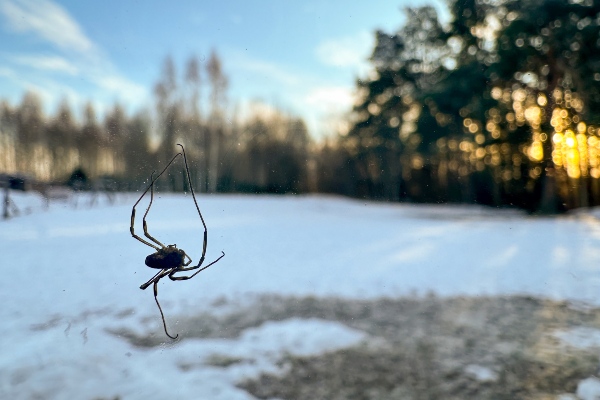
As the seasons shift and temperatures plummet below 50°F, most spiders become significantly less active, entering a survival mode to cope with the cold. While spiders don't hibernate, many enter a dormant state called diapause, or overwintering, where their metabolism slows to conserve energy.
Some spider species, like certain wolf spiders, even produce natural antifreeze compounds through cold-hardening, allowing them to survive surprisingly low temperatures, sometimes even below freezing. However, not all spiders are so tough; many outdoor species, like some orb weavers, die with the cold and leave behind eggs to hatch in the spring. So, while some spiders die in the winter, not all species do.
A dangerous exception: The brown recluse spider
The brown recluse spider, known for its violin-shaped mark, is quite resilient. Unlike some species, these spiders survive the winter by finding sheltered spots inside your home, like basements, attics, cluttered closets, or even stored boxes. They can enter diapause and potentially remain active in your home all winter. If you think a brown recluse has bitten you, consult a medical professional. While severe reactions are rare, their venom can sometimes cause a lesion needing attention.
Whatever the time of year, if you’re dealing with a spider infestation and need spider control, let Terminix help!