Home Garden
Common house spiders: identification and facts
Content updated: June 18, 2026
Key takeaways
- Common house spiders and domestic house spiders are generally harmless and help control insect populations indoors.
- Domestic house spiders are typically larger than common house spiders and prefer quiet areas such as garages, basements, and attics.
- House spiders are often found in dark, secluded spaces, including corners, crevices, and areas beneath furniture.
- Most house spiders are not dangerous, although black widows and brown recluse spiders can bite when threatened.
- Tips for preventing spiders include sealing entry points, repairing screens, reducing clutter, and avoiding floor storage of items.
Jump to section:
What do house spiders look like?
How do you know if it’s a house spider?
The common house spider and domestic house spider are two of the most frequently encountered spiders in homes. While they may look similar, these spiders have different habits and preferred hiding places. Learn how to identify common house spiders, where they live, whether a house spider can bite, and if house spiders pose a risk to people.
What do house spiders look like?
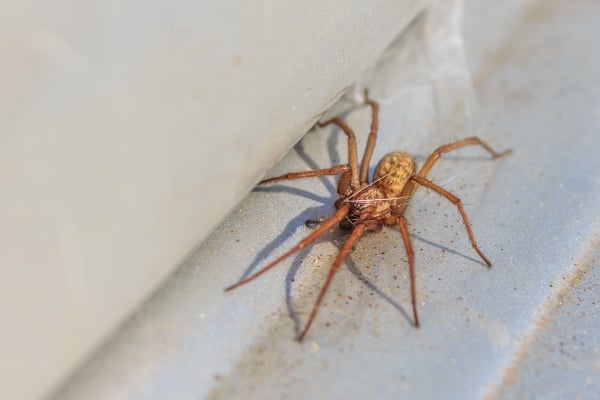
The most common types of spiders found in homes are domestic and common house spiders. Domestic spiders are larger, reaching up to two inches in leg span, with a brown body and a lighter abdomen often marked with a herringbone pattern. They prefer undisturbed areas and build messy sheetwebs in garages, basements, or attics. Common spiders are smaller, nickel-sized, with brown or gray bodies and darker legs. They're more likely to be found in living areas and construct tangled webs with retreats in corners, under furniture, or near windows.

Where do house spiders live?
House spiders are adaptable pests, capable of thriving in various locations worldwide. Typically, they favor temperate environments where they can avoid extreme cold or heat, making houses in many regions perfect havens for them. Within the home, they tend to gravitate towards dark and secluded areas such as the corners and crevices of walls and ceilings or the spaces underneath furniture. Basements, attics, and garages are prime real estate for these arachnids, as such areas usually offer the quiet and shadowy environments they prefer for web construction and hunting.
Domestic house spiders
Domestic spiders are tiny to medium-sized and exhibit a variety of brown or grayish hues. They are web builders, preferring to inhabit dark, secluded areas in homes where they can craft their webs undisturbed.
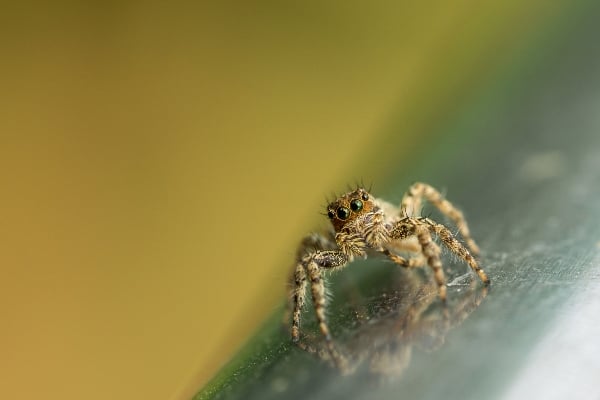
Jumping spider
Jumping spiders have vibrant colors and large, forward-facing eyes. They hunt by relying on their excellent jumping ability to pounce on prey rather than spinning webs.
The hobo spider
Hobo spiders are web-building spiders constructing funnel-shaped webs in dark, moist environments to catch their prey. They are not known for being aggressive but can be found frequently in homes.
How do you know if it’s a house spider?
What gives a house spider its name is its adaptation to indoor environments. Unlike many other spiders that may prefer outdoor habitats, these spiders thrive inside homes in dark, secluded areas. Physically, these spiders are usually small to medium in size and can be different shades of brown to grayish, sometimes with distinctive markings on their abdomens.

Are house spiders dangerous?
Not all house spiders pose a danger to humans; most are harmless and can even be beneficial by controlling insect populations within our homes. However, two notable exceptions are considered dangerous: the black widow and the brown recluse spiders. Both of these species can bite humans when threatened.
The black widow is easily identifiable by its shiny black body and the distinctive red hourglass shape on its abdomen. Brown recluse spiders, on the other hand, are often identified by the violin-shaped marking on their abdomen, leading to their nickname "fiddleback" spiders. If you suspect a spider has bitten you, or are exhibiting symptoms, seeking medical treatment from a professional is essential.
Tips for house spider control
To prevent dangerous house spiders from entering your home, it's essential to seal cracks and crevices in walls, windows, and doors, ensuring any potential entryways are blocked. You can also help prevent spiders by regularly repairing window and vent screens, decluttering, and avoiding floor storage of items. If you encounter dangerous species like the black widow or brown recluse or an infestation that seems beyond your control, you should consider hiring a professional. Start protecting your home from spiders today with our spider control services, or try our Terminix PestFree365 pest control plan for year-round protection against common house spiders and 24 other pests. 1
1Coverage includes: "House" Ants, Bird Mites, Indoor Ticks, Cockroaches, Carpet Beetles, Fabric Moths, Overwintering Insects, Ground Beetles, Centipedes, Crickets, Earwigs, Firebrats, Millipedes, Clover Mites, Pillbugs/Sowbugs, Psocids, Scorpions, Silverfish, Paper Wasps, Springtails, Spiders, Stored Product Beetles, Stored Product Moths, Mice, and Rats.