
What does a dead mouse smell like?
Content Updated: July 28, 2026
Key takeaways:
A dead mouse smells like an intense odor resembling rotten eggs and decaying meat that peaks within three to five days.
Pinpoint a carcass by following strong odors, checking vents or wall stains, and observing fly or beetle clusters in the area.
Always wear rubber gloves and a protective mask during carcass removal, double-bag the rodent, and sanitize surfaces using enzymatic cleaners.
Prevent lingering odors by sealing entry points and using traps rather than poison baits, which cause rodents to die inside walls.
Professional pest control technicians can identify hidden entry points, address active rodent issues, and help keep your home protected.
Jump to section:
Mice are destructive little rodents who can cause big misery, especially when they end up dying in the walls of your home or inside your car. It's amazing how one tiny animal can make such a huge stink. If you suspect a deceased rodent in your home, professional mice control can help identify and get rid of the dead mouse smell.

What a dead mouse smells like
So, what does a dead mouse smell like? For most people, the smell of a dead mouse is immediately recognizable by its sheer intensity. It is often described as a combination of rotten eggs, spoiled cabbage, decaying meat, and stale ammonia. Unlike the smell of forgotten trash or spoiled meat in the fridge, a dead mouse's smell penetrates nearby materials (drywall, insulation, wood) and lingers constantly. If opening a window or taking out the garbage doesn't reduce the stench within a few hours, you are likely dealing with a decaying mouse.
The odor is caused by a mixture of sulfur dioxide, methane, hydrogen sulfide, and other gases produced as tissue decomposes. In the first 24-48 hours, the odor begins as a faint, stale, sour smell. After three to five days, the stench reaches its peak, filling the room or spreading through HVAC vents. Factors like high humidity and moisture can slow down the drying process and intensify decomposition, making the smell of a dead mouse stronger and longer-lasting.
Identifying dead mouse smell vs. other dead rodents
Unfortunately, decomposing tissue releases similar chemical compounds across all mammals. So, if you’re experiencing a foul odor in your home, it’s hard to say with certainty that the culprit is a mouse without visual confirmation. However, you can look at context clues to figure out what kind of critter you may be dealing with.
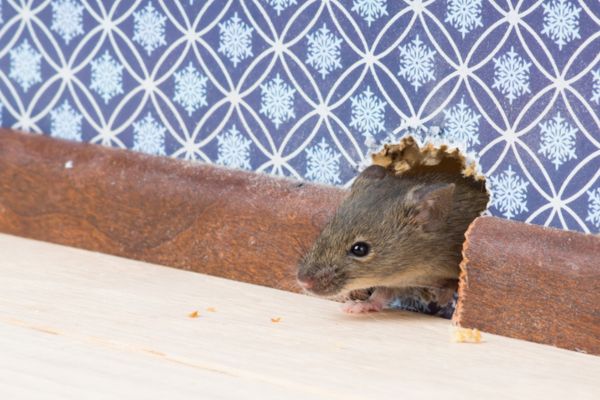
Both mice and rats prefer small, dark spaces that offer a place to hide. Mice love to make nests and will shred materials, especially fabrics, paper, and insulation, to line them. They may also burrow into upholstered furniture and claim your couch as their own before eventually dying there.
To narrow down the suspect, check for signs of mice or other wildlife in surrounding areas:
Droppings: Examine any droppings in your cupboards, drawers, attic, or crawl space. Mice feces are tiny, roughly one-quarter of an inch long, and pointed at each end. Rat feces are significantly larger, typically three-quarters of an inch long and blunt.
Odor strength: Because rats are much larger than mice, a dead rat's smell is typically far more overwhelming and lasts significantly longer than a single mouse carcass.
How to get rid of that dead mouse smell
In short: find the source, remove it, and thoroughly sanitize the area.
Find the dead mouse
Locating a dead mouse isn't always easy, but you can narrow down the search zone by watching for key indicators:
Follow your nose: Move from room to room, sniffing near baseboards, outlets, and vents to find where the odor is strongest.
Look for stains: As a carcass decomposes, fluid may seep through drywall, ceiling tiles, or wood floors.
Watch insect activity: Death attracts pests. If you notice a sudden cluster of houseflies, blowflies, maggots, or carpet beetles gathering near a specific section of a wall or floorboard, the carcass is likely directly behind it.
Check common hideouts: Inside air ducts, behind kitchen appliances, in attic insulation, around water heaters, and under cabinets.
Remove the dead mouse
Once the carcass is found, removal may not be a quick fix, and it is recommended to reach out to a professional mouse control expert for help. Unless you get lucky and the mouse expires in an easy-to-reach area, dead mouse removal often means cutting through walls or floors. In some situations, you can't get to the dead rodent at all and have to settle for drilling holes in walls and applying odor-neutralizing chemicals or heavy-duty deodorants.
Breathing in the dead mouse smell for a short period is generally not toxic; however, the carcass itself and its droppings carry pathogens (such as Hantavirus, Leptospirosis, and Salmonella).
If you are able to access the carcass, take strict safety precautions:
Wear protective gear: Put on rubber or nitrile gloves and a tight-fitting mask (such as an N95).
Avoid stirring up dust: Do not sweep or vacuum the area around a carcass, as this can kick harmful particles into the air.
Double-bag the carcass: Carefully pick up the mouse, seal it tightly in a plastic bag, and place that bag inside a second sealed trash bag before disposing of it in an outdoor trash bin.
Clean yourself up: Remove gloves, discard them, and thoroughly wash your hands with soap and hot water immediately.
Sanitize and deodorize
Once the carcass is removed, it’s important to remove remaining pathogens and lingering odor molecules:
Disinfect the surface: Spray the area thoroughly with a disinfectant or a diluted bleach solution. Let it sit for 10 minutes before wiping it up with disposable paper towels.
Use enzymatic cleaners: Standard household cleaners only mask scents. Enzymatic cleaners break down the organic compounds, causing the smell.
Absorb lingering odors: Place bowls of baking soda, activated charcoal bags, or ground coffee in the affected room to absorb airborne odors.
Increase air ventilation: Open windows, run exhaust fans, and place high-powered floor fans in the room to flush out trapped gases.
How can you prevent dead mouse odor?
Stopping mice and rats from living comfortably in your home is the best way to prevent them from smelling up your house. Follow these simple steps to get rid of the dead mouse smell in your home before it happens.
Avoid poison baits: Poison baits can be effective at killing rodents, but they often cause animals to die deep inside inaccessible wall voids or ceiling spaces. Contrary to popular belief, rodents do not ingest poison and then magically exit your house to search for water, nor does poison cause an animal to instantly dry up without smelling.
Use traps instead: Whether you choose snap traps or live-catch options, trapping gives you complete control over where the animal ends up, making disposal straightforward and keeping carcasses out of your walls.
Seal entry points: Mice are extraordinarily limber and can squeeze through holes as small as a dime. Inspect your foundation, siding, rooflines, and utility entry points. Fill gaps with steel wool or wire mesh, then seal with silicone caulk or expanding foam. Fix leaking pipes and eliminate indoor standing water sources.
Professional assistance: The most reliable protection against dead mouse smells is stopping an infestation before it starts. Schedule a free mouse inspection with Terminix to identify potential access points, eliminate active infestations, and keep your home pest-free.