Home Garden
Understanding the different types of mouse traps
Content Updated: August 12, 2026
Key takeaways
- The best mouse trap for your home depends on the size of the infestation, where mice are active, and whether you prefer a trap that captures or kills mice.
- Live traps, also called box traps, capture mice without harming them but require careful handling and relocation.
- Snap traps kill mice quickly but only catch one mouse at a time and can pose a risk to pets and children.
- Glue traps, electronic traps, and no-touch traps each have unique advantages and drawbacks, including cost, maintenance, and humane considerations.
- DIY mouse traps may help with individual mice, but larger infestations often require professional rodent control.
Jump to section:
So, how effective are these mouse traps?
Get professional help for your mouse problem
Choosing the best mouse trap depends on your situation, including the size of the infestation, where mice are active, and your preferences for capture or removal. From live traps, box traps, and snap traps to electronic options, each type has advantages and drawbacks. Learn how different mouse traps work and what to consider when deciding which option is right for your home.
Live or box traps
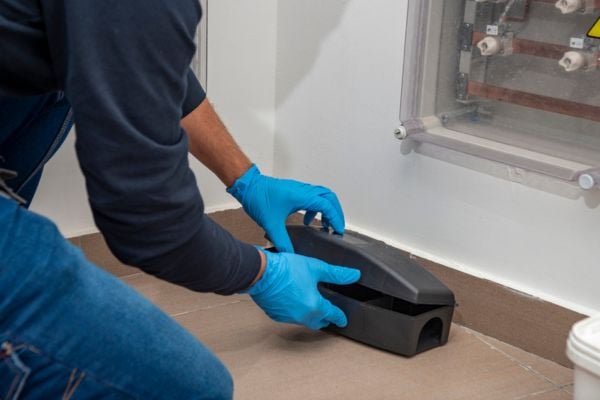
Live or box traps are devices designed to capture mice without causing them harm, allowing for their safe relocation. These mouse traps typically consist of a metal or plastic enclosure with a door that shuts when the animal enters, lured by bait placed inside. While these traps are considered humane options, they do have some drawbacks. For example, releasing the mice can be difficult. You’d want to wear gloves and be careful to make sure you don’t get scratched or bitten, as these pests are carriers of various diseases. Additionally, you may not want to release mice into your yard. There’s no guarantee that the mice won’t return to your home.
Snap traps
Snap traps are one of the most common methods for catching mice. These traps consist of a spring-loaded mechanism that is triggered when a mouse takes the bait placed on the trap. One of the most popular baits, believe it or not, is actually peanut butter instead of cheese. Once triggered, the powerful snap quickly kills the mouse.
Although they are effective, there are some risks to using snap traps. Pets and children can accidentally come into contact with the mouse trap, leading to potential injuries. Additionally, while snap traps are effective for individual catches, they may not be suitable for larger infestations, as they can only capture one mouse at a time. There’s also the concern of dealing with dead mice, which can be an unpleasant experience for homeowners.
Glue traps
Glue traps are a type of mouse trap that utilizes a sticky adhesive to capture mice when they come into contact with it. These traps are typically flat boards coated with strong glue, making them effective at stopping mice as they attempt to cross over them. Despite their simplicity, these may not be the best mouse traps for your home. One significant concern is the potential for inhumane treatment of captured mice, as they may suffer for an extended period before dying. Additionally, they can also inadvertently capture non-target animals, including pets.
Electronic traps
Electronic mouse traps use a combination of bait and advanced sensor technology to lure mice inside. Once a mouse enters the trap, the sensors detect its presence and deliver a quick, high-voltage shock to ensure a swift and humane kill. Many electronic traps are equipped with safety features, making them a safer option, especially if there are pets or children in the vicinity.
However, these mouse traps can be more expensive upfront compared to traditional snap traps. Maintenance and cleaning can also be a hassle, as the trap needs to be emptied and sanitized regularly to prevent odors.
No-touch or no-view traps
No-touch or no-view traps work as their name suggests: In a way that you don’t have to see or touch the dead mouse. These types of mouse traps will usually completely enclose any dead mice that the trap catches, so all you have to do is dispose of the trap.
Despite their benefits, there are still some drawbacks to consider. There is a potential for a delayed response in checking the traps, which might lead to the trapped pests suffering for longer periods. Additionally, the initial cost of these traps can be higher compared to traditional traps.

So, how effective are these mouse traps?
When it comes to mouse traps, there’s no guarantee they will work. Their success largely depends on the quantity deployed, the type of trap used, and whether they are set up properly. Some mice may learn to avoid traps over time. While some mice may exhibit cautious behavior around traps, many are opportunistic feeders and will eventually go after the bait, especially if food sources are limited.
Get professional help for your mouse problem
Dealing with mice can be frustrating, and DIY traps often only scratch the surface of an infestation. Professionals can determine the best mouse trap for your home and where to place it for effective results. Unlike DIY solutions, which may only provide a temporary fix, professional services address the root causes of infestations, helping ensure long-lasting results.
If mice have invaded your home, Terminix can help. Schedule your free inspection and kick these pests out of your house.