
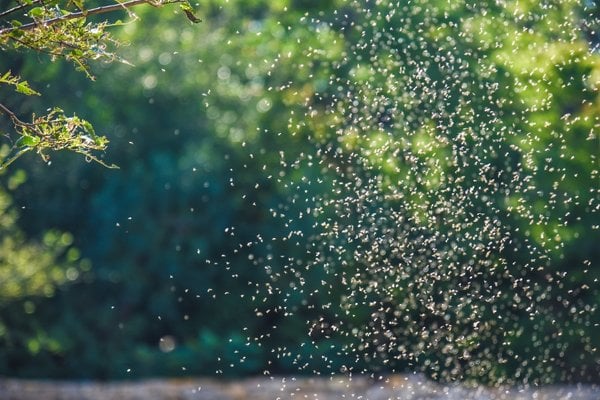
Mosquitoes are found in every U.S. state, though their activity levels can vary depending on the climate. They thrive in warm, humid environments and tend to rest in cool, shaded areas during the day. Outside, you’ll often find them in tall grass, dense shrubs, under decks, or along wooded edges. Indoors, they may hide in dark corners, closets, or basements if they find a way inside.
Mosquito identification and information
Content updated: April 2nd, 2026
Key takeaways
- Mosquitoes are small flying insects classified as parasites; females need blood to reproduce, while males feed only on nectar.
- Only female mosquitoes bite because they need blood to produce eggs, while males stick to nectar.
- Mosquitoes are drawn to carbon dioxide, body heat, sweat, certain skin bacteria, dark clothing, and movement.
- Mosquitoes love stagnant water, tall grass, and shaded spots where they can hide during the day.
- You can help reduce mosquitoes by eliminating standing water, trimming vegetation, and using professional mosquito treatments.
Jump to section:
Where do mosquitoes prefer to breed?
Why do mosquitoes bite some people more than others?
What are common types of mosquitoes?
When are mosquitoes most active?
What are mosquito bite signs and symptoms on humans?
What health risks or diseases come from mosquitoes?
How Terminix treats mosquitoes
If you’ve ever wondered why some evenings feel like a mosquito convention in your backyard, you’re not alone. These tiny pests have mastered the art of finding us. Whether it’s learning about mosquito descriptions or figuring out why they bite, teaming up with Terminix can help make your outdoor evenings more relaxing.
What are mosquitoes?
If you’ve ever wondered what a mosquito is, it’s a small flying insect classified as a parasite because females rely on blood meals to reproduce. Mosquitoes belong to the family Culicidae within the order Diptera. While they are known for biting humans and animals, they also play a role in the ecosystem as a food source for birds, fish, and other insects, making each mosquito predator an important part of the natural balance.
What do mosquitoes look like?
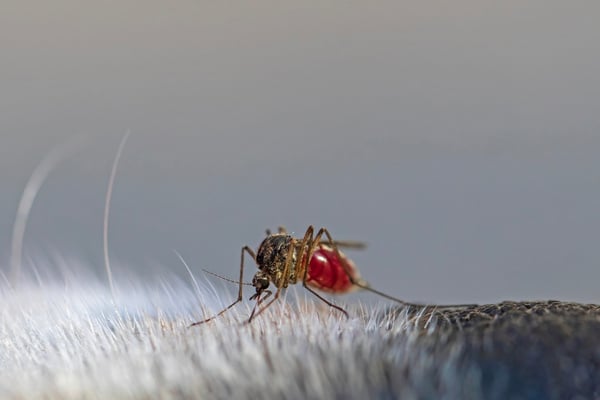
If you’re looking to identify a pesky intruder in your home, a quick mosquito description can help you tell the difference between a common fly and a biting pest. Adult mosquitoes are often muted grey or brown and can range in size from one-quarter to one-half of an inch.
These mini menaces have six legs and segmented bodies, each with a head, thorax, and abdomen. They have two clear wings that create the familiar buzzing mosquito sounds and enable agile flight. Mosquitoes also have a long, needle-like “straw” called a proboscis, which is used for feeding on nectar or, in females, blood.
What are the differences between male and female mosquitoes?
The biggest difference between male and female mosquitoes is that females can bite, while males cannot. Females require blood to develop eggs, which is why they are responsible for mosquito bites. Males often have bushier antennae, also called a proboscis, which is used for feeding, but is not strong enough to pierce the skin.
The mosquito lifecycle
The mosquito life cycle consists of four stages and can be completed in as little as one to two weeks under ideal conditions. Most adult mosquitoes live from a couple of weeks to a month, depending on species and environment. The four stages in the mosquito life cycle are:
- Egg: Laid on or near standing water
- Larva: Aquatic stage where they feed and grow
- Pupa: Transitional stage before adulthood
- Adult: Flying, feeding, and reproducing stage
Where do mosquitoes prefer to breed?
Mosquitoes prefer to breed in stagnant or slow-moving water sources. Common breeding grounds may include ponds, marshes, and ditches. They may also deposit eggs in outdoor spaces around your home, utilizing artificial containers such as flowerpots, birdbaths, and clogged gutters. Mosquitoes only need a tablespoon of water to breed.
Where do mosquitoes live?
What attracts mosquitoes?
Knowing what attracts mosquitoes can help reduce your exposure to them. These tiny terrors are drawn to:
- Standing water for breeding
- Carbon dioxide from breathing
- Body heat and perspiration
- Certain skin bacteria and body odors
- Dark clothing and movement
Some scents, such as citronella, peppermint, eucalyptus, and lavender, are often used in home remedies for mosquitoes. While certain plant-based oils can briefly help repel mosquitoes, their effectiveness is usually limited and short-lived compared to professional mosquito treatments.
Why do mosquitoes bite some people more than others?
Not everyone is equally attractive to mosquitoes. Factors like blood type, body temperature, carbon dioxide output, and even the bacteria on your skin influence mosquito behavior. People who are active outdoors or sweating may also be more likely to be targeted.
How to keep mosquitoes away?
Effective mosquito prevention starts with reducing breeding areas and limiting exposure. Try following these tips to help prevent these unwanted guests:
- Eliminate any unnecessary containers in your yard that could hold water.
- Repair cracks and gaps in your septic tank.
- Cover all water storage containers tightly.
- Trim dense vegetation and keep the grass cut short.
To help control mosquitoes inside your house, keep doors and windows closed unless they have a screen, and use air conditioning whenever possible.
What are common types of mosquitoes?
There are over 3,500 types of mosquitoes around the world, but the most common species in the United States include:
When are mosquitoes most active?
Peak mosquito season typically runs from spring through early fall, depending on the climate. Most mosquitoes are active at dawn and dusk, when temperatures are cooler and humidity is higher. However, some species, like the Asian Tiger mosquito, are aggressive daytime biters and can remain active throughout the day, especially in shaded areas.
What do mosquitoes eat?
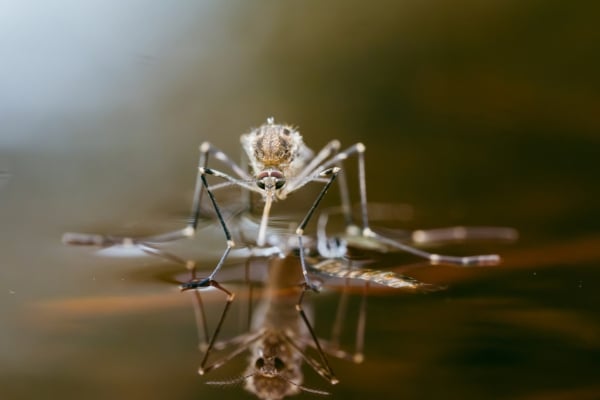
The mosquito diet varies by gender and life stage. In their larval stage, mosquitoes feed on organic matter, algae, and microorganisms in water, which helps them grow quickly. As adults, males feed only on nectar and plant sugars for energy. Female mosquitoes also rely on nectar but require blood meals to develop their eggs. They do not feed on blood for survival, but for reproduction.
What are mosquito bite signs and symptoms on humans?
Most mosquito bites cause mild skin reactions due to the body’s response to mosquito saliva. Common signs and symptoms of a mosquito bite include:
- Small, raised, itchy bumps on the skin
- Redness or slight swelling around the bite area
- A firm or puffy welt that appears shortly after being bitten
- Increased itching or irritation over time
In some cases, people may experience a mosquito bite allergy, which can lead to larger welts, more intense swelling, or prolonged itching that lasts several days.
What health risks or diseases come from mosquitoes?
Mosquitoes can transmit pathogens through bites, making them a serious public health concern. These mosquito-borne diseases include West Nile virus and Eastern Equine Encephalitis (Triple E). Transmission occurs when an infected mosquito feeds on a host and transmits the pathogen through its saliva. In addition to disease risks, repeated mosquito bites can lead to allergic reactions or secondary skin infections from scratching.
How Terminix treats mosquitoes
Mosquitoes can quickly take over your outdoor spaces, making it difficult to enjoy your yard. Terminix Mosquito Control targets both adult mosquitoes and their breeding areas, such as standing water, shaded landscaping, and dense foliage. Our technicians apply targeted treatments that help reduce current populations while disrupting the mosquito life cycle to help prevent new mosquitoes from emerging.
.jpg?h=400&w=600&rev=e0958623e5aa491489d05bf791664267&hash=B7EB21D58CEE9A33AAD0F88C0727AD5D)
Protect your yard with our Mosquito Repellent System
In addition to our standard mosquito treatments, we separately offer the Mosquito Repellent System, which provides continuous, long-lasting protection to serviced areas by releasing a mosquito-repelling barrier into the air. This system:
Repels mosquitoes in outdoor living spaces.
Covers large areas with multiple repellers for maximum protection.
Includes expert installation and maintenance for optimal results.

Bundle mosquito and tick control to save
For comprehensive pest control, we also offer a combined mosquito and tick treatment, providing dual protection for your family and pets. Our targeted treatments:
Eliminate adult mosquitoes and ticks while disrupting their life cycles.
Focus on key areas like tall grass, mulch beds, wooded edges, and standing water.
Include expert recommendations to reduce breeding and resting sites.