Raccoons Opossums and Wildlife
Where and how do squirrels build their nests?
Content Updated: August 27, 2026
Key takeaways:
Tree squirrels and flying squirrels typically live in forest canopies, nesting in hollow trees or abandoned woodpecker nests.
Ground squirrels and chipmunks live in underground burrows with tunnel systems that provide shelter and places to raise their young.
Squirrels make nests from leaves, twigs, and other natural materials when hollow trees or other nesting sites aren't available.
In urban areas, squirrels may enter attics, basements, chimneys, or walls to find shelter and build nests.
Removing food sources and blocking access points can help prevent squirrels from entering your home.
Jump to section:
Squirrels can live in a variety of habitats, from trees and underground burrows to urban areas and even parts of your home. Where squirrels live depends largely on the species, with tree and flying squirrels typically living above ground while ground squirrels and chipmunks prefer burrows. Learn more about squirrel habitats, how squirrels make nests, and what to do if one enters your home.
The different areas squirrels live
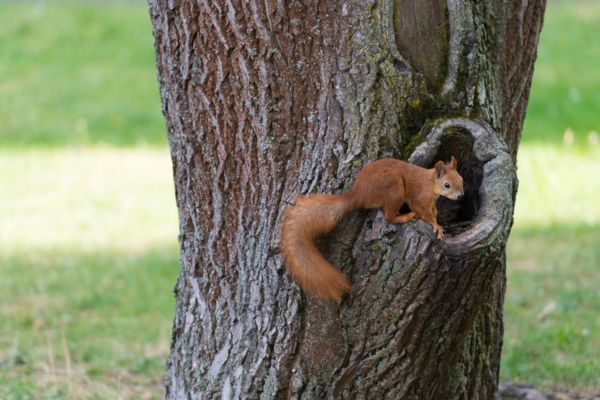
Tree squirrels and flying squirrels primarily make their homes in the high canopies of forests, where they nest in hollowed trees or abandoned woodpecker nests. These species include red squirrels, Eastern gray squirrels, Eastern fox squirrels, Douglas squirrels, and Western gray squirrels. In contrast, ground squirrels and chipmunks prefer to burrow underground, constructing intricate tunnel systems to raise their young and hibernate during colder months. These squirrel habitats typically feature multiple entrances and can be found in open fields, meadows, and even urban backyards. Urban areas also provide alternative shelter for squirrels, with many finding their way into attics, basements, or chimneys of homes, where they can create nests in quiet, undisturbed spaces.
Do all squirrels live in nests?
Tree squirrels and flying squirrels typically construct nests in hollowed trees or utilize abandoned woodpecker nests. When those natural sites are not available, they may create nests in nesting boxes or directly on trees. Squirrel nests are typically constructed from leaves, twigs, and other natural materials, offering insulation and protection for the young. In some cases, a female squirrel may seek out a nest site inside human structures such as attics, chimneys, or walls, especially when natural options are scarce. On the other hand, chipmunks and ground squirrels opt for a different approach, building burrows where they raise their young. A burrow generally features at least one main entrance and exit, although the exact number can vary by species. In urban settings, both ground squirrels and chipmunks can find their way into homes through basements, foundation cracks, or chimneys.

What should I do if a squirrel enters my home?
Unfortunately, squirrels don't always stay outside. Squirrels commonly enter attics, basements, and even living spaces, often seeking shelter or food. Removing food sources and blocking access points can help prevent further intrusions.
If a squirrel finds its way inside of your home – Terminix can help. Our wildlife control and exclusion services can help safely remove squirrels from your home and prevent them from coming back. Schedule your free inspection today!