Raccoons Opossums and Wildlife
Understanding what a skunk eats in the wild and around homes
Content updated: September 17, 2026
Key takeaways
- Skunks eat a varied diet that changes with the seasons, relying primarily on insects in spring and summer and shifting toward small mammals, carrion, and bird eggs in fall and winter.
- Skunks are scavengers and may be attracted to garbage, pet food, birdseed, and food growing in gardens.
- To help prevent skunks around your home, secure trash and compost bins, store pet food indoors, clean up spilled birdseed, and seal gaps under decks and sheds.
- For severe skunk infestations, professional wildlife control may be needed.
Jump to section:
Skunks are opportunistic feeders whose diet changes based on the season, location, and available food sources. In the wild, they eat both plant and animal matter, while skunks around homes may also eat food scraps or trash. Learn more about skunk eating habits, how their diet changes throughout the year, and how to help prevent a skunk infestation around your home.
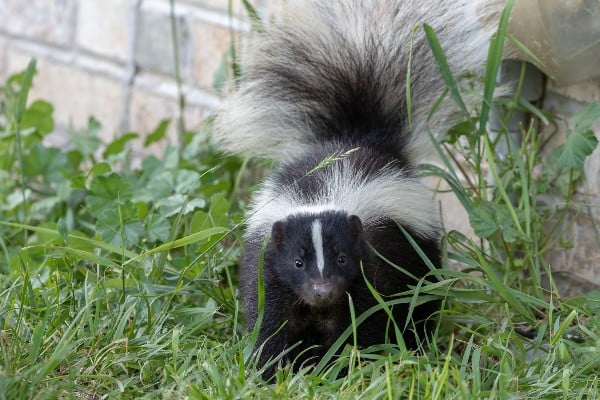
A skunk’s diet is not too particular, and much of what it eats depends on what it can catch. Skunks have a body that helps them find their food. They have five long claws on their front and back feet, enabling them to dig holes or climb trees. Striped skunks have longer front claws curled in to help them dig for food in the ground. Both striped and spotted skunks have 34 teeth, including four canine teeth, to help them chew through food. But what does a skunk eat?
What do skunks eat?
A skunk’s diet varies depending on the season and location. During spring and summer, their primary food source is insects, such as beetles, crickets, grasshoppers, and larvae. They also consume fruits, berries, and nuts. In autumn and winter, a skunk’s diet shifts towards small mammals like mice, voles, and shrews, as well as carrion and bird eggs. Skunks like to eat human food sources, including pet food, birdseed, and garbage. Their diet varies significantly by location due to the different available food sources.
Will skunks eat your trash?
Skunks are notorious scavengers and can often rummage through trash for food. They are particularly attracted to food scraps, pet food, and birdseed left outside. Skunks are also known to dig up gardens for plants, fruits, and vegetables. While they generally prefer to avoid confrontations, skunks will use their infamous spray as a defense mechanism if they feel threatened.
Preventing skunks at your house
Taking proactive steps can help minimize the likelihood of attracting these nocturnal scavengers to your property. Here’s a list of steps you can take to help prevent skunks from your home or yard:
- Secure trash cans and compost bins.
- Store pet food indoors.
- Clean up spilled birdseed.
- Seal up gaps under decks and sheds.
- Install motion-activated sprinklers or lights.
For more severe infestations or professional removal, contacting a wildlife control professional is always best. Terminix Wildlife Services can help safely and humanely remove skunks and prevent future infestations. Schedule an inspection to get started!