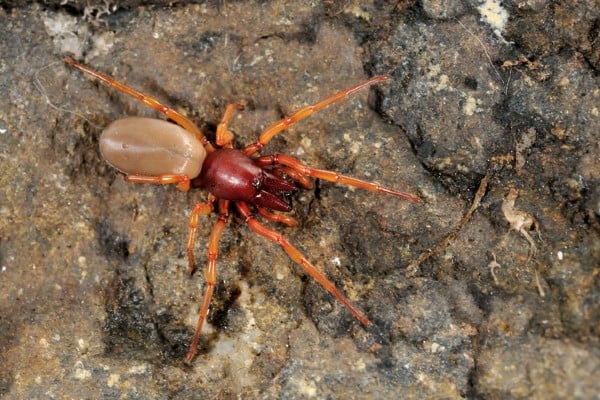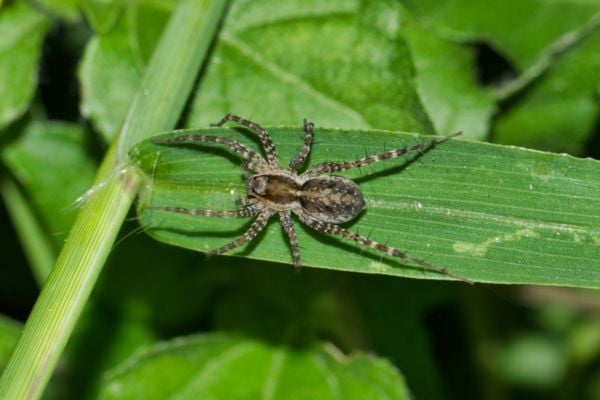
What are wolf spiders
Content Updated: July 20th, 2026
Key takeaways
- Unlike many other spiders, the wolf spider does not spin webs to catch food; instead, it actively hunts and chases down its prey on the ground.
- Wolf spiders are large, hairy, and robust arachnids with a unique three-row eye arrangement that gives them excellent night vision.
- While a wolf spider bite can cause minor pain and swelling similar to a bee sting, their venom is not dangerous to humans, and they prefer to flee rather than attack.
- Female wolf spiders carry their egg sacs attached to their bodies and transport their newly hatched spiderlings on their backs.
Jump to section:
What do wolf spiders look like?
Ecological role of wolf spiders
How to prevent wolf spiders in your home
Of the over 50,000 spider species across the globe, wolf spiders are some of the most recognizable arachnids. Unlike the spiders that spin webs to catch their prey, wolf spiders are hunters, roaming the ground at night in search of their next meal. They belong to the family Lycosidae, a name that derives from the Ancient Greek word for wolf. Known for their unique hunting techniques and eight large eyes, these spiders have a keen sense of sight and speed, making them formidable predators in the insect world.
If you happen to find these predators in your home, their presence might not be as sinister as you think. Often, wolf spiders wander indoors in search of prey or shelter, especially during colder months. So, before you panic at the sight of one, learn everything you need to know about wolf spiders and when you should call for spider control.
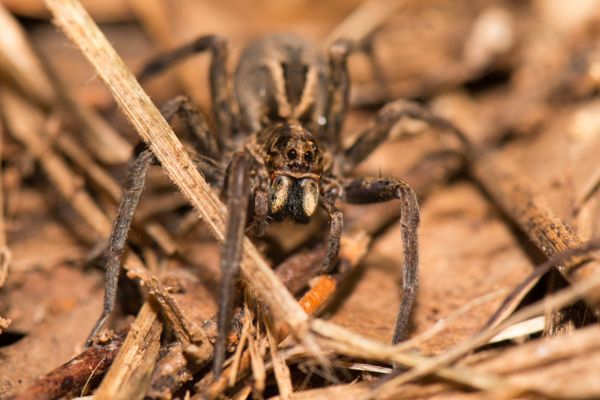
What do wolf spiders look like?
Wolf spiders have a variety of physical characteristics that set them apart.
- Size: They range from relatively small to quite large, with adult body lengths spanning from a quarter of an inch up to an inch and a half, and a leg span that can stretch even wider.
- Color: Their bodies range in color from shades of brown, grey, and tan to black. This coloration provides excellent camouflage against soil, leaf litter, and stones.
- Body and markings: They possess robust, heavily built, and hairy bodies. Many species display distinct dark stripes running down their carapace or abdomen.
- Legs: Their legs are stout, sturdy, and well-equipped for rapid running and capturing prey on foot.
- Eyes: They have eight eyes arranged in three rows: four small eyes on the bottom, two very large eyes in the middle row, and two medium eyes on the top. The large central eyes feature a reflective layer that glows under a flashlight at night.

Wolf spiders vs. grass spiders
At first glance, grass spiders and wolf spiders look incredibly similar due to their overlapping brown coloring and striped patterns. However, a few key distinctions can help you tell them apart:
- Webs: Grass spiders build large, sheet-like funnel webs in lawns and bushes to snare their prey. Wolf spiders do not build webs to capture food and are typically spotted running out in the open.
- Spinnerets: Grass spiders have long, prominent spinnerets extending out from the rear of their abdomen like a "spiky butt". Wolf spiders have much smaller, barely visible spinnerets.
- Appearance: Wolf spiders are noticeably sturdier and hairier, whereas grass spiders have a lighter, more elongated body shape.
Wolf spider behaviors
Wolf spiders are solitary, nocturnal predators that rely on their speed and keen eyesight rather than silk traps to survive. Their diet primarily consists of ground-dwelling insects, such as crickets, ants, beetles, and cockroaches. Large individuals may even consume other small spiders or minor invertebrates.
Unlike web-weaving types of spiders, wolf spiders employ dynamic hunting strategies. Some species act as active foragers, patrolling the terrain at night to run down and pounce on unsuspecting prey. Other species prefer an ambush style, waiting quietly inside or near the entrance of a burrow or leaf cluster before exploding forward to tackle passing insects.
Are wolf spiders dangerous?
Wolf spiders are venomous, a common trait among spiders used to immobilize their prey. However, their venom is not particularly harmful to humans. A wolf spider bite can result in symptoms that are similar to a bee sting, such as redness, swelling, and mild pain at the site of the bite. Severe reactions are rare, but it is important to consult a medical professional if bitten. If you suspect your pet has been bitten and is showing signs of distress, contact your veterinarian.
Wolf spiders will bite if they feel threatened or provoked, but it is highly unlikely that you’ll experience a wolf spider bite, especially in your sleep. Wolf spiders do not seek out humans and will not intentionally crawl into bed to attack you. A wolf spider bite usually only happens if the spider is accidentally trapped against your skin, stepped on, or squeezed inside a piece of clothing.
Where do wolf spiders live?
Wolf spiders are incredibly common and can be found in virtually every state across the United States. They live in several environments, including forests, gardens, grasslands, marshes, and even in mountainous regions. Their adaptability allows them to easily thrive in habitats with both warm and cold climates.
When a household wolf spider wanders indoors, it generally stays close to ground level. They prefer dark, undisturbed locations that mimic their natural outdoor shelters. You are most likely to encounter them in:
- Basements and crawlspaces
- Garages and breezeways
- Inside closets or under low furniture
- Near floor vents, baseboards, and doorways
Unlike many other spiders that reside in silk-lined retreats or webs, the wolf spider digs burrows or uses natural holes and leaf litter to build its home. These burrows serve as a hideout, a hunting ground, and a safe place for their offspring. In regions where digging is not possible due to hard or rocky soil, wolf spiders will still seek out similar natural shelters that provide camouflage and protection.
Types of wolf spiders
There are over 2,000 distinct species of wolf spiders distributed worldwide, belonging to over 120 different genera. North America alone is home to around 240 to 250 species. Some of the most common spider species belonging to the wolf spider family in the United States include:
- Carolina wolf spider (Hogna carolinensis): This is the largest wolf spider in North America, with females reaching up to almost one and a half inches in body length. They are recognizable by their light brown color and dark, mottled patterns.
- Rabid wolf spider (Rabidosa rabida): Despite its alarming name, it does not carry rabies. It is a very common species found across the eastern and central U.S., featuring two distinct, long dark stripes across its yellow-brown body.
- Thin-legged wolf spiders (Pardosa): These are much smaller wolf spiders, typically measuring under half an inch, and are frequently spotted darting across garden mulch and open rocks.
Wolf spider life cycle
The average lifespan of a wolf spider varies by gender and species. Males typically live for under a year and often die after mating in the autumn. Females, however, can live for several years, making their lifespan relatively long compared to other arachnids.
The life cycle of a wolf spider initially begins with the female laying eggs, which she carries in a silk sac attached to her spinnerets. This behavior is unique compared to the more common practice among spiders, which prefer to leave their eggs in the web. Females typically lay their eggs during the late spring or early summer months, when temperatures rise, and food becomes abundant.
Once the spiderlings hatch, they climb onto their mother's back, where they remain until they reach maturity. In terms of life span, wolf spiders can live several years, a relatively long life compared to many other spiders that may only live for a season.

Ecological role of wolf spiders
Wolf spiders can serve as vital pest-control agents. By consuming large quantities of ground-dwelling insects, they keep populations of garden pests, crop-destroying beetles, and annoying bugs in check. They also serve as an important food source for larger animals, including birds, reptiles, and small mammals.
Because they are highly beneficial predators, encountering one in your garden or yard is a sign of a healthy ecosystem. If a single wolf spider wanders into your garage or basement, it can often be left alone to handle actual pests or captured under a glass and moved back outside. However, when multiple wolf spiders begin moving indoors, it usually indicates they are following an abundant insect food source into your living spaces.
How to prevent wolf spiders in your home
Although wolf spiders are relatively harmless, that doesn't mean they need to be in your home. If you are wondering how to keep spiders out of your home, it's important to eliminate the environments that attract them and their prey.
- Seal entry points: Seal cracks and crevices in your home's foundation and exterior walls.
- Install screens: Place tight-fitting screens on windows and doors, and ensure gaps around them are properly sealed.
- Reduce clutter: Removing clutter and debris near your home can discourage wolf spiders by eliminating their hiding spots and reducing the insects they prey on.
- Manage outdoor lighting: Switch to yellow bug lights outside, as bright white lights attract the nocturnal insects that wolf spiders love to hunt.
If you spot wolf spiders lurking in and around your home, it’s time to call in the spider control experts at Terminix. With our PestFree365 plans, you can help make sure your home is protected from spiders.1
1 Service frequency will vary based on geography. Covered Pests defined in your Plan. Automatic payment sign up is required for PestFree365+. Voles and fire ants are only covered if they are in the home, we will not treat the lawn. Homes must be free of bed bugs at the initial service to qualify for coverage of bed bugs under the PestFree365+ Plan. Applies to single family, free-standing, owner-occupied homes only. Account must be in good standing. Other limitations may apply. See Plan for details.