Characteristics:
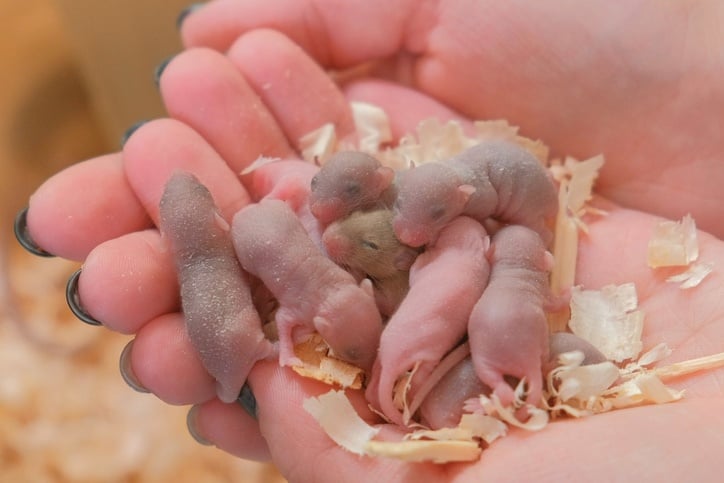
●Mice are born blind, deaf, and hairless
●Ears develop by day 4
●Fur starts growing around day 6 and fully develops by day 10
●Eyes open around day 13-14
●Nursing continues until weaning on day 21
Learn about the average mice lifespan and life cycle of these small rodents.
Content updated: August 8, 2026
Key takeaways:
While the average mice lifespan in the wild is 12 months, indoor mice can survive for 2 to 3 years.
Female house mice reach sexual maturity at 6 weeks old and can produce up to 10 litters every year.
Indoor environments with constant food sources allow mice to breed year-round, which rapidly accelerates overall population growth.
Identifying early signs of activity, such as droppings or gnaw marks, helps homeowners address infestations before numbers explode.
Professional rodent control services can help evaluate your home, target nesting areas, and keep your property protected.
Jump to section:
Mice may be small, but their ability to reproduce fast makes them a significant threat to homeowners. Understanding the mouse life cycle is crucial for preventing a mouse infestation from taking over your home. Learn about mice and how quickly they grow, reproduce, and spread so you can take steps to protect your property with reliable mice control.
The average lifespan of mice is around 12 months to 3 years, depending on the environment. At 6 weeks old, a female house mouse is sexually mature and ready to start producing pups of her own. This rapid maturation process gives mice immense reproductive capacity. Living indoors enhances these capabilities, as they can then breed year-round. In the outdoors, breeding can occur year-round in Southern and coastal areas.
How long mice live varies depending on the specific species and environmental conditions:
Environmental factors can also heavily influence how long mice live. Extreme cold, food scarcity, diseases, and mice predators (such as owls, snakes, cats, and hawks) drastically shorten their wild existence. Conversely, climate-controlled buildings with steady food sources extend their longevity.

While the average wild mouse lifespan is only about 12 months outdoors, it can climb to two to three years indoors. This is because, indoors, mice aren’t exposed to harsh environments or natural predators. Access to abundant pantry crumbs, trash, and warm insulation gives them every advantage to survive longer.
Unless active pest control measures are taken, mice will not leave your house voluntarily; they will stay indefinitely as long as food and shelter remain available. When kept in captivity or as domesticated pets, mice can live between two and three years on average.
Mice are hardy creatures, but their intense metabolic rates mean they cannot survive without resources indefinitely:
Without food: A mouse can typically survive for only 2 to 4 days. However, if water is available, they may extend their survival to one week.
Without water: Mice can survive about 3 to 4 days. That said, they can often extract necessary moisture directly from the foods they consume.
How long do mice live? We’ll walk you through the whole mouse life cycle from when mice are born into adulthood:
In these first three weeks of a mouse’s life, baby mice are completely dependent on their mother for warmth and nutrition. By the end of this stage, they are rapidly on track towards adulthood.
Characteristics:
●Mice are born blind, deaf, and hairless
●Ears develop by day 4
●Fur starts growing around day 6 and fully develops by day 10
●Eyes open around day 13-14
●Nursing continues until weaning on day 21
Juvenile mice are now capable of surviving on their own. They begin chewing and foraging, which can lead to damage around your home.
Characteristics:
●Start foraging for food independently
●Rapid growth and development of motor skills
●Males often leave the mother’s territory, while females may stay longer
Adult mice are focused on nesting and reproduction. Once mice reach adulthood, their population can boom and become a large infestation.
Characteristics:
●Fully grown and sexually mature
●Start reproducing as early as 6 weeks old
●Lifespan averages about 12 months in the wild and can survive as long as 2 to 3 years indoors
Mice are prolific breeders, which is why infestations can grow so quickly. Their rapid reproductive cycle is why the early stages of a mouse problem need to be addressed as soon as possible.
Gestation period: About 19–21 days.
Litter size: Typically 5–6 pups per litter, but can get as high as 12 in a litter.
Litters per year: A single female can birth between 5 and 10 litters a year.
Lifetime offspring: A single mouse can give birth to up to 300 pups over a 2- or 3-year lifespan.
Because mice mature in just 6 weeks and give birth to up to 10 litters per year, homeowners have a very short window of opportunity before a single pair becomes a widespread infestation. Acting at the first sign of rodent activity, such as droppings, gnaw marks, or scratching noises, is critical to intercepting their breeding cycle before numbers explode.
A pair of mice can quickly go from no big deal to trouble for your home. Stop the life cycle of mice with mice control solutions for your home, indoors and out. Book your free mice inspection today with Terminix, and our experts will put our most advanced techniques to target and eliminate mice fast.