Flies
Interesting facts about flies
Content updated: May 4th, 2026
Key takeaways
- Flies might help clean up the environment outside, but once they get indoors, they can quickly turn into a problem.
- These pests have been around for hundreds of millions of years, which is why they’re so good at surviving just about anywhere.
- Instead of chewing food, flies break it down into liquid first, which is part of how they spread germs around your home.
- Their quick, darting flight makes them tough to swat and even harder to keep out once they find a way inside.
- With near 360-degree vision and the ability to taste with their feet, flies are built to find food fast and stick around if conditions are right.
Knowing how flies operate is the first step in keeping them out of your space. While they seem like a simple nuisance, their biology makes them one of the most resilient pests to deal with, making professional fly control an essential part of keeping your space clean. Read more interesting facts about flies and why they thrive, and how to stop them.
Fly origins go back to the Paleozoic Era
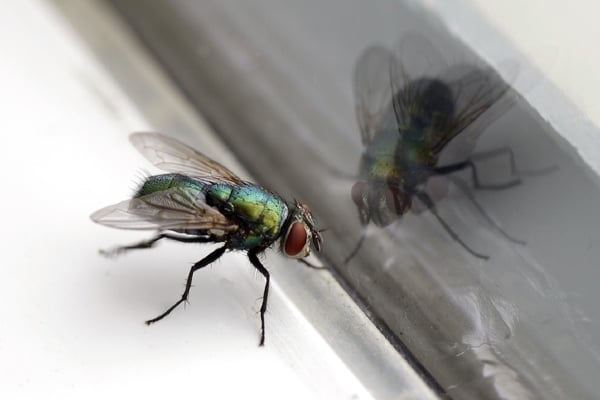
Have you ever wondered where flies come from? They belong to the insect order Diptera, just like mosquitoes. They're ancient insects that have been flying around and adapting to different environments for a long time. That’s the reason you see so many different kinds of flies today. Their origins can be traced back to the Paleozoic Era, with the earliest known fly fossils dating to the Permian period, almost 300 million years ago!
Flies “throw up” when they land
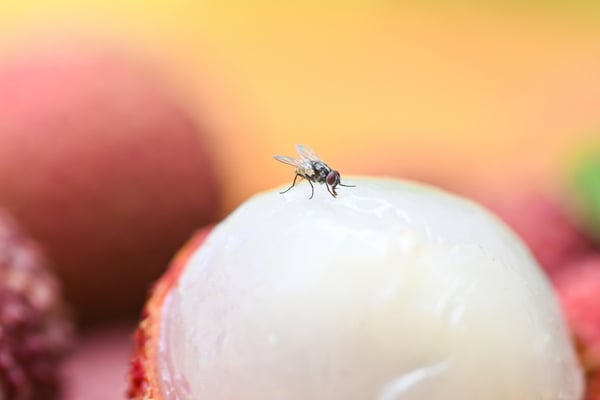
One of the more surprising and interesting fly facts involves how they eat. Since flies don’t have teeth, they rely on liquid food. When they land on something solid, they release digestive enzymes that break it down externally, essentially liquefying it before eating it.
So, what do flies eat? Almost anything organic: sugary foods, decaying matter, and even waste. A single fly eats small amounts at a time but feeds frequently throughout the day. This feeding process is also how flies can spread bacteria. They can transfer contaminants as they move from one surface to another.
Flies are excellent…fliers
One of the most impressive fly characteristics is their ability to fly. Flies are built for speed and agility, capable of hovering, darting, and changing direction almost instantly.
How fast are flies? Some common houseflies can reach speeds of up to five miles per hour, while larger species can go even faster. Their wings beat incredibly quickly, up to hundreds of times per second. These flight skills are a big reason flies are so hard to swat and why they can easily navigate through homes and tight spaces.
Some flies pretend to be other insects
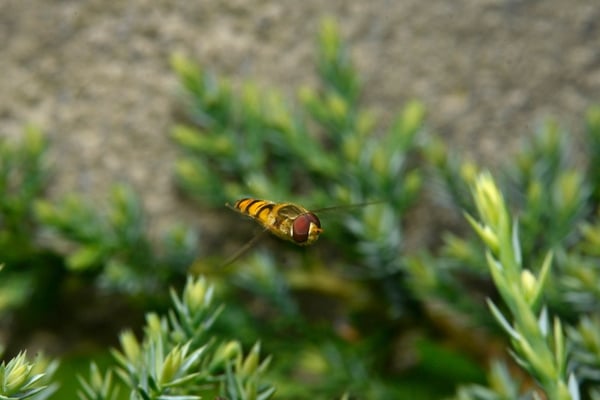
One fact about flies is that many species mimic other insects to help protect themselves from predators. Hoverflies, for example, often look like bees or wasps, which helps them avoid predators. They get their name from their behavior as they are usually seen hovering in midair like small, living helicopters.
Fruit flies share roughly 60 percent of their genes with humans
Flies have played a significant role in science, particularly genetics and biology. One of the most famous species used in research is the fruit fly (Drosophila melanogaster). Researchers have found that fruit flies share roughly 60 percent of their genes, which can also be found in humans in a similar form. Since the average fly lifespan is short, and they can reproduce quickly, scientists can study multiple fly generations in a short time.
How flies see, taste, and sense the world
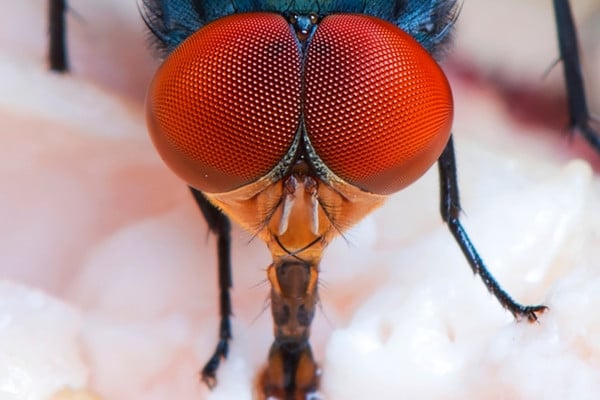
One of the most notable fly characteristics is their vision. A fly’s head is dominated by two large compound eyes made of thousands of individual lenses called ommatidia. These lenses allow the fly to see in almost every direction simultaneously. This 360-degree field of vision is why they detect movement and react to threats so quickly. Here are some other interesting biology facts about flies:
- Most flies have five eyes. Beyond the two large compound eyes, three small eyes on top of their head detect light and help with flight stability.
- Flies have taste receptors on their feet,allowing them to identify food sources just by landing.
- Flies don’t feel pain like humans do because they lack a nervous system.
Flies help maintain healthy ecosystems
While they are a major nuisance indoors, flies serve a specific purpose in the natural world. Outside the home, they act as nature's cleanup crew by breaking down organic waste. This process recycles vital nutrients back into the soil, which supports plant growth and a balanced environment.
Flies are also a foundational part of the food chain. Many animals, including birds, bats, frogs, and larger insects, rely on them as a primary food source. However, once these pests cross the threshold into your home, they become a health risk. That’s where Terminix can help, providing professional fly control solutions to help keep flies out of your home.