
Joro spiders (Trichonephila Clavata)
Content Updated: July 14th, 2026
Key takeaways
- Joro spiders are large orb-weaving spiders native to East Asia that were first discovered in the United States in 2014.
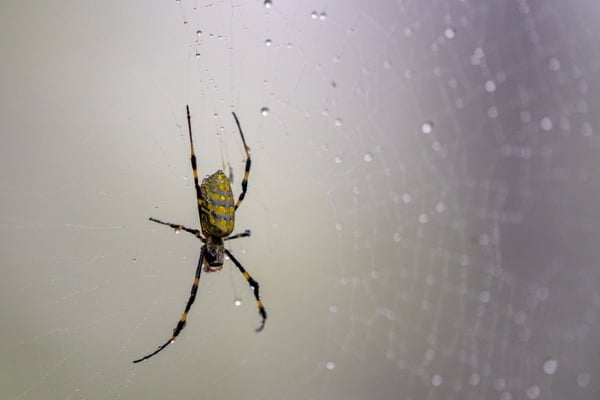
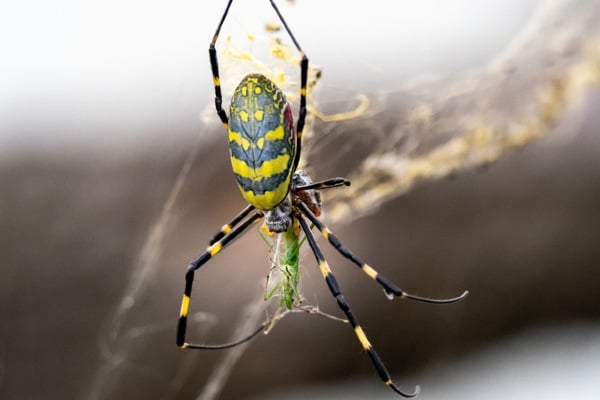
- Joro spiders can be easily identified by their size and coloration. Females are large with long, banded yellow-and-black legs, and bright yellow, blue-gray, and red markings, while males are smaller and less colorful.
- These spiders can spread through hitchhiking and ballooning, where spiderlings release silk into the air and travel on wind currents, allowing them to expand into new areas over time.
- Joro spiders are not considered a threat to people or pets, as bites are rare and generally not medically significant.
Jump to section:
What does a Joro spider look like?
How are Joro spiders spreading in the United States?
Joro spiders are large orb-weaving spiders known for their colorful appearance and expansive webs. Native to East Asia, they were first discovered in Georgia in 2014 and have since spread to additional areas of the southeastern United States. While their growing range has attracted attention, Joro spiders are generally considered more of a nuisance than a threat to people.
If you're concerned about spiders around your home, spider control services provided by Terminix can help identify spider activity and recommend effective treatment options.
What does a Joro spider look like?
The key characteristics of a Joro spider are:
- Size: Female Joro spiders are much larger than males. Adult females can have a body length of about one inch, while males are typically less than half that size. Including their legs, females can span several inches across.
- Body and markings: Female Joro spiders have a bright yellow abdomen with distinctive blue-gray bands and red markings on the underside. Males have a smaller, more slender body with muted brown and gray coloration.
- Legs: Joro spiders have very long legs with alternating yellow and black bands. Female legs are noticeably longer and more prominent than those of males.
- Eyes: Like most orb-weaving spiders, Joro spiders have eight eyes arranged in two rows. They rely more on vibrations in their webs to detect prey and potential threats.

Where are Joro spiders found?
Joro spiders are native to East Asia and are commonly found in China, Japan, Korea, Taiwan, and Vietnam. They were first discovered in Georgia in 2014, likely having arrived through international trade and shipping. Since then, their range has expanded to additional areas of the southeastern United States.
What U.S. states have Joro spiders?
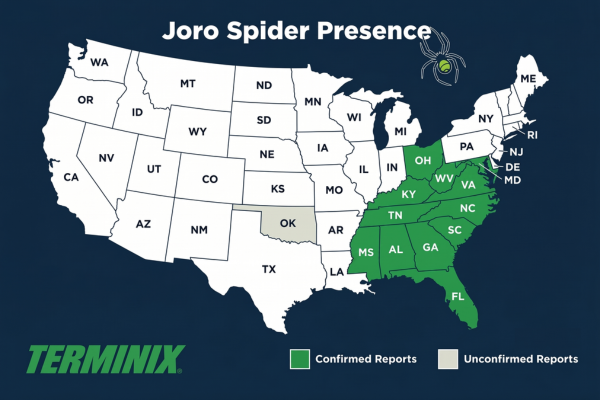
Since their discovery in the U.S., the Joro spider has been found in:
- Alabama
- Georgia
- South Carolina
- North Carolina
- Tennessee
- Florida
- Kentucky
- Mississippi
- Virginia
- West Virginia
- Ohio
- Maryland
There have also been unconfirmed reports of the Joro spider in other areas of the U.S. Their adaptability has contributed to their spread beyond where they were initially discovered.
How do Joro spiders move around the United States?
Joro spiders use two primary methods to move around. One method is by hitchhiking with humans, as they did when they first got to the U.S. The other method is through a process known as ballooning.
Ballooning is when newly hatched spiderlings climb as high as they can, stand on raised legs, and then release several threads of silk from their spinnerets. These thin silk threads act as a parachute, allowing the spiderlings to travel with the wind as air currents carry them along. Depending on the species and other environmental factors (such as wind speed), ballooning may carry spiderlings over tens to hundreds of miles.
Are Joro spiders a threat to native ecology?
While concerns remain about their potential effects on native wildlife, there is currently limited evidence that Joro spiders are causing significant ecological disruption. Current observations suggest that they consume a wide variety of insects, including some invasive pests such as spotted lanternflies and brown marmorated stink bugs.
Like many introduced species, they may compete with native spiders and other insect-eating predators for food and habitat. Researchers continue to study their long-term impact on local ecosystems.
Do Joro spiders bite?
Joro spiders can bite, but it is rare. Like most spiders, they generally prefer to avoid people and are more likely to flee or remain still than bite when disturbed. Joro spiders are venomous but do not pose a danger. If this spider bites you or your pet, an allergic reaction is possible, though no such cases have been reported. As with any bite, if you think you have been bitten by an insect, it’s always best to consult a medical professional.
Joro spider prevention tips
While Joro spiders are not considered dangerous to humans, their large size and expansive webs can make them a nuisance around homes. To help reduce spider activity around your property:
- Maintain your landscaping by trimming vegetation away from the home and reducing dense plant growth near structures.
- Limit outdoor lighting when possible, as lights attract insects that Joro spiders feed on.
- Remove potential harborage areas such as leaf litter, brush piles, and stacked wood.
- Inspect and remove webs around your home, deck, porch, and other outdoor structures.
- Seal cracks and gaps around doors, windows, siding, and utility penetrations to help prevent spiders and other pests from entering.
If you're seeing large numbers of spiders or webs around your property, our spider control services can help identify areas of activity and recommend treatment options tailored to your home.
FAQs
How long do Joro spiders live?
Joro spiders typically live about one year, depending on environmental conditions. Females can lay 400 to 1,500 eggs annually, with spiderlings hatching in spring, maturing through summer, and adults usually dying off in late fall or early winter, though warmer climates may extend their lifespan.
What do Joro spiders eat?
A Joro spider feeds on a wide range of insects, including mosquitoes, stink bugs, beetles, flies, and occasionally bees or wasps. It is a passive hunter that waits in its web for prey to become trapped. Once captured, the spider quickly wraps the insect in silk and uses venom to immobilize it before feeding.
What eats the Joro spider?
Joro spiders share many of the same predators as other spider species. Some of their predators include birds, lizards, frogs, bats, and certain wasp species, such as Mud daubers.
What does a Joro spider web look like?
A Joro spider web is a large, wheel-shaped orb web that can span several feet wide. It often has a golden or yellowish tint and features strong radial support lines with a spiral of sticky silk used to trap prey. These webs are usually more visible and structured than many other spider webs and are often built between trees, shrubs, or around outdoor structures like porches and decks.