
What is attic insulation R-value?
Content updated: October 7, 2026
Key takeaways
- The attic insulation R-value measures how effectively materials resist heat transfer, which can help keep your home comfortable and manage energy costs.
- Determining the correct R-value of insulation for an attic depends on your specific climate zone and existing materials.
- Reviewing an attic insulation R-value chart can help you understand the recommended thermal resistance needed for your region to optimize efficiency.
- Improper installation can lower insulation effectiveness, so scheduling a professional inspection may be beneficial to ensure your attic is properly insulated.
Jump to section:
Choosing the correct R-value for your attic
Next steps for insulating your home
If your home feels drafty or your energy bills are creeping up, it might be time to look into attic insulation services. The most important metric to know is the R-value, which measures how effectively insulation stops heat from transferring in and out of your house. Figuring out what rating you need isn't always obvious, but the attic insulation R-value chart below takes the guesswork out of calculating attic insulation for your climate zone.
What is insulation R-value?
R-value, short for resistance value, is the measurement used to explain how well an insulation material resists conductive heat flow. In simple terms, it indicates how effective your insulation is at keeping your home comfortable while using as little energy as possible.
Insulation is rigorously tested in a laboratory setting to assign this numerical rating. The higher the R-value, the greater the heat-stopping power it provides to keep warm air inside during winter and hot air out during the summer. However, a higher number isn't automatically the best choice for every attic. The recommended R-value for attic insulation depends on your climate zone and where in the structure the insulation is placed.
How is R-value calculated?
The overall rating is not determined by a single trait but by a combination of physical properties. R-value is calculated by measuring the material's density, its overall thickness, and its specific material composition. Dense, thick materials with air-trapping compositions generally yield a higher thermal resistance, meaning they perform better at slowing heat transfer.
For example, if an insulation product has an R-value of about R-3 per inch, a 10-inch layer would provide approximately R-30 under the appropriate conditions. Actual performance can vary depending on the product and its installation, so the R-value should be considered along with the condition of the attic itself.
R-value insulation chart
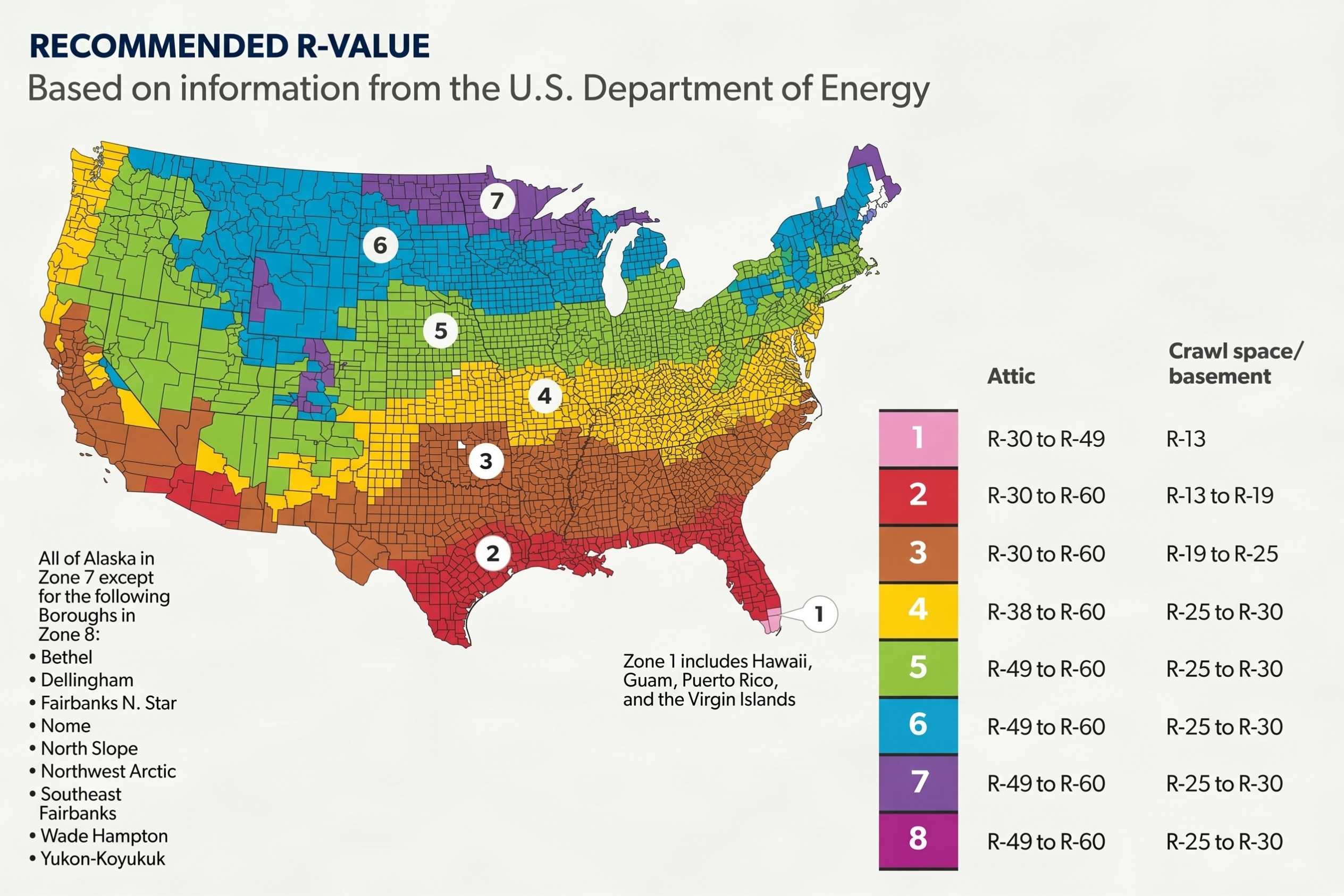
The recommended attic insulation R-value varies by climate zone. Homes in colder regions generally need a higher R-value to provide adequate resistance to heat loss, while recommendations for warmer regions may be lower.
Use this attic insulation R-value chart based on general guidelines provided by the U.S. Department of Energy to identify your zone's requirements:
You can help improve your home’s overall resistance value by installing new insulation, adding to the insulation you already have, or contacting a professional who can safely perform these services for you.
Choosing the correct R-value for your attic
Understanding the R-value of insulation for attic spaces requires looking beyond laboratory numbers. R-value is useful for comparing insulation, but it doesn't account for all the factors that can affect how well your attic is insulated, including air leaks, moisture, and installation quality. When determining the best solution for your attic specifically, consider these critical factors:
- Climate zone: Colder northern regions require significantly higher thermal resistance than warmer southern states.
- Current insulation: New insulation can often be layered over existing materials to reach your target R-value.
- Type of material: Different materials (such as cellulose insulation, fiberglass insulation, or spray foam) have varying insulating properties.
- Thickness: The thicker the insulation, the higher the R-Value.
- Density: Tightly packed insulation typically resists heat more effectively than loosely packed insulation.
- Temperature and moisture: Changes in heat and humidity can affect how insulation performs in real-world conditions.
Choosing the proper R-value and making sure insulation is installed correctly can pay off in big ways. The benefits can include lower energy bills, fewer drafts, and a more comfortable home year-round.1
Does the insulation material affect the R-value?
Yes, the type of insulation you choose heavily impacts its R-value. Each material resists heat transfer differently, meaning two distinct products of the exact same thickness will yield different insulating power. Based on estimates from the U.S. Department of Energy, here are the general R-value per inch ranges for common options:
- Cellulose: Usually ranges from R-3.2 to R-3.8 per inch. Our expertly installed cellulose insulation is dense, highly effective at reducing air leaks, and contains materials designed to deter certain pests upon contact.
- Fiberglass batts: Typically range from R-2.9 to R-4.3 per inch. Fiberglass insulation is standard and affordable, though it can be prone to air movement if not perfectly fitted.
- Spray foam: Ranges from R-3.5 (open-cell) to R-7.0 (closed-cell) per inch. It provides a high R-value and creates a strong air seal, but is generally a more costly investment.
- Rigid foam boards: Generally range from R-4.0 to R-6.8 per inch. These are highly effective in tight spaces or as specialized barriers, though they are rarely used as the primary fill for a wide-open attic floor.
Since each insulation type performs differently, choosing the right one depends on your attic space, budget, and energy efficiency goals.
Next steps for insulating your home
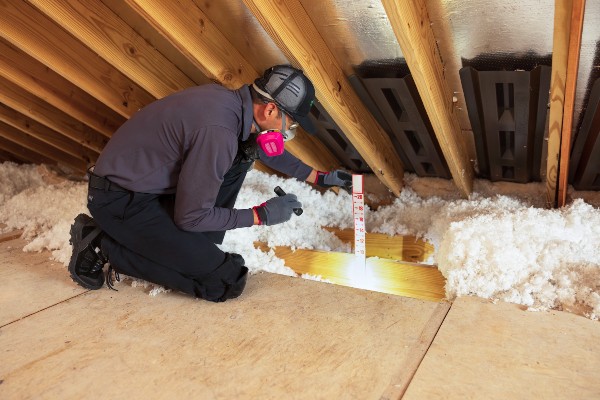
Understanding the importance of attic insulation is the first step, but proper installation is just as critical as choosing the right material. Even the highest-rated insulation won’t perform well if it is installed incorrectly. DIY installation poses several risks, including poor ventilation, leaving gaps, compressing the material (which lowers the R-value), or creating fire hazards by placing insulation too close to recessed lighting or heat sources.
Eight in 10 homes have less attic insulation than recommended.3 Protect your home with our expert installation. Our Terminix experts can help you understand your home’s needs and create a customized plan tailored to your home. Schedule your free attic insulation inspection today to get started.
1Savings vary and depend on use patterns, the home’s current insulation, home and system efficiency and products purchased.
2R-value per inch ranges are estimates based on general guidelines provided by the U.S. Department of Energy. Actual R-values may vary based on the specific manufacturer, product density, and installation quality.
3ICF Consulting. “Evaluation of Under Insulated Single Family Detached Homes in the United States.” Published October 2024. Accessed online May 2025.