


- Address details
 current STEP 1
 - Contact details STEP 2
- Schedule STEP 3
Contributed by: Doug Webb
Content Updated: May 1, 2026
Worried about termites quietly munching away at your home? A termite inspection is the first step to protecting your property. Termites are sneaky, and spotting them early isn’t as simple as flipping a floorboard or checking your walls. That’s why relying on professional termite control makes all the difference.
Looking for a termite inspection near you? At Terminix, our experts know exactly where to look and what to look for to keep your home protected.
What happens during a termite inspection?
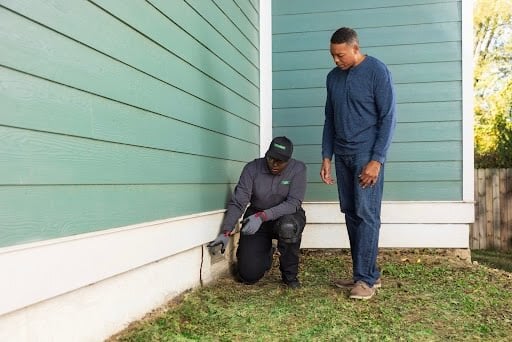
A Terminix technician will thoroughly examine your home for termites and conditions that could attract them. Here’s what the inspection typically involves:
- Checking common entry points – Foundations, crawl spaces, garage areas, and plumbing penetrations are inspected for termite access and signs of activity.
- Using specialized tools – Moisture meters, flashlights, and other tools help detect hidden damage, mud tubes, or areas at risk.
- Evaluating home conditions – Leaks, wood-to-soil contact, and other potential risk areas are identified, with guidance offered to prevent future infestations.
What do termite inspectors look for?
Termites leave clues if you know where to look. Common signs of termites a include:

- Blisters in wood flooring
- Visible wood damage
- Discarded termite wings
- Mud tubes where soil meets your property
- Mounds of frass (drywood termite droppings)
How can I prepare for a termite inspection?
Making it easier for your inspector helps ensure a thorough check. A few quick steps that can help you prepare for your inspection are:
- Garage walls – Move items two feet away from walls so the inspector can check expansion joints and wall-floor intersections.
- Crawl spaces/basements – Remove obstacles and clutter to provide clear access to your crawl space and basement doors.
- Attic and sinks – Clear items away to allow inspection of insulation, roof beams, and plumbing for signs of termite activity.
Questions to ask your termite inspector
Going into your appointment prepared with questions helps you understand your options and the protection available. Here are just a few questions to consider asking during your termite inspection:
- Where is the termite activity or infestation?
- Which termite treatments do you recommend?
- How long will the treatment take?
- How can I help with termite prevention?
- What is the initial termite control cost and ongoing protection fees?
- What type of guarantees do you provide?
- Can Terminix provide a termite inspection for a VA loan?
Does Terminix offer Wood-Destroying Insect Reports?
Yes, Terminix can provide Wood-Destroying Insect Reports (WDIR) to document the presence, or absence, of termites and other wood-destroying insects in your home. Simply schedule a termite inspection and request a WDIR, and our termite experts will handle the inspection, documentation, and delivery for you.
How often should I schedule a termite inspection?
Annual termite inspections are the best way to help prevent costly damage. Homes should also be inspected anytime termite activity is suspected or before a real estate transaction.
What happens if they find a termite infestation?
Finding termites doesn’t have to be overwhelming. Terminix technicians will evaluate the extent of the infestation, explain your treatment options, and take action to help eliminate the infestation. Treatments may include liquid barriers, bait systems, or localized spot treatments depending on your home’s needs.
Understanding termite plan costs
Protecting your home involves more than just an inspection. While the initial free termite inspection is complimentary, ongoing protection comes with associated costs depending on factors such as property type, location, and whether the inspection is part of a real estate transaction. Some homeowners may choose a termite bond, which provides periodic inspections and treatments if termite activity is detected. Check out our termite control cost page for more information.
Is an initial termite inspection from Terminix really free?
Yes, an initial termite inspection from Terminix is free. Our goal is to identify any termite activity or damage in your home and provide a tailored treatment plan to help eliminate and prevent termites. While the average termite inspection cost in the industry can vary depending on your home and property size, our experts will answer all your questions and guide you through your treatment and prevention options.
The Terminix Difference
Here’s what our customers have to say...
Tamara Goff
Memphis, TN
![Google Logo]()
Our technician Tripp is amazing! He’s an incredible communicator, is always on time and is consistent and proactive about treating our home and yard. We have a challenging property and he always knows the right remedy — no matter what time of year. Love working with him—-he makes everything easy…scheduling, communicating, etc. I’d give him 10 stars if I could!!!
9 months ago
Mary A Ragusa
Canton, OH
![Google Logo]()
We have had Terminix since 2001. They treated twice for termites and we do annual inspections and maintain service for the “insurance” that they will repair damage caused by termites. Our home was built on a former grape vineyard and termites seem to love any grape vines left in the soil in our city! Termites are common here…
3 months ago
Arthur Perry
Salisbury,MD
![Google Logo]()
We have enjoyed termite service with Terminix for 16 years and appreciate their professional and personal touch of class!!
9 months ago
Dawn Ellison
Winter Haven, FL
![Google Logo]()
Very respectful very helpful very informative on their knowledge of termites if I ever sell my house I will have that bond to pass on to the next buyer
4 months ago
Julie Ploss
Tampa, FL
![Google Logo]()
Had a bug issue and they were very quick to respond. They took care of termites found and sprayed for bugs. They worked around my schedule to make things easy.
A Month ago


Frequently Asked Questions About Termite Control
Yes, with the Terminix It Guarantee, you can rest easy knowing that we'll nix your termite problem and keep it nixed. If termites return or new signs of activity appear, we'll be back to take care of it—at no additional cost to you.1
For even greater peace of mind, our Terminix It & Fix It Guarantee goes a step further. Not only will we eliminate termites and prevent their return, but we'll also repair any new termite damage—up to $250,000—as long as you maintain your plan. With Terminix, you're protected from both termites and costly repairs, giving you total confidence in your home's defense.2
A termite inspection is recommended in several situations. It's often required when buying or selling a home, as lenders and insurance companies may request proof of a recent inspection. Even if you're not in the process of buying or selling, it's a good decision to get an inspection if you notice signs of termites, such as mud tubes, hollow-sounding wood, or frass. Regular inspections—typically once a year—can help catch an infestation early before it causes significant damage.
The cost of termite treatment depends on factors like infestation severity, termite type, and whether you need treatment, prevention, or ongoing protection. At Terminix, we offer flexible payment options to help make termite protection more affordable. You can choose monthly or annual payment plans, and for larger treatments, financing options may be available to fit your budget. Our expert termite exterminators customize solutions to fit your home and budget.
While DIY termite treatments are available, they are generally not effective. Termites are persistent and can be challenging to eliminate without professional help. A professional termite exterminator can assess the extent of the infestation and provide a more thorough and long-lasting solution.
Termites can cause significant damage to your home before you even notice their presence. Taking proactive steps to prevent infestations and recognizing the early warning signs can help minimize costly repairs. Here are a few basic preventive measures and early detection tips:
- Reduce moisture: Fix leaks, improve drainage, and keep wood from direct contact with soil to help deter termites.
- Store wood properly: Keep firewood, lumber, and mulch away from your home's foundation.
- Use treated wood: When building or renovating, use termite-resistant or pressure-treated wood.
- Maintain landscaping: Keep bushes, trees, and mulch away from your home to help reduce termite sheltering spots and make it easier to spot mud tubes or structural damage caused by termites.