Videos
Terminix pest pro reacts to termites in the house
Content updated: July 22, 2026
Transcript
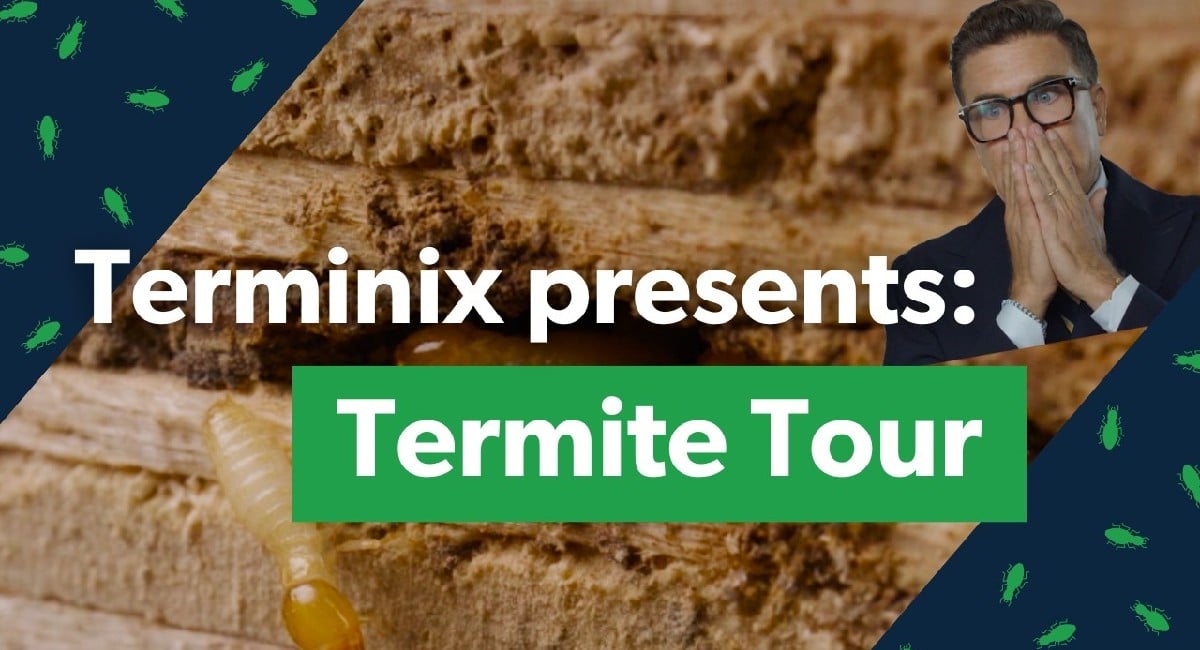
Miguel: That's bad. That's bad. Yeah. Yeah. Hi, I'm Miguel. I'm a termite specialist with Terminix. Man, off camera: Hey, we're going to watch some termite clips. Miguel: Yes, sir. Woah, woah. That was done. I mean, you could see through. I probably put my fist through that hole. That's a drywood termite. I could tell because of the fecal pellets. It is something that looks like sawdust, but that's how I do know that it is drywood termites. Termite damage can get really, really expensive if you don't take care of it quickly. So, here's everything you need to know to prevent termites from damaging your home. Number one: fix your leaks. Subterranean termites love moisture, and you do not want them going into your home. Number two: cut down dead trees. The swarmers tend to travel from trees to the home, and they're the ones that are looking for a wood structure to eat. And number three: knock on the wood. If it's hollow, then you might have termites in there. If that's the case, I mean, you might have to remove the wood. You don't want your home to have structural damage where it gets to a point where your home collapses. So, we're good at what we do. We like what we do, and we'll do it right the first time. And Terminix has been doing this for 95 years. So, just call Terminix already.
Termite damage can be expensive. Drywood termites can eat through the wood in your home, and leave behind droppings that look like sawdust. Other signs of termites can include hollow-sounding wood. Termite prevention can mean getting rid of dead trees around your home and fixing leaks that add moisture that can attract termites. Think you might have termites in your house? Schedule a free termite inspection with Terminix.