Bees
The role of the queen bee
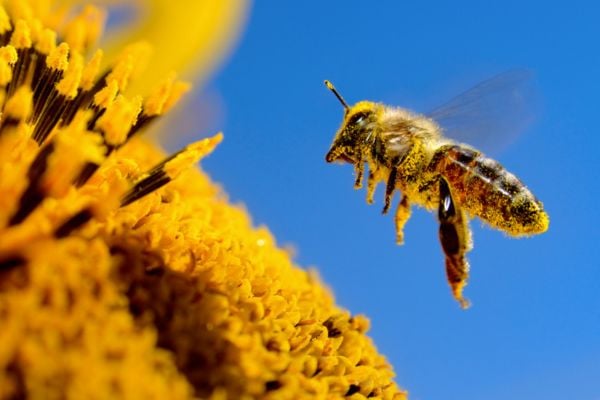
There are many species of bees, but they do not all live and behave in the same way. Bees are either social or solitary, depending on their species. Solitary bees live independently of each other, except for when they breed. Social bees nest in colonies that may consist of just a few members or several thousand bees, all living and working together to maintain their colony under the direction of one bee, the queen bee. Whether social or solitary, everything bees do is to fulfill one purpose: produce more bees to ensure the survival of the colony and their species.
What does a queen bee look like?
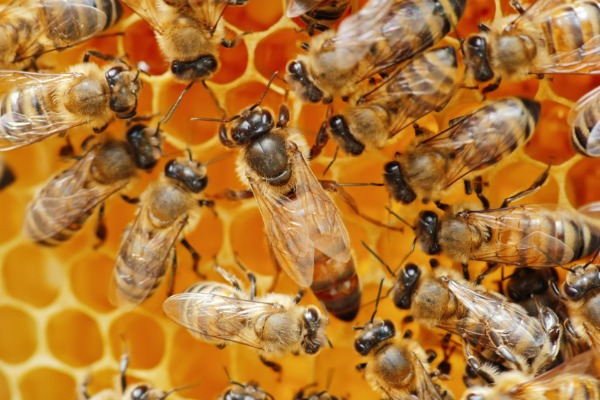
A queen bee has distinct characteristics that set her apart from worker bees and drones. Here are some key features to help you tell the difference:
- Size: Queens are typically larger than worker bees and drones, with a body length ranging from 15 to 20 mm.
- Abdomen Shape: The queen's abdomen is long and tapered, giving her a more elongated appearance than worker bees' rounder abdomens.
- Color: The queen may exhibit a slightly different coloration than worker bees, often with a more golden or darker hue.
- Wings: Her wings are shorter than her abdomen, reaching only about halfway down its length, in contrast to worker bees whose wings cover the entire length.
- Mandibles: A queen bee's mandibles are a pair of jaws located on either side of her head. They are primarily used for non-aggressive tasks such as grooming and removing dead bees from the hive. Unlike worker bees, the queen's mandibles are not strong enough to sting or defend the hive.
How a bee is crowned queen
A new queen bee emerges when the old queen dies or when the colony becomes too large and splits in two. Queens are created through a process called the larval selection process. The worker bees in a hive select certain larvae to be fed a unique substance that is secreted by worker bees called royal jelly, which triggers the development of ovaries in the larvae and allows them to mature into queens rather than worker bees.
When a bee colony senses that its queen is aging and not producing enough eggs, it starts the process of creating a new queen, called "supersedure." Once the new queen bee emerges from her cell, she will kill any other developing queens to eliminate competition and ensure her survival.
A queen’s duty
The queen bee is the sole member of the colony that can lay eggs. She is responsible for the colony's growth, laying thousands of eggs throughout her life. Worker bees carefully construct each honeycomb cell, and the queen places a single egg into each cell. She can lay up to 1,500 eggs per day and over 200,000 eggs in a year, ensuring the stability of the colony's population.
Before the queen can start laying eggs, she must mate with drones. During the mating flight, she will mate with up to 20 drones, which provide her with enough sperm to last for the rest of her life. The queen also directs the colony's behavior, work assignments, and population balance. She uses various pheromones, which dictate the behavior of specific bees, causing some members to become workers, drones, or potential queens. The queen bee's essential role ensures the colony's survival, making her the most crucial member of the hive.
Life span and species of queen bees
Bees come in many different species, each with their own unique characteristics and behaviors. Among the most common bee species are honeybees, bumblebees, carpenter bees, and sweat bees, each with a queen that plays a vital role in the colony. Depending on the species, the lifespan of a queen bee can vary significantly, with some living only a few months while others can live up to four years. For example, honeybee queens typically live between two to three years on average, while Africanized honeybees have a shorter lifespan of a few months.

Queen bumble bees
Unlike queen honey bees, the queen bumble bee is only slightly larger than the workers and has a more rounded abdomen. A bumble bee queen also looks fuzzier than the honey bee’s queen, with a more pronounced "fur coat." Queen bumble bees are typically less aggressive than honey bees and sting only when threatened. Queen bumble bees are more independent, with each queen starting her colony rather than living in a giant hive like the honey bees.
What happens when a queen bee dies?
When a queen dies, it significantly impacts the bee hive. Without her, the hive cannot produce new workers or drones. As mentioned, when a queen dies, the workers will immediately start the process of selecting a new queen by choosing a few female larvae and feeding them royal jelly. The new queen will then take over the queen's duties, and the hive will continue to function normally. However, if the hive cannot produce a new queen, it will eventually die out.
Safe bee control
Dealing with bee-related issues can be daunting, especially when it comes to ensuring the safety of the bees. That's why working with a trusted pest control provider like Terminix is essential. At Terminix, we understand the importance of bees in our ecosystem and take a safe and responsible approach to bee control. Our team of experts is trained to handle bee-related issues in a way that protects both you and the bees. So, if you're dealing with a bee problem and need help, check out our bee control services today!