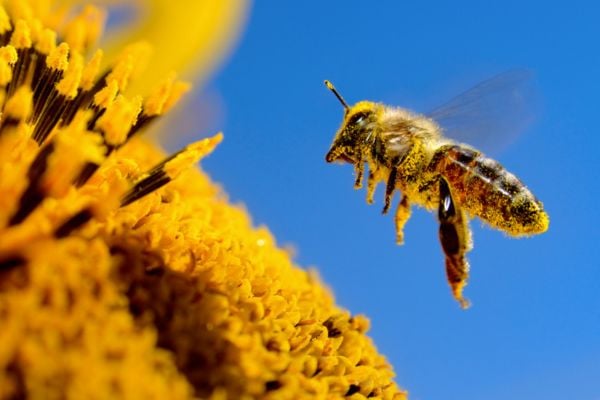
- Size : Noticeably larger than the rest of the colony, typically 15 to 20 mm long.
- Abdomen : Long and tapered, giving her a distinctly elongated appearance.
- Color : Often a solid, darker, or more golden hue compared to worker bees.
- Wings : Noticeably short, reaching only halfway down her abdomen.
- Mandibles : Designed for grooming and hive maintenance, not for defense.

Bees
Queen bee identification and role explained
Content Updated: June 17th, 2026
Key takeaways
- Queen bees control the colony’s growth and survival by laying eggs and releasing pheromones that guide worker bee behavior.
- A queen bee is larger than other bees, with a long tapered abdomen and shorter wings that don’t fully cover her body.
- Worker bees constantly surround and protect the queen, making her easier to spot inside a busy hive.
- When a queen dies or weakens, worker bees quickly raise a replacement by feeding selected larvae royal jelly.
- Bees are important pollinators, but hives near homes should be handled by professional bee control experts for proper removal and prevention.
Jump to section:
What does a queen bee look like?
How to find the queen bee in a hive
How does a bee become a queen?
What is the role of a queen bee in the colony?
What happens when a queen bee dies?
Debunking common queen bee myths
Can you get rid of a bee nest?
Every thriving beehive centers around one vital figure: the queen bee. As the sole reproductive female, she dictates the colony's growth, behavior, and survival. While these pollinators are essential to the environment, a hive located too close to your home or inside your walls can quickly become a safety hazard. If you suspect an issue, professional bee control is the best way to address it. Terminix technicians have the expertise to properly evaluate and manage the hive while prioritizing your household's safety.
What does a queen bee look like?
When comparing different types of bees, proper bee identification starts with knowing how the queen stands out from the rest of the colony. A queen bee has distinct characteristics that set her apart from workers and drones. Here are the key features to look for:
/Queen-bee-on-hive-(1).jpg?h=400&w=600&rev=b7b8ff1ceffc454eac81406f712717c7&hash=7FCEC991BC3534737833220B7185E3C2)
Queen bumble bees
Unlike the honey bee, a queen bumblebee is only slightly larger than her workers and features a much more rounded abdomen. She also appears significantly fuzzier, with a thick, pronounced "fur coat." Queen bumble bees are typically less aggressive and sting only when explicitly threatened. They are also highly independent; instead of taking over a massive existing colony, each bumblebee queen starts her own smaller nest from scratch.
How to find the queen bee in a hive
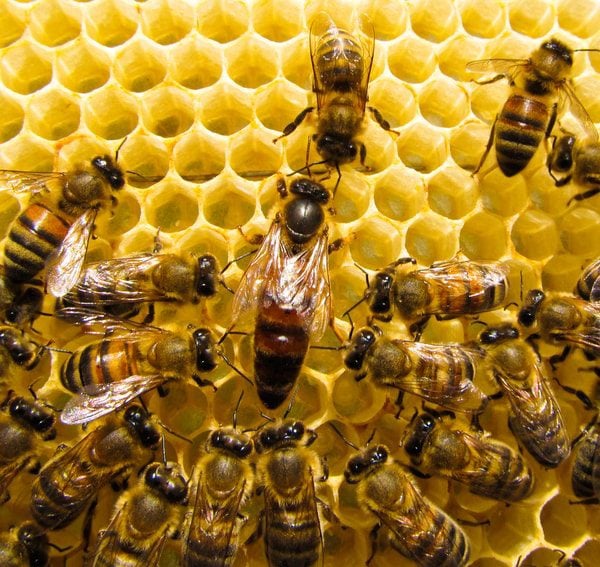
Spotting a single insect among thousands of moving bees is challenging, but observing worker behavior makes it easier. Workers constantly surround the queen to groom, feed, and protect her. If you look closely at the comb, you will often see a distinct circle or "rosette" of worker bees facing inward toward a central, larger bee. They will quickly part ways to let the queen bee move freely across the comb, creating a clear path as she searches for empty cells to lay eggs.
How does a bee become a queen?
A colony initiates the creation of a new queen bee when the current one dies, begins failing, or when the hive becomes too large and prepares to split. The entire transformation from egg to a mature queen takes about 16 days.
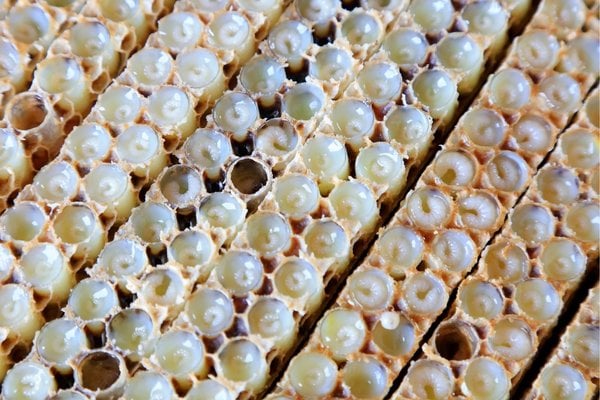
Worker bees start the selection process by choosing specific, recently hatched female larvae. These chosen few are exclusively fed a nutrient-rich secretion called royal jelly. This specialized diet triggers the development of fully functioning ovaries, allowing the larva to mature into a reproductive female rather than a sterile worker. Once the first new queen emerges from her cell, she immediately hunts down and kills any other developing queens to eliminate competition and secure her position.
What is the role of a queen bee in the colony?
The queen bee is the only member of the colony capable of laying eggs, making her entirely responsible for population growth. During the spring and summer, when bees are most active, she can lay up to 1,500 eggs per day, which can total over 200,000 in a single year.
Before her egg-laying begins, a newly emerged queen takes a mating flight. She will mate in mid-air with up to 20 male bees, known as drones. These drones die immediately after mating. The queen stores enough sperm from this single flight to fertilize eggs for the rest of her life. Beyond reproduction, she regulates the colony's entire operation by releasing distinct pheromones that dictate worker behavior, assign hive duties, and maintain social order.
Queen bees vs. worker bees
While both are female, their specific jobs inside the colony give them completely different physical traits and daily routines:
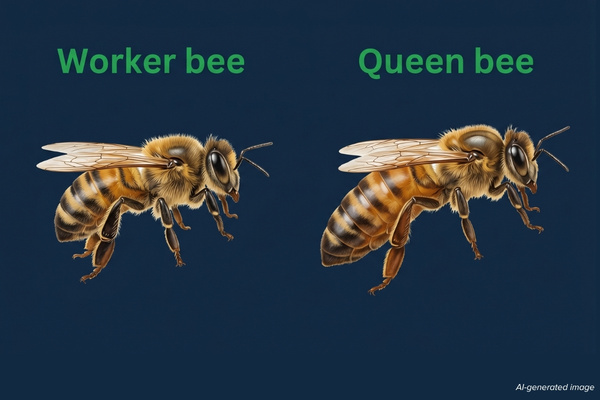
- Queen bees: Larger with a long, tapered abdomen, the queen is built solely for reproduction. She has a smooth, reusable stinger but lacks foraging tools, relying entirely on attendants for food and grooming.
- Worker bees: Smaller and rounder, workers are equipped for constant labor. They have wax-producing glands to build comb, pollen baskets for foraging, and barbed stingers that cause them to die after defending the hive.
How long do queen bees live?
A healthy queen bee can live for two to five years, a significantly longer bee lifespan than the few weeks or months typical of worker bees. However, her longevity depends heavily on hive health and external conditions. A queen’s life can be prematurely shortened by parasitic Varroa mites, environmental stressors like pesticides and poor nutrition, or even her own workers. If the colony senses she is failing, worker bees may swarm and suffocate her in a defensive cluster known as a "ball."
What happens when a queen bee dies?
When a queen bee dies, the colony immediately begins raising a replacement to prevent the hive from collapsing. Worker bees detect the absence of her pheromones within a few hours and trigger an emergency rearing process. They select viable worker larvae under three days old and transition their diet entirely to royal jelly, ensuring a new queen develops and takes over before the current population ages out.
Debunking common queen bee myths
Due to her royal title, many people misunderstand the queen's actual role and power within the bee colony. Let's clear up a few common misconceptions about her daily life and behavior.
The queen is in charge of the hive
Despite her title, the queen bee does not give orders. The worker bees actually work together to run the colony. They are the ones who decide when it is time to swarm, where to build new comb, and even when the current queen is failing and needs to be replaced.
Queen bees only eat royal jelly
A queen is exclusively fed royal jelly during her larval development to trigger her reproductive organs. However, as an adult, her bee diet shifts. While workers still provide her with occasional royal jelly for a protein boost, she primarily consumes honey and nectar brought directly to her by her attendants.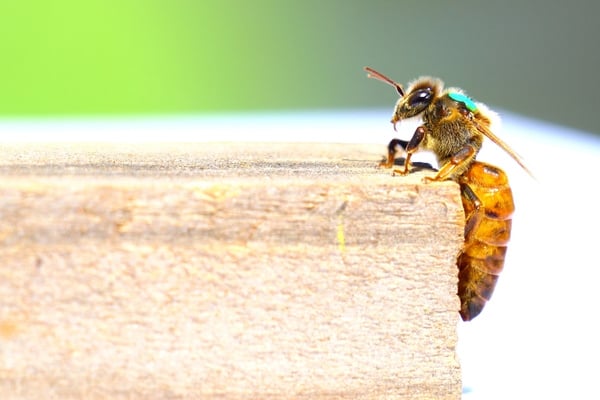
Queen bees die after one sting
A common question is, do queen bees sting? Yes, but unlike a worker bee that dies after using its barbed stinger, a queen possesses a smooth stinger. This anatomy allows her to deliver multiple bee stings without fatally injuring herself. However, she almost never stings humans; she reserves her weapon exclusively for fighting rival queens inside the bee hive.
Can you get rid of a bee nest?
Yes, you can safely get rid of a bee nest by hiring a professional. Bees are vital to our ecosystem, pollinating the crops and flowers we rely on daily. However, removal is necessary if you spot signs of a bee infestation inside your walls or dangerously close to high-traffic areas.
Removing a hive without professional help is dangerous and can quickly cause the bees to attack. Relying on an expert ensures the nest is removed safely while also helping with future bee prevention. Terminix provides responsible solutions to protect your home. For help with an active nest, check out our professional bee control services.