
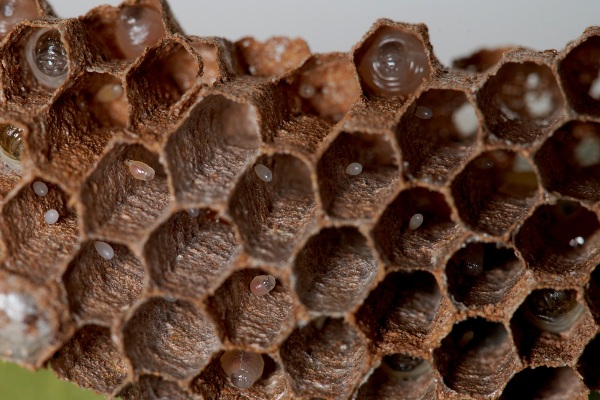
Egg
The bee life cycle begins with a three-day egg stage. The queen lays a single, tiny, white, cylindrical egg inside each honeycomb cell, securely attaching it to the bottom. The egg stage lasts for approximately three days.
Content updated: June 25th, 2026
What factors affect a bee’s lifespan?
The stages of the bee life cycle
If you are wondering how long bees live, the answer ranges from just a few weeks to three full years. A bee's lifespan depends entirely on its species and daily hive role—such as worker, drone, or queen. Regardless of their job, they complete the four stages of the bee life cycle (egg, larva, pupa, and adult) that takes about 21 days from egg to emergence. If a colony gets too close to your home, professional bee control is the safest way to manage them.
When considering how long bees live, you have to take their role and species into account. Survival rates vary widely depending on the type of bee:
Queen bees generally live longer than worker bees and drones, though environmental conditions, disease, and stress can affect their longevity. Honey bee queens usually live for two to three years, while bumblebee queens survive for just a few months.
Beyond their natural biological clocks, several external factors can heavily impact a bee's longevity:
If you are concerned about a nearby nest, Terminix can help responsibly manage the situation.

The bee life cycle begins with a three-day egg stage. The queen lays a single, tiny, white, cylindrical egg inside each honeycomb cell, securely attaching it to the bottom. The egg stage lasts for approximately three days.
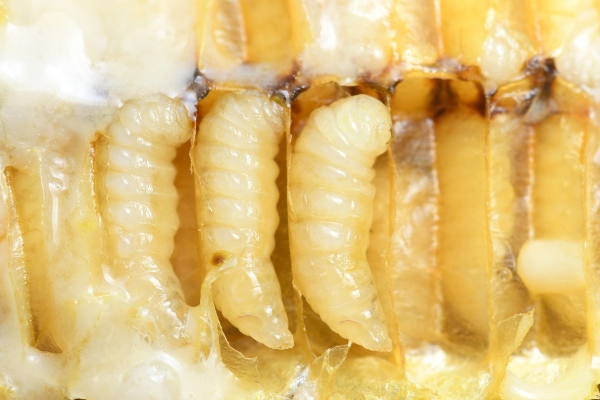
Following the egg phase, the six-day larva stage is a period of heavy feeding and rapid growth. The emerging larva is white and worm-like, completely lacking eyes, wings, legs, or antennae. Nurse worker bees constantly feed it a highly nutritious secretion called royal jelly until the larva sheds its skin multiple times and grows a protective cocoon.
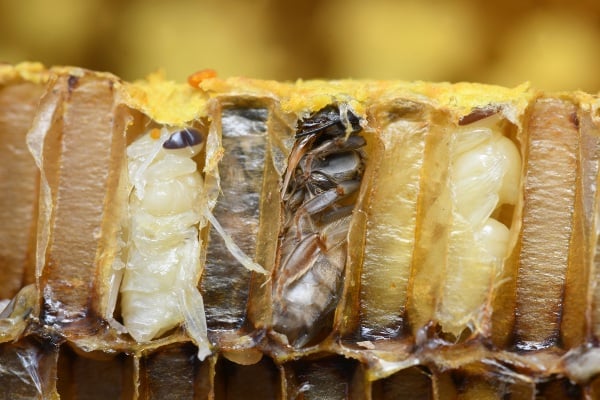
Hidden safely inside its cocoon, the bee undergoes a massive physical transformation. This pupal stage lasts roughly 12 days for workers, 14 days for drones, and 16 days for queens. During this time, the insect develops essential adult features, such as wings, legs, eyes, and antennae, before finally chewing through the wax cell cap to join the colony.
In this final stage of the bee life cycle, bees emerge ready to assume their lifelong roles, depending on the size of the cell they were laid in. Worker bees spend their time collecting nectar and pollen, caring for the young, and maintaining the hive. Meanwhile, drones take on the crucial responsibility of mating, and the queen serves as the sole reproductive female.
.jpg?h=341&w=512&rev=26341e1b8c514f0896d20bdce108a82a&hash=AC62E849BBFB0CDCDB33A9022F508E4F)