

Spider diet and feeding habits explained
Key takeaways
- Spiders eat a variety of insects, including ants, flies, mosquitoes, moths, beetles, and cockroaches.
- Some spiders also feed on larger prey, including small fish, lizards, frogs, and certain plant materials.
- Most spiders eat daily and may feed up to four times a day, although some can go several weeks without eating.
- Some spiders use webs to capture prey, while others rely on speed, agility, and surprise to hunt.
- Tips for limiting spiders in your home include minimizing their insect food sources and sealing cracks and openings around doors, windows, and foundations.
Jump to section:
How do spiders catch their prey?
What spiders eat varies by species, but most spiders feed on insects and other small prey. Their diverse diet and hunting strategies help them play an important role in controlling insect populations. Learn more about what spiders eat, how often they eat, and how spiders catch their prey.
What do spiders eat?
Spiders primarily feed on insects, which make up the bulk of their diet. Spiders eat ants, flies, mosquitoes, moths, beetles, cockroaches, and many other common insects. On occasion, the spiders may eat other types of prey beyond insects, which can include smaller fish, lizards, frogs, and certain plant materials like leaves. Through their diverse diet, spiders help manage the number of insects, ensuring certain crops and plants are free from pests. This can have a positive impact on human agriculture and the ecosystem in which they live.

How often do spiders eat?
What spiders eat and how often they do it is largely based on the species, environmental conditions, and the availability of prey. Most spiders eat food daily, sometimes up to four times a day. In contrast, they can also go for several weeks without eating, thanks to their ability to slow down their metabolism. Colder months might see a decrease in prey availability, causing some spiders to go into a state of semi-hibernation where they eat less frequently. On the other hand, the abundance of insects in warmer seasons can lead to more frequent feeding.
How do spiders catch their prey?
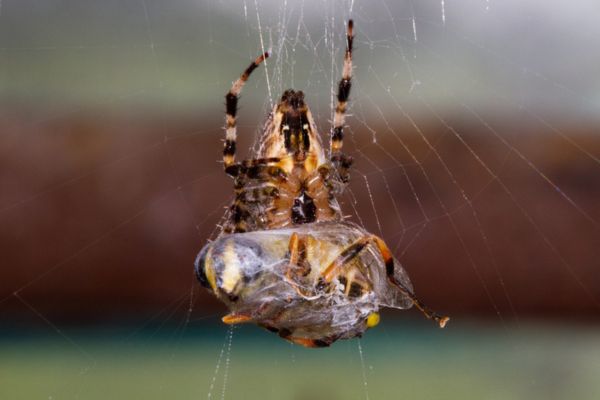
Spiders use a variety of hunting techniques to catch their prey, leveraging intricate webs, venom, and speed. The most common method is the use of silk webs, designed to capture prey when they come into contact. Beyond webs, some spiders take a more active approach to hunting. Jumping spiders, for instance, rely on their exceptional eyesight and agility to stalk and leap on unsuspecting prey, while wolf spiders chase down their meals with speed and precision. The main purpose of a spider's venom is to immobilize prey. Spiders are extremely delicate, and most of their prey could harm or kill a spider if their venom were not able to immobilize them. Once a target is bitten and succumbs to the venom, the spider can eat at its leisure.
Limiting spiders in your home
What the spiders eat may play a crucial role in our ecosystem, but that doesn't mean they need to reside in your home. Minimizing the insects that serve as their primary food source helps make your home less attractive to spiders, thus reducing their presence in your home. Sealing cracks and openings around doors, windows, and foundations also prevents both spiders and insects from entering your home.
However, if the spider infestation becomes significant or if you encounter a potentially dangerous species, it’s time to call in the professionals. Contact the Terminix spider control experts.