
Raccoons Opossums and Wildlife
What do skunks do during the winter?
Content Updated: August 27, 2026
Key takeaways:
Skunks do not hibernate but become less active during winter and spend more time sheltered in their dens.
Skunks may build dens under houses, decks, woodsheds, or woodpiles and in basements or other areas protected from the elements.
Grubs are a staple of the skunk diet and can lead skunks to dig in lawns and gardens for food.
Unsecured garbage and pet food left outdoors can attract skunks to your property during winter.
To help make your property less attractive to skunks, address grub problems, secure and clean trash containers, and block vulnerable areas around your home's foundation.
Jump to section:
Skunk encounters are more common during the warmer months, but these animals can also be found around homes when temperatures drop. Learn what skunks do in the winter, whether skunks hibernate, and what may attract them to your property during colder months.
Do skunks hibernate?
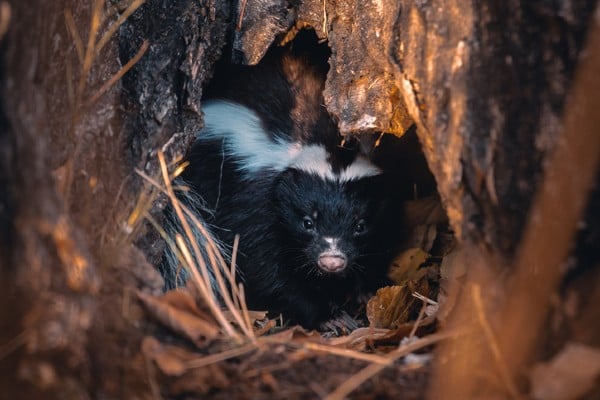
While skunks do not hibernate, they do become significantly idler once temperatures begin to drop. During the winter, skunks mostly huddle in their dens for warmth. However, the skunk mating season usually takes place in February and March, and most skunk young (or kits) are born in April and May.
Skunks will seek out the most convenient locations for their dens. They’re looking for warmth and easy access to food and water, which most likely can be found on your property. In areas populated by humans, skunks will make their dens under houses, under decks, in basements, under woodsheds or woodpiles and anywhere else that provides shelter from the elements.
What do skunks eat in the winter?
Grubs are the staple of the skunk diet. So, like possums, armadillos and moles, skunks are diggers. A skunk can tear up a garden or lawn looking for insect larvae. Grubs are most plentiful in the colder months of the year, as they lay dormant underground or chew on roots in preparation for their spring and summer metamorphoses. Almost all skunks are nocturnal and do their burrowing and feeding at night.
Because skunks forage more infrequently during the winter, certain foods can entice them onto your property. The most common of these is unsecured garbage. Pet food left on a porch, patio or in a garage or shed can also be very tempting to a skunk. That food supply may in turn become a convenient excuse for a skunk to take up residence underneath or inside your home. And while skunks may spend more time in their dens in the winter, they use them year-round.
If you’re concerned about skunks making their winter home on your property, take measures to make your property a less attractive habitat. Look for patches of dead grass and eliminate any grub problems you may have. Make sure all seals and lids on your trash cans and recycle bins are secure, and periodically clean out these receptacles to remove odors and stray bits of waste. Finally, take the Human Society’s advice and cordon off any vulnerable areas around your home’s foundation using L-footer style fencing.


