Raccoons Opossums and Wildlife
Skunk facts: Learn about spraying behavior, diet, and nesting habits
Content Updated: October 6, 2026
Key takeaways:
Understanding skunk behavior, like their habit of digging for grubs, can help you remove food sources and prevent yard damage.
Important facts about skunks include their poor climbing ability, meaning they typically seek ground-level shelter under porches, decks, or sheds.
When exploring what do skunks do, remember they can spray up to 10 feet, so keep pets away to avoid encounters.
While learning skunk facts is helpful, professional pest control can safely address active wildlife issues if these animals settle on your property.
Jump to section:
Skunks may be famous for their smell, but there’s a lot more to these small mammals than their spray. Their behavior, diet, nesting habits, and other traits can tell you a lot about why they show up around homes. Most skunks grow to about 20 to 30 inches long and weigh 6 to 10 pounds. Knowing these skunk facts can also help you recognize when a skunk may be settling in around your property and when it’s time to consider professional skunk control.
Where do skunks live around homes?
Skunks prefer quiet, sheltered places where they can hide during the day and stay protected from predators. Around homes, skunks may live in abandoned animal burrows, hollow trees, rock piles, wood piles, or spaces underneath porches and decks. They may also take advantage of openings beneath sheds or other structures.
One important fact about skunks is that they are not good climbers. Unlike raccoons and squirrels, skunks found in the U.S. typically don't climb well enough to enter homes through rooflines or settle in attics. Instead, they usually stay close to the ground and look for sheltered spaces they can reach easily.
What do skunks eat?
Skunks are omnivores, so they eat both plants and animals. A skunk’s diet changes with the seasons and depends on what's available, but common foods include insects, grubs, earthworms, small animals, eggs, berries, nuts, seeds, and other vegetation. Their strong sense of smell helps them locate food, even when it is buried beneath soil.
A yard can provide plenty of easy meals for a skunk. Lawn grubs, fallen fruit, unsecured garbage, compost, pet food, and accessible gardens can all attract them. You may notice small holes or patches of disturbed soil where a skunk has dug through the lawn looking for grubs and other insects. Removing these food sources is critical to help keep skunks out of your yard and make your home less appealing to them.
Do skunks hibernate?
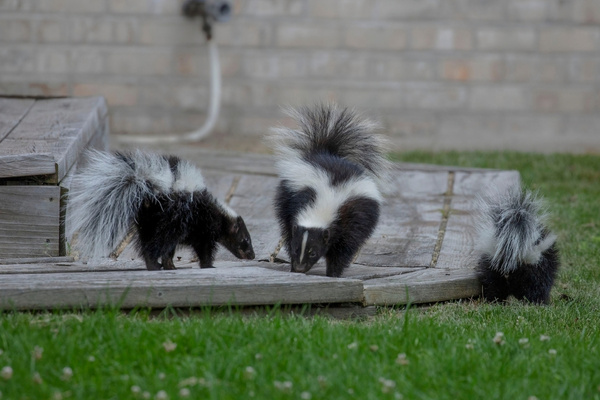
Skunks don't truly hibernate, but they become much less active during cold weather. They spend more time inside their dens and may remain sheltered for several days during particularly cold periods. They can still leave their dens during warmer winter weather when conditions are suitable for finding food. Several skunks may also share a den during the winter, especially females and their young.
How far can a skunk spray?
A skunk can spray up to 10 feet when it feels threatened, which is one fact about skunks that makes giving them plenty of space important. The spray comes from glands near the base of its tail and contains sulfur-based compounds that create its strong, lingering odor.
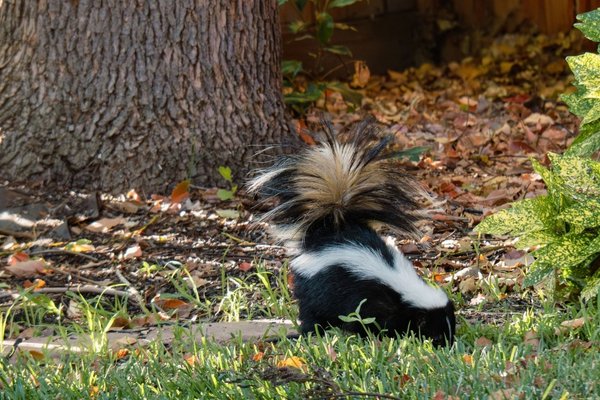
Skunks usually give a few warnings before spraying. They may raise their tail, stomp their feet, hiss, or turn their back toward the threat. If the warning isn't enough, they may spray. A skunk can spray multiple times, but its supply is limited and needs time to replenish. If you do get sprayed by a skunk, wash your skin and clothing as soon as possible and avoid rubbing the spray into your eyes.
What damage can skunks cause?
Skunk behavior can damage lawns, gardens, and landscaping, especially while searching for food. Their strong claws and digging habits allow them to turn over soil in search of grubs, insects, and other food sources. This can leave small holes, patches of disturbed grass, and damaged garden beds.
Skunks may also burrow beneath porches, decks, sheds, and other structures. Burrowing can disturb the soil around a structure and may contribute to foundation problems over time. A den beneath a home can also create unpleasant odors and increase the risk of encountering a defensive skunk.
Do skunks carry diseases?
Skunks can carry diseases and parasites that may affect people and pets, including:
- Rabies: Can spread through bites or scratches and may be fatal without prompt treatment.
- Leptospirosis: Can spread through contact with infected animals or contaminated urine.
- Parasites and bacteria: May spread through contact with infected animals, feces, or other contaminated materials.
Keep people and pets away from skunks, especially if an animal appears aggressive, disoriented, unusually active during the day, or otherwise abnormal. Don't try to handle the animal yourself.
How many types of skunks are there?
There are four main groups of skunks found throughout North and Central America: striped, spotted, hooded, and hog-nosed skunks. Each group has different physical characteristics and habitats, but they share the same basic defense mechanism of releasing a strong-smelling spray when threatened.
The striped skunk is the most common skunk species in North America. It has a black body with two white stripes running from its head down its back and can adapt to a variety of environments, including forests, grasslands, agricultural areas, and neighborhoods. The different types of skunks vary in appearance and habitat, so identifying the species can help determine what you're seeing around your property.
Additional skunk facts
From their impressive defenses to their unexpected habits, these skunk facts show what makes skunks unique:
- Skunks have some resistance to certain venoms.
- They raid beehives for bees and other insects, not honey.
- Male skunks are called bucks, females are does, and babies are kits.
- Skunks have a very keen sense of smell and hearing, but poor eyesight.
- Skunks can run up to 10 miles per hour.
- Skunks typically live about 3 years in the wild and up to 10 years in captivity.
Skunks may be interesting to learn about, but they’re not the kind of wildlife you want taking up residence in your yard. Terminix can help identify skunk activity and recommend effective solutions to help keep your property protected.