




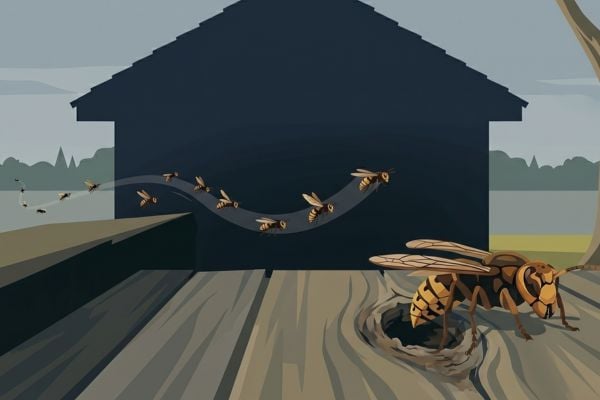
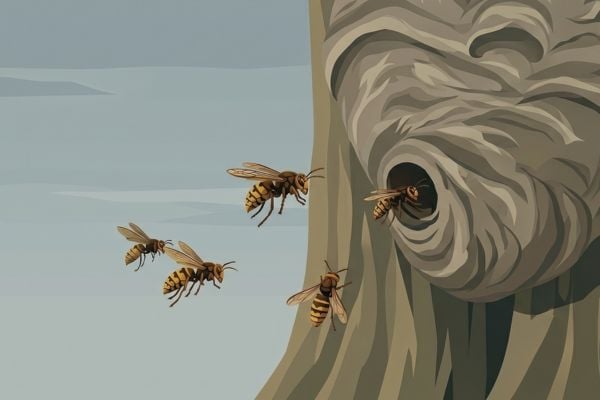
Increased hornet activity around your home, especially near rooflines, eaves, trees, shrubs, or sheds. Hornets typically fly back and forth to the same location.
Hornets are large, stinging insects that can become aggressive when their nests are disturbed, posing a risk to people and pets nearby. Because they often build nests in hard-to-reach areas, infestations can be difficult and dangerous to handle without proper training and equipment.
Hornets can pose a threat to your health and property if left untreated. Our technicians know how to get rid of a hornet's nest and will select the best hornet pest control method(s) to help eliminate the problem and prevent future issues.
Aerosol insecticide is a fast-acting product that can be applied directly to a visible, accessible nest to knock down the colony. Your technician will use professional-grade aerosols that are stronger and more effective than store-bought options, and apply them from a safe distance with proper protective gear.
Unlike an aerosol that targets an active nest, repellent liquid residual works as a protective barrier. It's applied to surfaces around your home after the colony has been handled, drying into a long-lasting residue that discourages hornets from landing and nesting in those spots.
Sometimes called insecticidal dust, residual dust is a highly effective way to treat hornet nests hidden in hard-to-reach spaces, such as wall voids, gaps in siding, attics, or other sheltered areas. Technicians may apply a fine, dispersible dust that penetrates deep into the nest and coats its internal surfaces. Hornets that enter or leave the nest come into contact with the dust and can carry it throughout the colony.
Once the colony has been treated and is no longer active, your technician will physically remove and dispose of the nest. Hornet nest removal is an important final step because an empty nest left behind can attract new hornets looking for a place to settle. Your technician handles the entire process with proper protective equipment.

Applied with care for the people and pets you love

Smart, targeted approaches designed with the environment in mind

Local technicians who understand your area’s unique pest challenges
Increased hornet activity around your home, especially near rooflines, eaves, trees, shrubs, or sheds. Hornets typically fly back and forth to the same location.
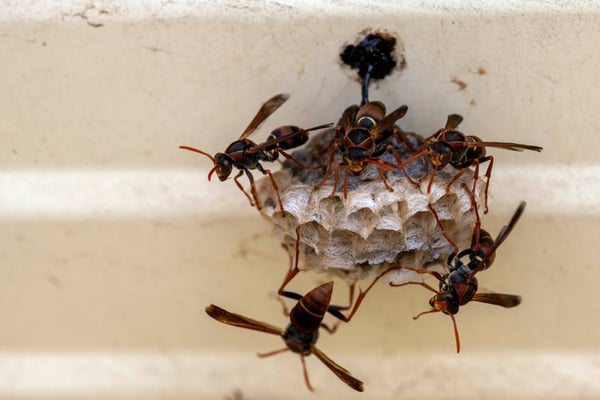
A large, papery nest hanging from a tree, roof overhang, or other protected area.
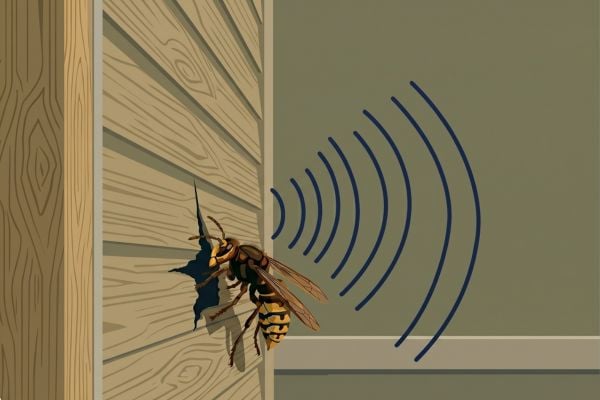
Buzzing sounds coming from wall voids, attics, or other enclosed spaces where hornets may be nesting.
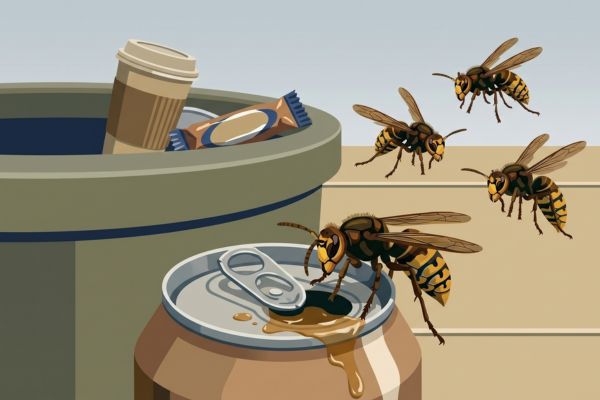
Hornets gathering around food, trash, or sugary drinks, particularly during late summer and early fall.
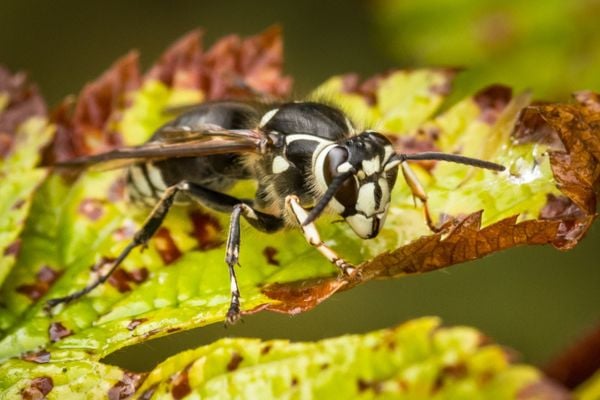
Bald-faced hornets grow between half an inch and three-quarters of an inch long, about as long as a large paperclip. They have a mostly black body with distinctive white markings on the face, thorax, and abdomen, giving them their "bald-faced" appearance. Despite their name, they are actually a type of yellowjacket rather than a true hornet.
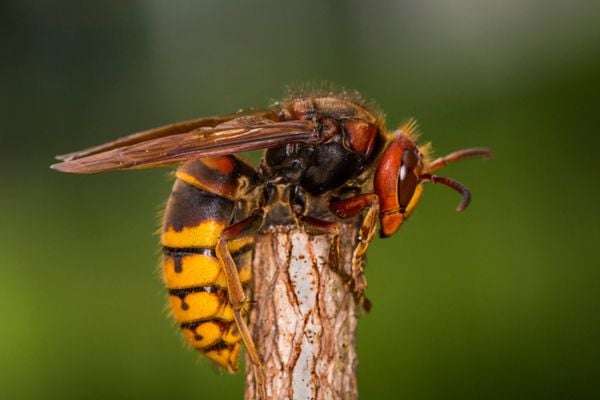
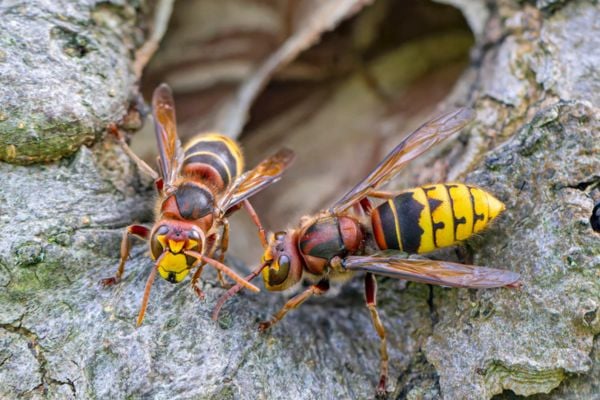
European hornets are large, reddish-brown and yellow hornets that can grow up to one and a half inches long, or about as long as a house key. They have a robust body, amber-colored wings, and a yellow abdomen marked with dark brown or black teardrop-shaped stripes. These hornets may remain active at night and are often attracted to lights.
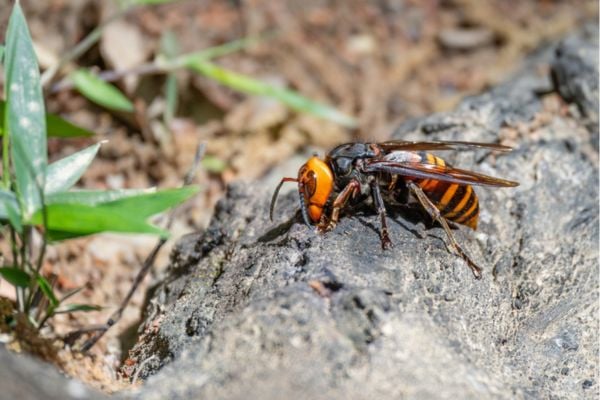
Northern giant hornets are the largest hornets in the world, reaching up to two inches in length, or about as long as a golf tee. They have a large orange-yellow head, prominent eyes, and a banded abdomen with alternating orange-yellow and dark brown or black stripes. Their size and coloration make them easy to distinguish from most other hornet species.
Here’s what our customers have to say...
Colorado Springs, CO
We got invaded, wildlife need to stay outside not inside. Called and they came, very fast and efficient. We do have dogs I was concerned for but what they use was safe for our dogs.
3 months ago
Indianapolis, IN
Terminix did a good job of taking care of my raccoons in the attic problem. Animals were captured and removed. Terminix showed up on time as scheduled. Phone communications were very good in getting everything coordinated. The cleaning and wildlife barriers were accomplished in one day with very little mess or inconvenience.
5 months ago
St Louis Park, MN
We've used Terminix for a while now and have always been happy with their provided services. Even when 'nature finds a way' to get back where it doesn't belong, they are very prompt to swing by to take care of the problem. We recently used Terminix to remove the insulation, sanitize, and re-blow insulation into our entire attic. The process went from inspection, to quote, to completion within the same week. The crew was very respectful of our home, pets, and our time. You might be able to find cheaper options out there, but for the amount of care the technicians provide with every service I recommend you go with Terminix.
7 months ago
Woburn, MA
Metro west MA Terminix team is amazing! Frances in pest control has protected us from pests for over 15 years! His response time and attention to detail is like no other. He listens and has solved all our issues over the years. We have been Vith and team in wildlife for over 5 years now and they have been diligent at finding and blocking access points in our 1860s home. At the beginning appt scheduling was frustrating but Frances has helped ease our frustrations and get us to the right people to schedule. Highly satisfied customer and highly recommend this team!
8 months ago
Virginia Beach, VA
Was very impressed with the quick response and efficiency in dealing with our home. Keith Sacco was great to deal with and made himself available to handle all our questions. Well done. The work performed by the wildlife exclusion tech and the moisture barrier installers was top notch also.
7 months ago
Your Terminix technician will inspect your property for signs of hornet activity and active nests. While some hornet nests are easy to spot in trees or under roof overhangs, others may be hidden in wall voids, attics, or other sheltered areas.
Once the nest is located, your technician will apply the appropriate hornet treatment and, when necessary, safely remove and dispose of the nest. Addressing both the hornets and the nest helps reduce the likelihood of continued activity.
Your technician will also recommend steps to help discourage future hornet activity around your property. If you're enrolled in a recurring stinging insect control plan, your technician will monitor for new hornet activity and nests during scheduled service visits.
The cost of hornet pest control varies based on factors such as the nest's size and location, the severity of the infestation, and the treatment methods required. Nests in hard-to-reach areas may require additional time and specialized equipment. A professional inspection can help determine the extent of the problem and provide an accurate pricing estimate.
Hornets are attracted to food, water, and sheltered nesting sites. They feed on sugary substances such as nectar, fruit, and sweet drinks, as well as on protein sources such as insects, meat, and pet food. Standing water, leaky outdoor faucets, and birdbaths can also attract hornets.
While DIY hornet control products and methods, such as sprays or homemade traps, are available, they are often ineffective and risky. Disturbing a nest with these approaches may provoke hornets and lead to aggressive defensive behavior. Professional hornet pest control is best to help ensure the nest is treated safely and effectively.
If you experience multiple stings or severe symptoms like difficulty breathing, swelling of the face or throat, or rapid heartbeat, seek emergency medical attention immediately. Hornets do not leave a stinger in the skin of their victims and can sting repeatedly. If you're stung by a hornet, wash the affected area with soap and water and apply a cold compress to help reduce swelling and pain.
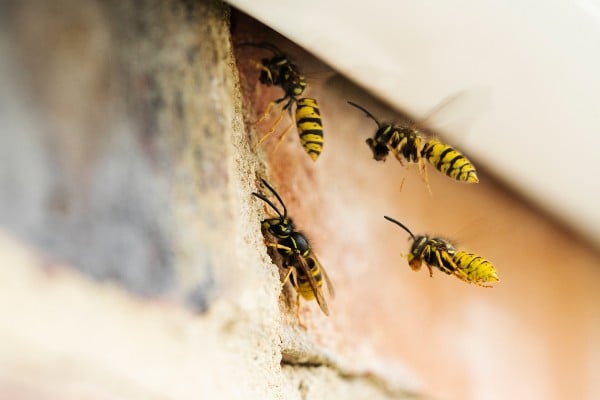
Hornets and wasps have many differences. Hornets are typically larger and generally more aggressive than many wasp species, and their stings are often more painful. Wasps tend to have a slimmer, more elongated shape, while hornets appear bulkier. Nesting habits can also differ, with hornets often building enclosed or partially enclosed nests in trees, shrubs, or structures, while many wasp species build more exposed nests in open areas.





.jpg?h=400&w=600&rev=5925732a7197417b93502a383f22407d&hash=3A4A2DD8A205E3FE90D9DA1235A9A844)