
Home Garden
House sparrow eggs and nests: Identification and removal
Content updated: October 15th, 2026
Key takeaways
- House sparrow nests are typically bulky, rounded, or domed structures made from grass, dried vegetation, feathers, hair, string, and other available materials.
- House sparrow eggs are small and can range from white to gray or greenish, often with brown speckles or spots.
- Bird protection laws and control requirements can vary by state and local jurisdiction. Before removing a nest or taking other control measures, make sure the species is properly identified and check the regulations that apply in your area.
- Prevention and exclusion methods can help discourage house sparrows from nesting and establish activity on your property.
Jump to section:
How to identify a house sparrow nest
What do house sparrow eggs look like?
Can I remove a house sparrow nest?
How to help get rid of house sparrows
If you find a house sparrow nest and eggs on your property, proper identification is an important first step before taking action. Several sparrow species can be found in the United States, and regulations may vary, so it’s best to contact a professional to help identify the species. Terminix bird control services can help identify bird activity and recommend appropriate solutions to help manage and prevent nesting on your property.
How to identify a house sparrow nest
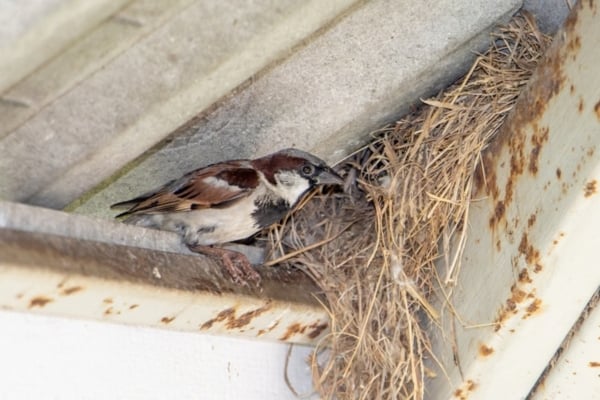
A house sparrow nest is typically a loosely constructed, domed, or rounded structure with a small entrance. Nests are often made from whatever materials are available nearby and may be tucked into sheltered openings around buildings.
- Size and shape: House sparrow nests are generally about 4 to 6 inches across and have a bulky, rounded, or domed shape.
- Nesting materials: Look for dried vegetation, grass, feathers, hair, string, and other soft or fibrous materials woven into a loose structure.
- Common locations: House sparrows often nest in sheltered spaces around homes, including outdoor lighting fixtures, kitchen vents, rooftops, gutters, and crevices around buildings.
- Nesting season: House sparrows typically build nests from February through May, although nesting activity can vary by location and conditions.
- Nearby activity: House sparrows tend to remain close to their nesting areas. They may reuse nests from year to year, so repeated sparrow activity around your property may indicate an established nesting area.
What do house sparrow eggs look like?
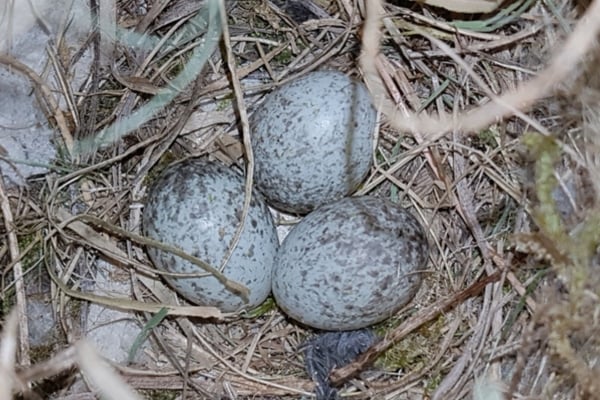
House sparrow eggs are small, typically around ½” across, and can range from white to gray or have a greenish tint with brown speckles or spots. A female usually lays 3 to 7 eggs per clutch, with 4 to 5 being most common. House sparrows may also produce multiple clutches during the breeding season. Eggs typically hatch within 10 to 14 days, and young sparrows typically remain in the nest for about 15 days before leaving.
Can I remove a house sparrow nest?
House sparrows are not protected under the federal Migratory Bird Treaty Act, but state or local restrictions may apply. If nest removal is legal where you live, it’s best to have a professional identify the bird and safely remove the house sparrow nest.
How to help get rid of house sparrows
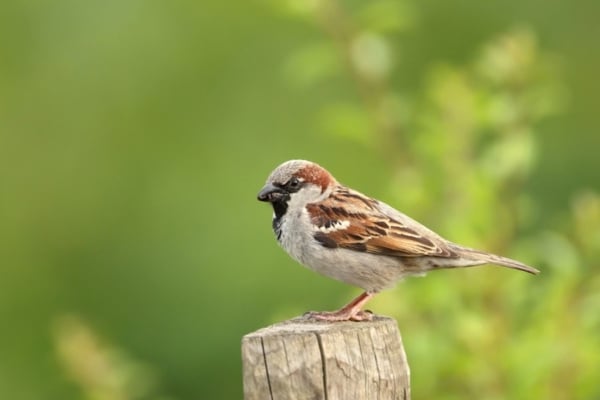
House sparrows can be persistent, but prevention and exclusion methods can help discourage them from nesting on your property. Removing nests yourself can expose you to droppings, nesting materials, and potentially harmful pathogens.
Terminix wildlife technicians can assess your property and recommend appropriate bird control solutions to help manage and prevent house sparrow activity. Schedule a free inspection with Terminix to get started.


