Content updated: July 8, 2026

Key takeaways

  • Jumping spiders hunt instead of building webs, using sharp eyesight and mighty jumps to catch prey.
  • Their large front-facing eyes provide excellent vision, helping them accurately judge distance and track insects.
  • Jumping spiders are beneficial predators that eat mosquitoes, flies, ants, moths, and other common pests.
  • They are not aggressive toward people, and bites are rare and typically harmless.
  • An increase in indoor jumping spiders may indicate another pest issue, since they follow the insects they hunt.

Jump to section:

Jumping spider identification and anatomy

Jumping spider behaviors

Types of jumping spiders

The life cycle of a jumping spider

Ecological role of jumping spiders

How to prevent jumping spiders in your home

Jumping spiders (Salticidae) are the active hunters of the spider world. Rather than trapping prey in silk webs, they use advanced depth perception to track targets from a distance and change their internal fluid pressure to launch themselves forward. Their relentless hunting behavior provides natural pest suppression in gardens and yards. However, when these pests begin moving indoors, it may be time to consider professional spider control.

Jumping spider identification and anatomy

Identifying a jumping spider comes down to a few distinct physical traits. To know what jumping spiders look like, look for these specific characteristics:

Jumping spider close up

Size: Most species range from 1/8 inch to 3/4 inch in length

Body shape: Compact, robust bodies with relatively short, stout legs

Color: Typically dull gray, black, or brown

Texture: Fuzzy appearance covered in dense hairs or scales

Markings: Unique bands, spots, or chevrons on their abdomens

Jumping spider eyes

These spiders have eight eyes, giving them a near 360-degree view of their surroundings. Their two large, front-facing eyes provide excellent vision, which helps them hunt and navigate. This sharp eyesight allows them to accurately judge distance and make precise jumps onto prey or plants, sometimes from distances of 10 to 12 inches.

How jumping spiders jump

Jumping spiders primarily leap to travel and catch prey by using a unique technique that does not solely rely on their leg muscles. Instead, they rapidly alter their internal fluid pressure. By contracting specialized muscles, they force a sudden rush of blood to their legs, causing them to extend instantly and propel the spider forward.

To help them land safely, jumping spiders secure themselves with silk threads attached to their starting point. This silk line acts as a safety tether in case they miss their target. Precision landing is made possible with their excellent vision and depth perception, allowing them to judge distances accurately and execute complex maneuvers mid-air.

Jumping spider behaviors

Jumping spiders are active daytime hunters that rely on highly developed senses rather than webs to survive. Here are a few quick facts about these active hunters:

Jumping spider wave

Diet: Flies, mosquitoes, ants, gnats, moths, and small spiders.

Hearing: Specialized leg hairs detect microscopic vibrations and acoustic signals, allowing them to sense human movement from a distance.

Habitat: Found in various regions across the U.S., including gardens, forests, grasslands, and homes.

Low bite risk: Not aggressive; venom is not harmful to humans or pets. Bites occur rarely, typically when threatened.

Why do jumping spiders wave?

When a jumping spider raises its front legs and waves, it is communicating or sensing its surroundings. In most cases, males perform these rhythmic waves as part of elaborate courtship displays to attract females. Outside of mating, they wave their front legs to detect air currents, navigate obstacles, or deter potential threats by appearing larger.

Why do jumping spiders come towards you?

Unlike many spiders that scurry away into the shadows, jumping spiders often move toward humans. They do this due to their inherent lack of fear and intense visual curiosity. Since they have such advanced vision, they are naturally drawn to large, moving objects and are simply trying to get a better look at you.

Types of jumping spiders

There are more than 6,000 species of jumping spiders globally, making Salticidae the largest family of spiders in the world. In North America, three common jumping spider species frequently cross paths with homeowners:

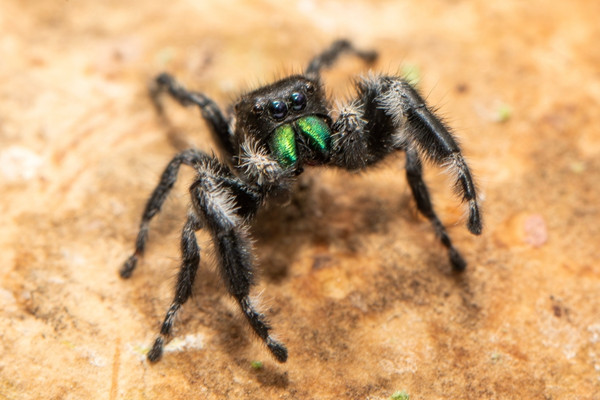
Bold jumping spider 

Bold jumping spider

A common species with a black, fuzzy body, bright iridescent green mouthparts, and white, yellow, or orange spots on its abdomen.

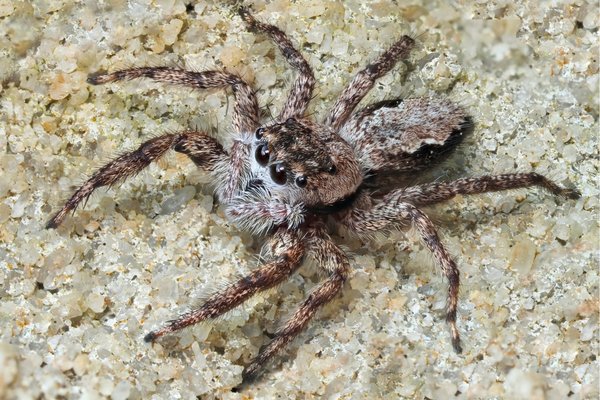
tan jumping spider 

Tan jumping spider

A flattened spider with gray and tan coloring that helps it blend in with tree bark, fences, and wooden surfaces.

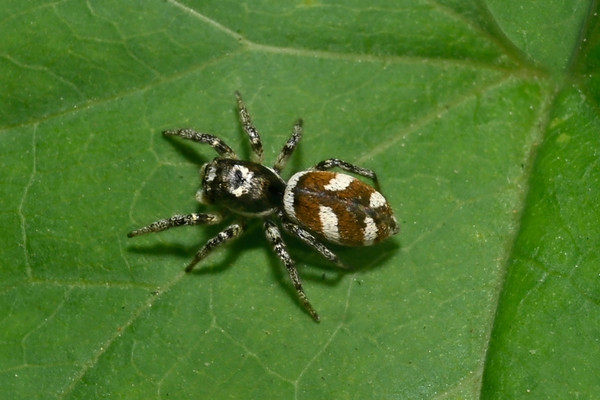
zebra jumping spider 

Zebra jumping spider

A small jumping spider with distinctive black-and-white stripes, often found on walls, windows, and other sunny surfaces.

The life cycle of a jumping spider

The average lifespan of a jumping spider is roughly one year, though it can vary based on climate and nearby predators. Their life cycle moves through four key phases:

life cycle of a jumping spider

1. Eggs: Females lay eggs during the spring and summer and seal them inside a silk nest hidden under tree bark, rocks, or home siding.

2. Spiderlings: Once the eggs hatch, the tiny spiderlings emerge and shed their hard outer shells (molt) multiple times to grow.

3. Juveniles: As they grow, they refine their hunting skills and gradually develop adult colors and physical traits.

4. Adults: Fully mature spiders spend their time hunting and seeking mates, restarting the reproductive cycle.

Ecological role of jumping spiders

Since jumping spiders are active daytime hunters, they play a vital role in balancing local ecosystems. Instead of waiting on a static web, they constantly patrol garden plants, crops, and home perimeters to hunt down pests. Their continuous patrolling acts as a natural check against outbreaks, allowing them to actively target destructive garden insects, crop-damaging beetles, ants, gnats, moths, flies, and mosquitoes.

While they are highly efficient predators, jumping spiders are also an important food source for larger wildlife. Birds, small lizards, frogs, toads, and predatory wasps frequently hunt these spiders to maintain their own balance within the environment.

Jumping spiders as pets

With their oversized front eyes and surprisingly expressive movements, jumping spiders have built a dedicated following in the exotic pet community. Keeping one is relatively simple, as they only need a secure, compact habitat with proper airflow and a diet of small, live insects. They are highly visual creatures that will often watch you back from inside their enclosure. However, they lack the capacity to play or bond, and because of their micro-sized, delicate bodies, handling should be kept to a minimum to prevent accidental injury.

How to prevent jumping spiders in your home

If you prefer your spiders outside rather than in your living room, you can take a few simple steps to discourage them from moving in. To help keep spiders away from your home:

  • Seal small gaps around windows, doors, and foundations using exterior-grade caulk.
  • Repair or replace torn window and door screens to prevent easy entry.
  • Clear away indoor clutter, like piles of paper or cardboard, where target insects might hide.
  • Manage outdoor lighting, as bright lights can attract flying bugs that spiders love to eat.

A sudden increase in indoor spider activity usually points to an underlying infestation of smaller bugs. Terminix technicians can assess your home for potential entry points for spiders and other pests and provide treatments that reduce the likelihood of future infestations. Help prevent these pests from taking up residence in your home and get spider control from Terminix today.